

Play
Unfortunately we don't fully support your browser. If you have the option to, please upgrade to a newer version or use Mozilla Firefox, Microsoft Edge, Google Chrome, or Safari 14 or newer. If you are unable to, and need support, please send us your feedback.
The Scopus Content Selection and Advisory Board (CSAB) is an international group of scientists, researchers and librarians who represent the major scientific disciplines. Year round, the board members are responsible for reviewing all titles that are suggested to Scopus.
The CSAB is comprised of 17 Subject Chairs, each representing a specific subject field. The Board works with the Scopus team to understand how Scopus is used, what content is relevant for users and what enhancements should be made.
The recommendations of the CSAB directly influence the overall direction of Scopus and the prioritization of new content requests to ensure that Scopus content stays international and relevant.
Learn more about the CSAB and Scopus content qualityopens in new tab/window

In making their decisions about approving journals for inclusion in Scopus, the members of the CSAB avoid conflicts of interest such as those that may derive from their own involvement with other journals or their work as consultants. In such cases, the CSAB member will ensure that they take no part in decisions about journals for which they might have a conflict of interest.

Chair of the Scopus Content Selection and Advisory Board | Subject Chair CSAB - Computer Science | Professor Emeritus
Canada’s Carleton University’s School of Computer Science

CSAB Subject Chair – Social Sciences; Education
The Chinese University of Hong Kong, Hong Kong

CSAB Subject Chair – Business, Management & Accounting; Economics, Econometrics & Finance
City University of Hong Kong, Hong Kong

CSAB Subject Chair – Nursing; Health Professions
Universidad Peruana Unión, Peru

CSAB Subject Chair – Arts & Humanities
University of St. Andrews, United Kingdom

CSAB Subject Chair – Psychology
Deakin University, Australia
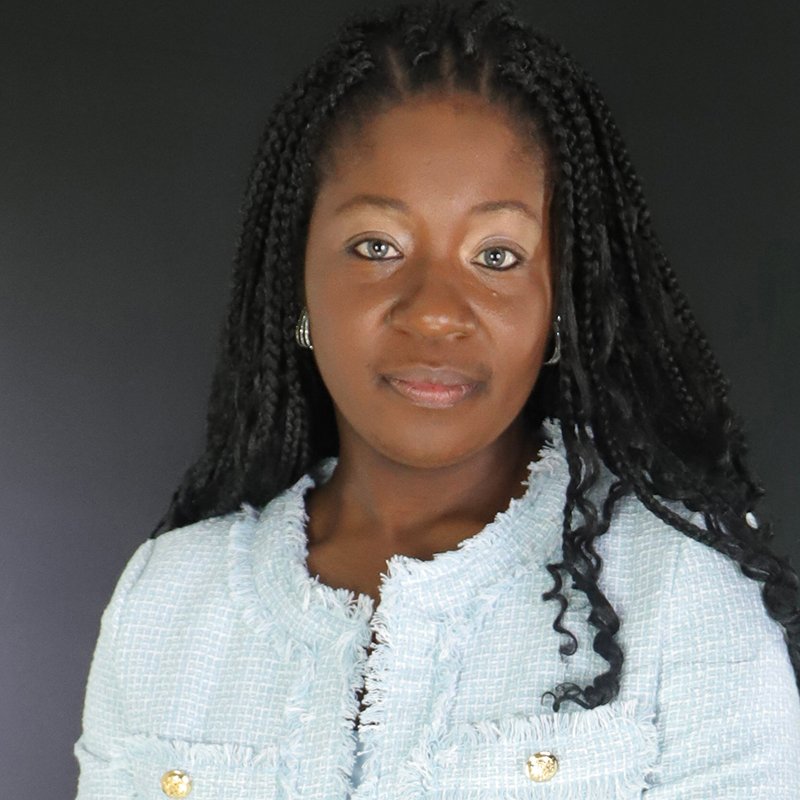
CSAB Subject Chair – Pharmacology, Toxicology and Pharmaceutics; Biochemistry, Genetics and Molecular Biology; Neuroscience
University of Mississippi Medical Center, USA

CSAB Subject Chair – Environmental Science
National Sun Yat-Sen University, Taiwan

CSAB Subject Chair - Library and Information Sciences; Multidisciplinary
University of Cape Town, South Africa

CSAB Subject Chair – Medicine, Dentistry, and Veterinary Sciences
University Hospital of Southampton, United Kingdom

CSAB Subject Chair – Chemistry, Chemical Engineering, Material Sciences
University of Aveiro, Portugal

CSAB Subject Chair – Engineering
National Technical University Athens, Greece

CSAB Subject Chair – Earth & Planetary Science, Energy
University of Munich, Germany

CSAB Subject Chair – Mathematics, Physics & Astronomy
TATA Institute of Fundamental Research, India

CSAB Subject Chair - Language, Linguistics, Communication and Media
University of Warwick, United Kingdom

CSAB Subject Chair – Law, Crime, Criminology and Criminal Justice
King’s College London, United Kingdom

CSAB Subject Chair - Agriculture and Biological Sciences
Wageningen University, The Netherlands
In collaboration with Elsevier and with guidance from the Scopus Content Selection & Advisory Board (CSAB), Scopus has established 4 local content boards, or Expert Content Selection and Advisory Committees (ECSAC). Currently, local boards are in place in China, Thailand, Russia and South Korea. The relevant CSAB subject chair takes the recommendation and evaluation comments from the local board reviewers into account for their review of the title for Scopus coverage. The goal of the ECSAC is to raise the standard of local titles and ensure that titles published primarily for a local audience, but deserving of international attention, are included in Scopus.
The objectives for the local boards are to:
Educate local publishers and editors about Scopus selection criteria
Proactively pre-screen local titles and act as a filter for local titles that need to be reviewed
Conduct a full review of local titles to improve the acceptance rate of local titles
Thailand was the first country to establish its own local board. ECSAC-Thailand comprises 14 Subject Chairs that mirror the CSAB Subject Chair disciplines as well as 13 additional general board members.
Through the support and collaboration with the Scopus CSAB, the ECSAC-Thailand goal is to raise the overall standards and quality of journals published in Thailand.
More informationopens in new tab/window
Through the support and collaboration with the Scopus CSAB, the ECSAC-Korea goal is to raise the overall standards and quality of journals published in Korea.
More informationopens in new tab/window
The ECSAC-Russian Federation consist of 14 Subject Chairs, who are all subject matter experts covering all major science fields. The Subject Chairs will focus on, in close collaboration with the Scopus CSAB, raising the local journal standard and international visibility of journals published in the Russian Federation.
By working closely with Elsevier to evaluate and select Chinese Journals to be submitted for evaluation by the Scopus Content Selection and Advisory Board (CSAB), China's local content board has the goal to raise the overall standard and international visibility of journals published in China.
More informationopens in new tab/window
By default, all local journals from relevant regions shall be reviewed by local boards and benefit from all values of the local boards. However, there are cases in which local journals deem it necessary to be reviewed directly by the CSAB, e.g., due to potential conflict of interests.
