Claim Radar for Corporate R&D
See whether published research supports a claim, contradicts it or shows mixed evidence before the claim moves forward.

Introduction
A claim can be clear and still need stronger evidence.
That matters in Corporate R&D. Scientific and technical claims move into clinical evidence briefs, device summaries, safety cases, formulation rationales, reliability memos, sustainability claims and engineering recommendations. Once they do, they can shape product, regulatory or leadership decisions.
Claim Radar in LeapSpace™ helps scientists and engineers inspect how a claim holds up across published research. It groups sources by what the evidence actually shows: which support the claim, which contradict it, and where the picture is mixed.
As Adrian Raudaschl, Sr Director Product Management for LeapSpace, explains: “With Claim Radar, we move from ‘how aligned is this claim with this one source’ to ‘how aligned is this claim with the wider research ecosystem’.”
Four hundred years ago Francis Bacon argued that doubt has a double use: it guards us against error, and it opens new lines of inquiry that enrich our understanding. Claim Radar is built for both. Catching the claim that outruns its evidence is the obvious win. The quieter one is what you learn when the evidence comes back mixed — that's often where the better research question is hiding.
Already using LeapSpace? Run Claim Radar on a claim in your current response or draft.
What Claim Radar does
When you trigger it on a claim, Claim Radar assesses it against published research and returns the sources grouped by evidence signal:- supporting, mixed, or contradictory.
You inspect the sources, read the pattern, and decide what to revise, qualify, keep, or investigate further.
It doesn't make the call for you. It gives you a clearer picture of the evidence before a claim goes into a report, brief, or review.
Where Claim Radar fits in LeapSpace
Claim Radar supports two important moments in the LeapSpace workflow.
In LeapSpace responses, users can inspect a claim and see how it aligns with the wider literature, not only the source attached to that statement.
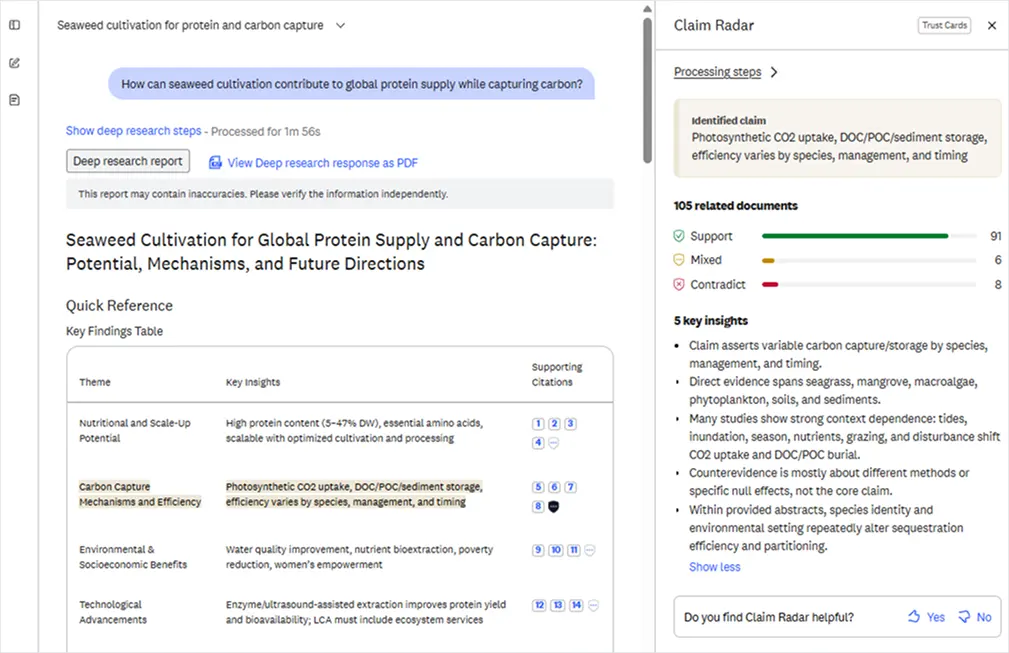
Fig. 1: Claim Radar panel showing support, mixed and contradict categories
Inside Writing Coach, users can run Claim Radar on assertions in their own draft. That means a technical recommendation, clinical rationale, safety argument or product claim can be assessed against published research before it moves forward.
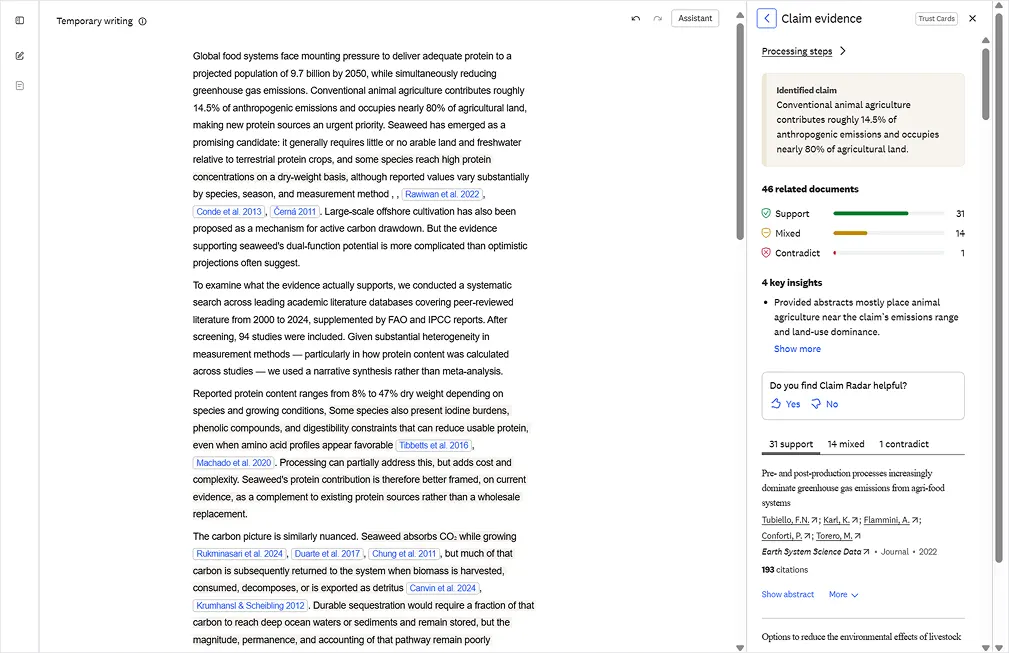
Fig. 2: Claim Radar within Writing Coach
What Corporate R&D teams can do with Claim Radar
Use Claim Radar to:
Check a claim against published research.
See evidence signals grouped as supporting, mixed or contradictory.
Inspect sources before reusing a claim in a report, brief or review.
Surface counterevidence before a recommendation moves forward.
Qualify wording when a claim sounds stronger than the evidence allows.
Across Corporate R&D, the question is not whether a claim sounds right. It is whether published research supports it, contradicts it or shows mixed evidence before it becomes part of a report, review or recommendation.
Frequently asked questions
No. Claim Radar assesses a claim against published research and shows evidence signals the user can inspect. The final judgment remains with the scientist, engineer or evidence owner.
Corporate R&D teams can use Claim Radar to inspect claims in technical reports, evidence briefs, product claims, safety cases, regulatory arguments, formulation rationales and engineering recommendations.
Inside Writing Coach, users can run Claim Radar on draft text. Claim Radar identifies key assertions, assesses them against published research and shows where the evidence is supporting, mixed or contradictory. Users then decide what to revise, qualify or keep.
No. Claim Radar supports expert review by surfacing evidence signals and sources to inspect. It does not replace expert judgment, regulatory review, quality review or technical decision-making.