
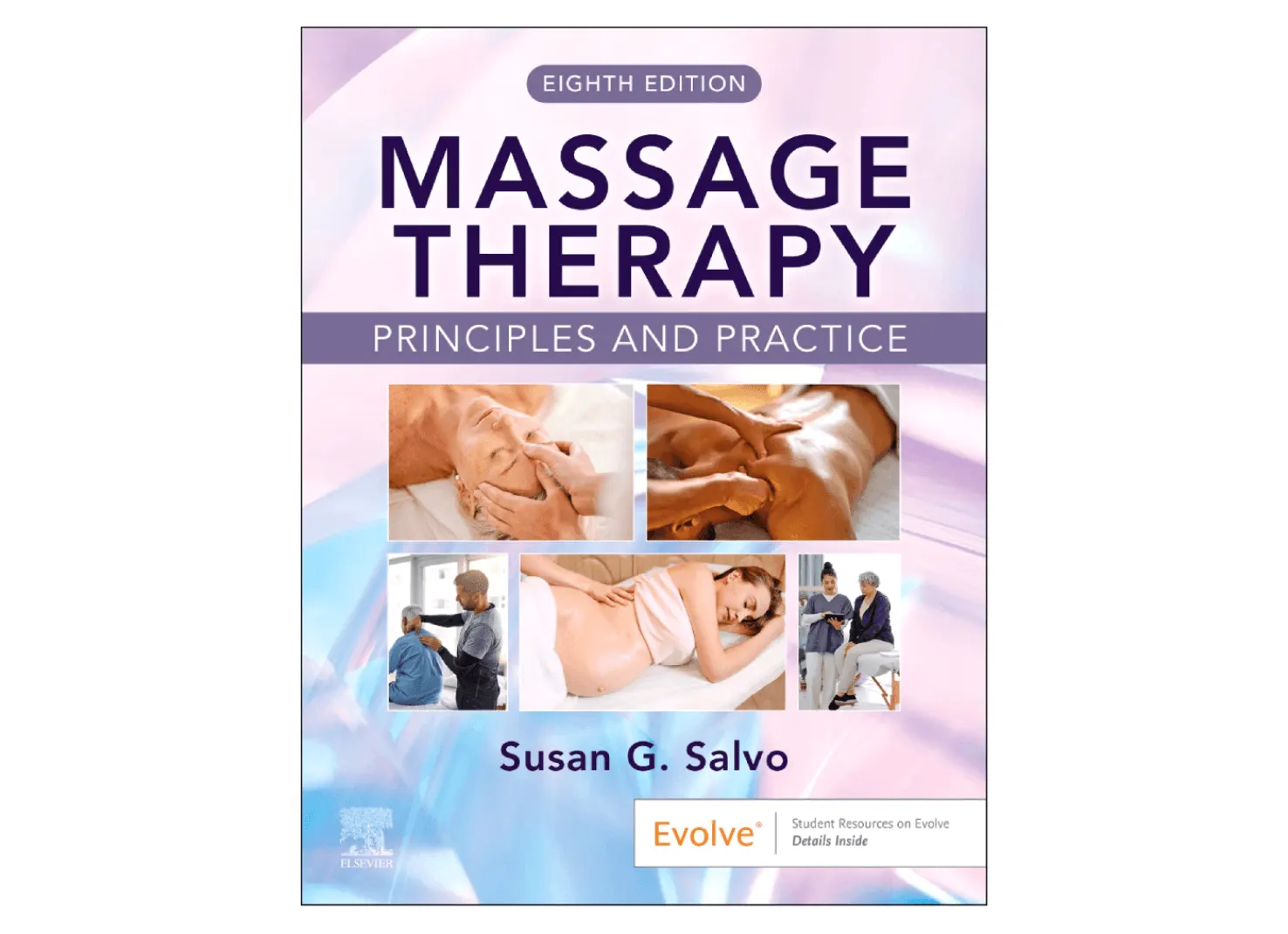
Author Q&A: Massage Therapy: Principles and Practice, 8th Edition
August 14, 2026
By Susan G. Salvo, EdD, LMT, BCTMB
Introduction and professional background
My name is Susan Salvo, and I have spent more than 40 years exploring the art and science of massage therapy as a practitioner, author, educator, researcher, and lifelong student. I hold a Doctor of Education degree from Lamar University and serve as an adjunct professor at massage schools in New York, New Mexico, and Louisiana. I also lecture at professional conferences around the world.
Service to the profession has been especially rewarding. I volunteer with organizations such as the Massage Therapy Foundation, the Federation of State Massage Therapy Boards, the National Certification Board for Therapeutic Massage and Bodywork, and the Massage Therapy Body of Knowledge project.
Tell us about the development of your book.
Massage Therapy: Principles and Practice has changed dramatically over the years, much like the profession itself. The first edition was a very different experience from today’s publishing world. It featured black-and-white images, and I wrote the manuscript on a Smith Corona typewriter, mailing chapters back and forth through the postal service. Looking back, it seems like another era.
One thing has remained constant: my commitment to clear, straightforward writing that makes complex concepts easy to understand. From the beginning, my goal has been to create a textbook that students could not only learn from but also view as a trusted companion. Over the years, one of the greatest compliments I have received is, “I actually enjoyed reading your textbook.” As any textbook author knows, that may be the academic equivalent of winning an Oscar.
The eighth edition brings updates that reflect the evolving needs of today’s students and educators. New content places greater emphasis on cultural humility, trauma-informed care, clinical safety, and inclusive practices. As massage continues to grow as a profession, I hope this edition prepares practitioners who are technically skilled, compassionate, curious, have integrity, and are committed to a growth mindset.
What do you find most exciting or significant about your new publication?
One of the joys of developing a textbook over multiple editions is watching it grow alongside the profession. The eighth edition reflects many of the exciting changes taking place in massage and healthcare.
Safety remains a top priority. This edition includes detailed discussions of side effects, adverse events, and endangerment sites, helping practitioners make sound clinical decisions and provide safer client care. And because practitioners are often so good at caring for others that they forget to care for themselves, this edition includes updated, practical strategies for professional wellness and self-care.
I am especially pleased with the book's expanded focus on cultural humility and inclusive practice. Rather than simply emphasizing cultural competence, this edition encourages curiosity and empathy. I am committed to preserving our history and introducing the next generation of massage practitioners to the pioneers and visionaries who shaped our profession through the biography feature in each chapter. This edition adds three new biographies highlighting the contributions of Indigenous massage practitioners and other historically underrepresented voices. It also replaces outdated terms such as “special populations” and “geriatric massage” with more respectful and inclusive language.
Who is the primary audience for your book, and why will they find it valuable?
The primary audience for this textbook has remained remarkably consistent over the years: students, practitioners, and educators in the massage profession. While the profession itself has evolved, the book’s mission has not — to provide a clear, evidence-informed foundation for safe, effective, and compassionate massage practice.
Over time, the book has also found an audience beyond massage programs. It is used in educational settings that prepare allied healthcare and service professionals, including physical therapists and physical therapist assistants, chiropractors and chiropractic assistants, osteopaths, estheticians, rehabilitation specialists, fitness professionals, and other healthcare providers.
What new ideas, practices, or procedures do you hope readers will take away from your book?
One of the features of the eighth edition I’m especially excited about is the addition of interactive learning activities that help students move beyond memorization and into application. New kinesiology palpation notes guide students in identifying skeletal muscles and bony landmarks, strengthening assessment skills and enhancing treatment techniques.
Clinical content has also been significantly expanded. Readers will find updated information on trauma-informed care, lymphedema, dialysis, and pain management, along with revised pain scales and clinically relevant measurement tools that better reflect current practice.
Because science is constantly evolving, I have updated sections on the neuroendocrine system, the hypothalamic-pituitary-adrenal (HPA) axis, and heart rate variability — areas that continue to deepen our understanding of how massage affects the body and mind.
Looking ahead, what challenges or problems in your specialty do you hope future generations will address?
One of my greatest hopes for future generations is that they continue to strengthen the scientific foundation of massage therapy through high-quality research. We need more studies that examine not only whether massage works, but for whom, under what circumstances, and why.
Massage practitioners do not practice in isolation. The future of healthcare is collaborative, and I envision a world in which massage practitioners work seamlessly with physicians, nurses, physical therapists, psychologists, psychiatrists, and other healthcare providers as integral members of interdisciplinary teams.
Is there anything else you would like to share about your book or its impact?
I hope this book cultivates curiosity and inspires a commitment to lifelong learning. The most effective practitioners I know are willing to question assumptions, embrace new evidence, and occasionally say, “I used to think differently.” Science evolves, and so should we. If this book helps students and practitioners think more critically, ask better questions, and remain open to new ideas throughout their careers, then it will have achieved its purpose. After all, the best healthcare practitioners are those who remain curious enough to keep asking questions and humble enough to revise their assumptions.
Do you have an online presence we can connect with?
Website: susansalvo.comopens in new tab/window LinkedIn: Susan Salvoopens in new tab/window Facebook: susansalvoopens in new tab/window X (formerly Twitter): @susansalvoopens in new tab/window YouTube: LAmassageschoolopens in new tab/window
Contributor
