
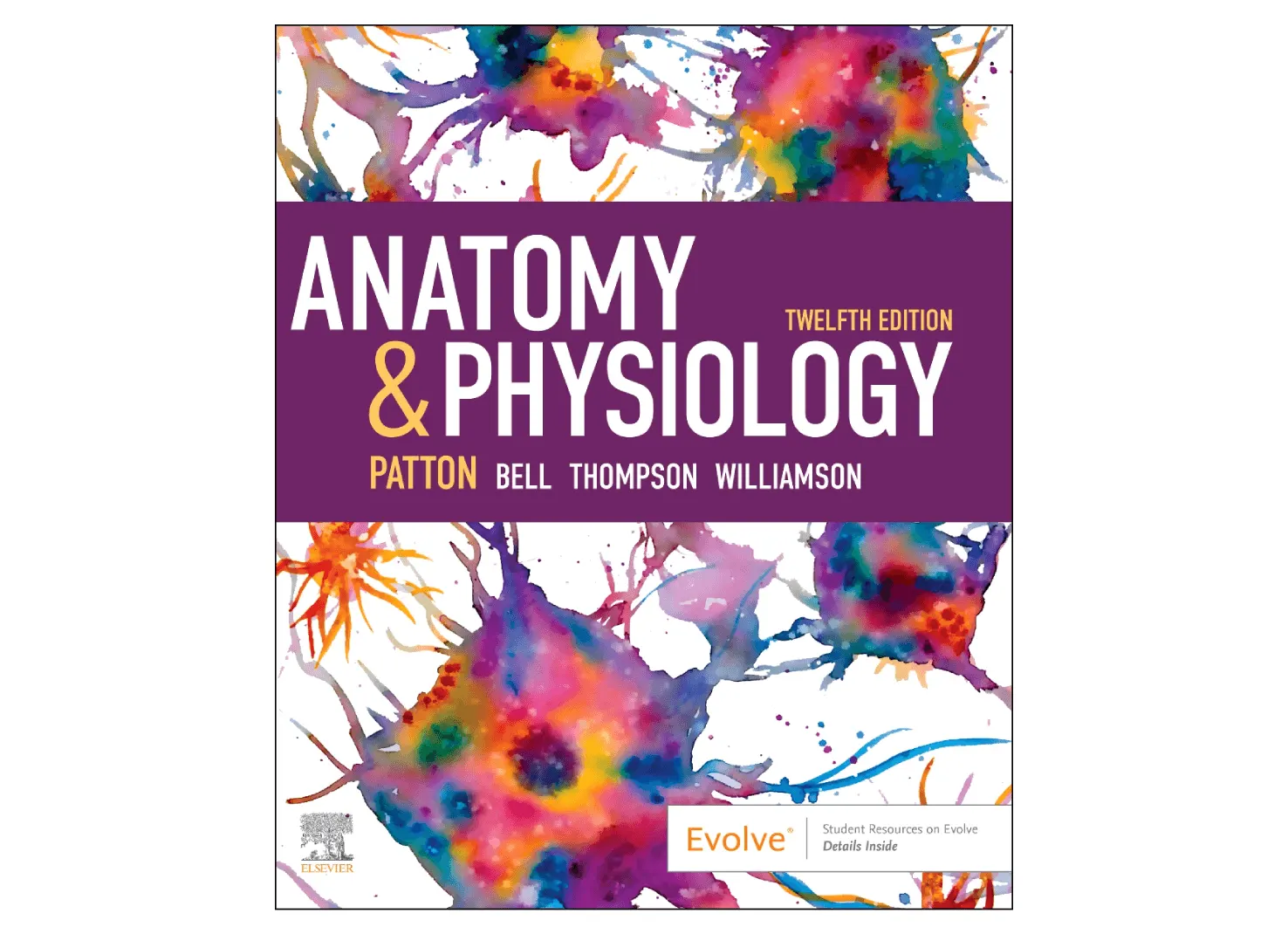
Author Q&A: Anatomy & Physiology, 12th Edition and Anatomy & Physiology Laboratory Manual, 12th Edition
August 14, 2026
By Kevin T. Patton, PhD, Frank B. Bell, DC, MS(HAPI), Terry Thompson, MS, MS(HAPI), Peggie L. Williamson, PT, DPT, MS, MS(HAPI)
Introduction and professional background Kevin Patton: I am an Emeritus professor at St. Charles Community College (near St. Louis, MO). I mainly taught undergraduate A&P and pre-A&P lecture and lab courses. I am also an Adjunct Emeritus Professor at Northeast College of Health Sciences based in Seneca Falls, NY. At Northeast, I taught and mentored in an online graduate program for A&P professors-in-training. I’ve been very involved in the Human Anatomy & Physiology Society (HAPS) since its founding, working in many service and leadership roles. I also host/produce a podcast for faculty called “The A&P Professor.” Frank Bell: I graduated from Cleveland University (formerly Cleveland Chiropractic College) in 1988 and practiced in upstate New York for 25 years. In 1989, I began teaching Anatomy & Physiology as an adjunct and made the transition to full-time teaching in 2011.
Currently, I am an Assistant Professor in the HAPI program at Northeast College of Health Sciences and an adjunct instructor teaching anatomy and physiology for Excelsior University. I have also instructed over 175 online undergraduate and graduate courses in biological and health sciences for multiple colleges/universities, such as human anatomy and physiology, medical terminology, trends and issues in health care, medical ethics, bachelor’s capstone in health science, and health behavior.
Terry Thompson: I am currently retired after 19 years of teaching Anatomy & Physiology full-time at a community college in Maryland. I started working on the 10th edition of this title five years before retiring. Three years before that, I earned a second master’s degree from the Northeast College of Health Sciences’ Human Anatomy & Physiology Instruction program, adding to my undergraduate and master’s degrees in Biological Sciences.
I previously worked as a science educator at several institutions across all grade levels and as a field researcher in a variety of science and conservation organizations. I remain active with, and serve as a President Emeritus of the Human Anatomy & Physiology Society.
Peggie Williamson: I am currently an Assistant Professor in a Doctor of Physical Therapy program, where I teach functional anatomy, physiology, pathophysiology, musculoskeletal rehabilitation, and other courses related to human health and movement. Over the past 25 years, I have taught at both the undergraduate and graduate levels and currently practice part-time as a Doctor of Physical Therapy in an outpatient setting.
Tell us about the development of your book. Kevin Patton: From the beginning, we've focused on maintaining the initial vision of providing a highly readable textbook for the rigorous and extensive set of concepts in the A&P course. Along the way, we've been at the forefront of introducing new learning tools and approaches, such as embedded reading/study tips; the Clear View virtual dissection tool; chapter word lists with pronunciations and word-part translations; and chunking content into smaller sections and smaller chapters (half the usual length). This new edition offers many evidence-based learning enhancements and scientific updates — making it our best effort yet!
Terry Thompson: The Patton textbooks are known for their drawings designed to visually simplify complex human body systems and processes. Key updates include replacing, redrawing, recoloring, updating, editing, or otherwise altering many illustrations to support student learning. Another evolution involves special boxed features and online Connect It! articles that illustrate how individual body systems, diseases, and physiological mechanisms relate to one another. With each edition, new topics have been added and existing ones updated, providing topic-related historical context, clinical applications, or current/future research areas.
Peggie Williamson: One of the strengths of this textbook has been its commitment to helping students understand the "big picture" of anatomy and physiology rather than simply memorizing isolated facts. Our author team incorporates learning science principles to improve how information is presented, with the intent of helping students build connections, reduce cognitive overload, and retain concepts more effectively. This textbook continues to expand its visual and interactive learning tools, including concept maps, integrated illustrations, audio summaries, and other resources designed to support diverse learning styles.
What do you find most exciting or significant about your new publication?
Kevin Patton: One of the most exciting enhancements in the new edition is consolidating and expanding our coverage of clinically important concepts of the human microbiome into a newly added chapter (Ch. 50). We've also added updated and expanded coverage of fascia — which is no longer considered a simple "packing material," but instead as a dynamic and vital body-wide network that interacts with almost every organ. We've continued our mission to make sure that all kinds of students see themselves and their communities in our descriptions of the human body and in our applications of A&P in the health professions. Much of this work has been done by using bias-free language, illustrating a variety of people likely to be seen in the clinic, and emphasizing the wide spectrum of variations of "normal" in our bodies that make each of us unique.
Our story of human reproduction has been reimagined in a bold, new female-first approach that reorganizes chapters into Genital Systems (Ch. 45; functional anatomy focus) and Reproduction (Ch. 46; physiology focus). We've added several customized videos extracted from Elsevier's separate product, Complete Anatomy, to add another opportunity for active discovery by students. We've also tweaked the design of our trademark summary tables, chapter summary outlines, and anatomical rosettes to make them even more useful for learning.
Frank Bell: I’m very excited about the addition of Sherpath, including interactive digital lessons with built-in assessments and adaptive quizzing assignments.
Terry Thompson: The new Human Microbiome chapter in the textbook is based on increased general interest in the topic and current research that better illustrates the comprehensive impact of the human microbiome on all our body systems.
In the Laboratory Manual, new Venn diagram activities engage students to visually organize information by comparing how three new concepts are similar and different. This encourages discussion and brainstorming and helps students better understand and remember structure and function relationships.
Peggie Williamson: We have continued to refine the organization and presentation of content to help students recognize overarching themes and connections among body systems. Features such as The Big Picture sections, Active Concept Maps, revised and new-to-this-edition Connect It! articles, and enhanced visual resources encourage students to think critically and integrate information, rather than approach each chapter as a separate collection of facts.
Who is the primary audience for your book, and why will they find it valuable?
Kevin Patton: Our textbook has always been focused on helping undergraduate students in two-semester A&P courses to gain a useful level of understanding to succeed in nursing and other health professions.
Terry Thompson: The primary audience for the Laboratory Manual is basically the same as the associated textbook, but with a focus on hands-on learning to apply and build essential skills related to future clinical practice. It can also be used as a standalone guide for student laboratory exploration and learning.
What new ideas, practices, or procedures do you hope readers will take away from your book?
Kevin Patton: There's a prevailing — but false — notion that core A&P content, particularly regarding anatomy, doesn't change much. However, as new concepts of fascia structure and function, the vital functions of the human microbiome, and the importance of understanding that "normal" is not as useful a concept as "healthy variations" emerge, we've done our best to recast our presentation of core content to incorporate these newer ideas. These ideas have quickly become mainstays of clinical applications of A&P, so it's important that A&P textbooks stay on top of current evidence and practice.
Terry Thompson: Now available from an exciting collaboration with Complete Anatomy, at no additional cost to students and instructors on Evolve, are over a dozen videos using a stunning series of diverse 3-D models that bring A&P to life with clear narration, closed captions, and accompanying transcripts. Instructors can use the information provided in a chart to decide how best to incorporate these specific videos into their own teaching style and course design.
Peggie Williamson: Learning science has provided valuable insights into strategies that improve understanding, retention, and long-term application of knowledge. As educators, we are increasingly using evidence-based approaches such as retrieval practice, spaced learning, and concept mapping to help students learn more effectively. Our entire text is organized around these concepts.
Looking ahead, what challenges or problems in your specialty do you hope future generations will address?
Kevin Patton: Besides the widely discussed promises and concerns regarding the roles of artificial intelligence in teaching and learning, I think an important challenge in teaching A&P is how to help students grow into the "constant learning" mindset necessary to function today in the health professions.
Frank Bell: Artificial intelligence. The integration of AI can be a blessing as a resource for learning or a curse if used for cheating on assessments.
Terry Thompson: I hope future practitioners still devoted to pursuing any career in allied health, such as those students using our book, can learn how to understand the advances in health science and then communicate them in a respectful way to their clients. They will need the basics, but also communication skills and health science literacy to be able to address and debunk misinformation in a sensitive way, then empower their clients to understand and explore their personal options with a trusted ally.
Peggie Williamson: As healthcare and technology continue to evolve, one of our greatest challenges will be helping students develop strong critical-thinking skills while navigating an ever-growing amount of information. Future healthcare professionals will need to thoughtfully evaluate the abundant information at their fingertips and apply foundational scientific principles to complex clinical situations.
Is there anything else you would like to share about your book or its impact?
Kevin Patton: I invite anyone interested in A&P student success to take a few minutes to go beyond the typical thumbing-through of this edition and explore the important differences between this textbook and other typical A&P textbooks. I think you'll find the little quirks that distinguish our book from the rest are the very things that make it the best tool for learning anatomy and physiology today.
Peggie Williamson: One of the things I appreciate most about being part of this author team is that we each bring different experiences to the table while sharing a common commitment to student success. My own background includes both classroom teaching and clinical practice as a physical therapist, which continually reminds me that anatomy and physiology are not just academic subjects. They provide the foundation for understanding health, movement, and patient care. Over time, our role as educators is to help students learn to recognize patterns, make connections, and realize they can understand concepts that once seemed overwhelming. My hope is that this textbook not only helps students succeed in their courses but also inspires a lifelong appreciation for learning and for the remarkable complexity of the human body.
Do you have an online presence we can connect with?
Kevin Patton Website: https://theAPprofessor.orgopens in new tab/window Blog: https://pattonap.blogspot.com/opens in new tab/window Instagram: https://www.instagram.com/theapprofessor/opens in new tab/window Facebook: https://www.facebook.com/theAPprofessoropens in new tab/window LinkedIn: https://www.linkedin.com/in/kevinpatton/opens in new tab/window TikTok: https://www.tiktok.com/@theapprofessoropens in new tab/window Threads: https://www.threads.com/@theapprofessoropens in new tab/window
Peggie Williamson LinkedIn: www.linkedin.com/in/peggie-williamson-pt-dpt-phd-15416015opens in new tab/window Anatomy & Physiology, 12th Edition Learn Moreopens in new tab/window Anatomy & Physiology Laboratory Manual, 12th Edition Learn Moreopens in new tab/window
Contributors

Kevin T. Patton, PhD

Frank B. Bell, DC, MS(HAPI)

Terry Thompson, MS, MS(HAPI)
