
Deep Research in ClinicalKey AI

From answers to deeper insights: Introducing Deep Research in ClinicalKey AI
Clinical questions often require different levels of inquiry. Physicians need trusted evidence distilled into clinically relevant insights that can inform patient care. Librarians and information specialists need efficient ways to explore large bodies of literature, identify key publications, and understand emerging themes, trends and evidence gaps.
Clinical and informatics leaders need an evidence base solid enough to support a guideline, a protocol or a change in practice at the institutional level.
Deep Research extends ClinicalKey AI beyond rapid answers to support healthcare professionals in academia, education, research and clinical practice — anyone whose work involves exploring a complex topic in depth rather than retrieving a quick answer.
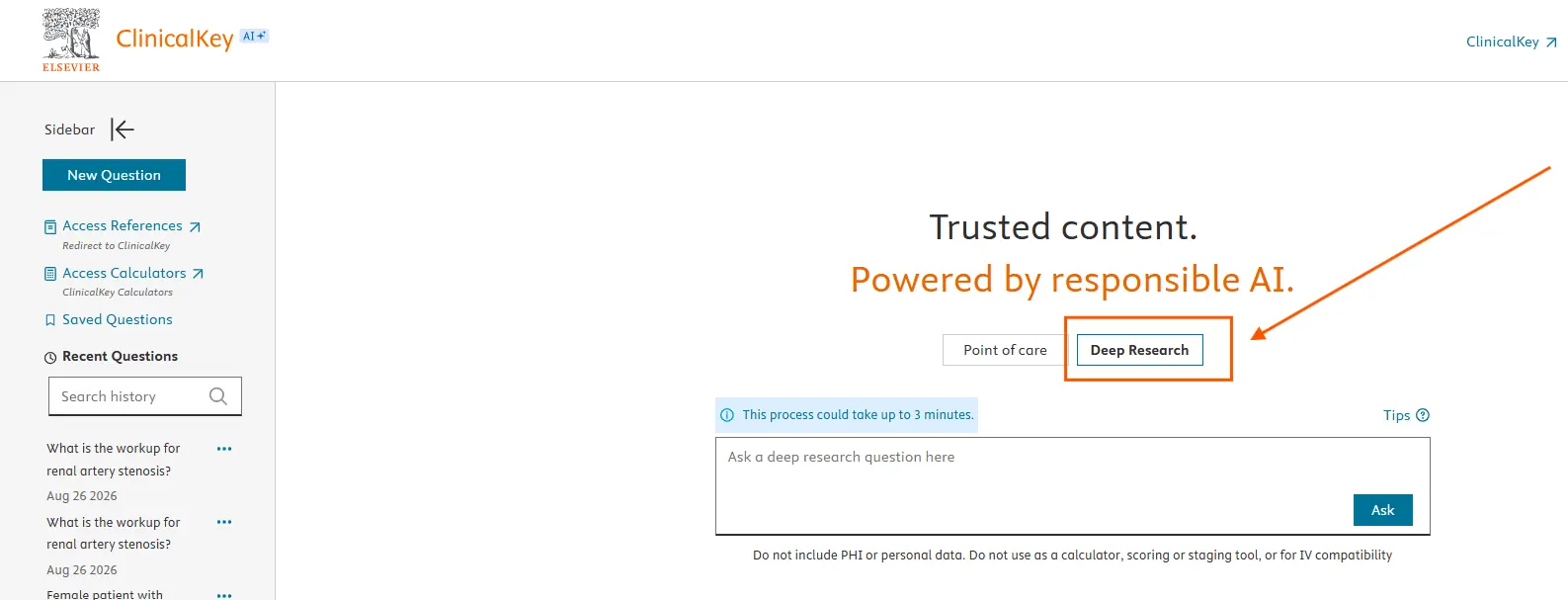
Fig. 1. ClinicalKey AI Deep research operating mode
The challenge: Evidence needs to extend beyond the point of care
Healthcare professionals work in one of the most information-intensive environments in the world. At the point of care, clinicians need decision support they can trust in the moment, allowing them to stay focused on the patients they care for rather than the search behind the answer. ClinicalKey AI was designed to meet this need by delivering trusted, evidence-based answers quickly and efficiently.
But the need for evidence does not end at the point of care. Many questions require deeper exploration, broader context and a more comprehensive understanding of the available literature.
Clinical work extends well beyond the immediate consultation. Physicians prepare lectures and conference presentations while researching complex cases. They may need to investigate challenging clinical questions, evaluate competing treatment approaches, support multidisciplinary decision-making or seek additional evidence in preparation for a second opinion. Librarians and information specialists support these efforts through literature searches, evidence reviews, source collection and expert information services.
Whether responding to emerging evidence, addressing complex clinical scenarios or supporting strategic research and educational initiatives, both clinicians and information professionals rely on access to relevant, trustworthy information.
While their objectives and workflows differ, navigating a vast and constantly evolving body of clinical literature can be challenging when questions require deeper exploration and broader context.
The challenge is no longer simply accessing information. Healthcare professionals are faced with an unprecedented volume of literature, varying levels of evidence quality and limited time to critically evaluate and synthesize findings across multiple sources. Whether supporting patient care, education, research or organizational decision-making, turning information into actionable knowledge has become increasingly complex.
For these moments — the deeper clinical and evidence work that happens beyond the immediate patient encounter — ClinicalKey AI now offers Deep Research mode.
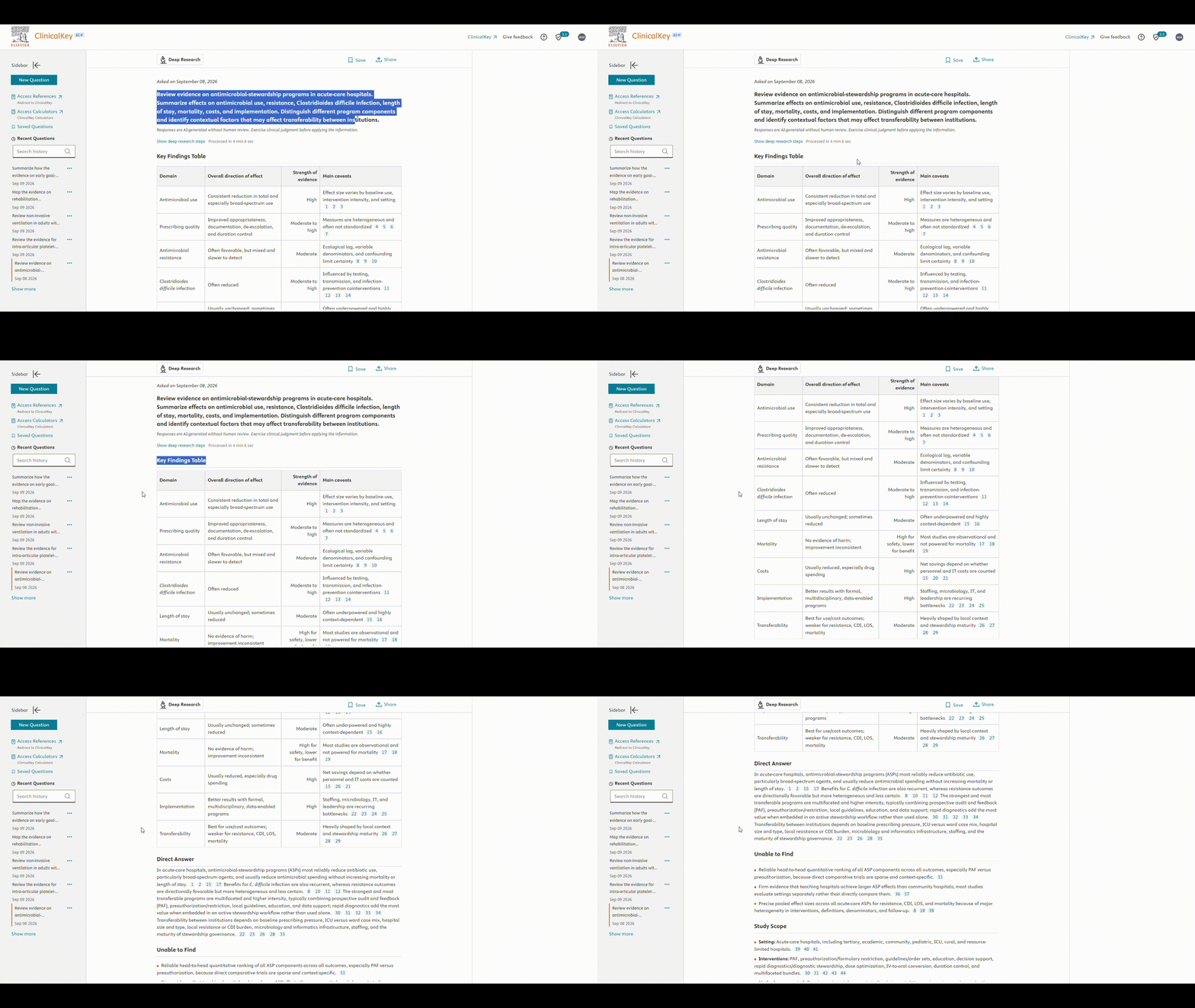
Deep Research pulls together the evidence and explains why results conflict across studies.
How Deep Research can help healthcare professionals
Activating Deep Research in ClinicalKey AI transforms the experience from answering a question to exploring a topic in depth. Rather than providing a single evidence-based response, Deep Research breaks complex questions into their component parts and conducts a structured analysis across Scopus abstract database.
The result is a comprehensive report that synthesizes the available evidence into a clear, actionable overview. Users can explore clinical questions, evaluate competing approaches, investigate emerging evidence or develop a deeper understanding of unfamiliar topics, all while maintaining visibility into the sources behind the findings.
Reports are structured to support efficient evidence review. Key findings are presented first, followed by the overall conclusion, supporting evidence, relevant limitations and complete references. This enables users to quickly assess the strength and scope of the evidence without manually reviewing large volumes of literature.
Deep Research is designed for topic-level exploration rather than patient-specific recommendations. When a query is framed around an individual patient scenario, ClinicalKey AI helps users reframe it as a broader clinical question, supporting evidence exploration while maintaining appropriate clinical safeguards.
Supporting the many roles of healthcare professionals
Healthcare professionals rarely operate within a single role. The same physician may be a care provider, researcher, educator and contributor to quality-improvement initiatives, often within the same week. Likewise, librarians and information specialists support a broad spectrum of activities, from evidence reviews and literature searching to educational and research initiatives.
Each of these responsibilities requires a different depth of evidence, level of scrutiny and tolerance for uncertainty. While some questions can be addressed with a trusted, evidence-based answer, others demand a more comprehensive exploration of the literature.
Deep Research was designed for these situations. By helping users identify relevant evidence, compare findings across sources and synthesize information at scale, it supports a level of investigation that would otherwise require substantial time and effort.
In this sense, Deep Research is not simply about finding more information. It is about helping professionals make sense of an increasingly complex evidence landscape, enabling deeper exploration without compromising rigor, transparency or trust.
A researcher from Germany's RWTH Aachen University, used Elsevier's AI solutions and had this feedback: "To get the kind of broad overview of a new topic that Deep Research can deliver would normally take me around a day. But those are days I don't have, so Deep Research propels me to a point that I couldn't have reached otherwise."
As the volume of medical knowledge continues to grow, the opportunity is not solely to access more information, but to work more effectively with it, transforming information into better knowledge, stronger research and, ultimately, better-informed decisions.
Please find below the “Use Case-Persona Library” to help you understand Deep Research functionality:
| Empty table header | Prompt | Persona | Workflow | Use Case | Why It Works | Specialty |
|---|---|---|---|---|---|---|
1 | Compare efficacy and safety of cefepime and piperacillin/tazobactam for patients with septic shock and altered mental status | Acute care | Comparative appraisal of two empiric regimens, including mortality, renal outcomes, and neurotoxicity signals | Empiric antimicrobial selection in the critically ill; antimicrobial stewardship, formulary and protocol review | Deep Research assembles RCT and meta-analytic evidence for both agents side by side, grades strength of evidence, and surfaces the competing safety trade-offs that would otherwise require reading several trials individually | • Emergency medicine • Hospital medicine • Infectious dz • Critical care |
2. | Which is better in terms of return of spontaneous circulation in pre-hospital settings, humeral intraosseous access or tibial intraosseous access? | Clinicians in prehospital and emergency settings; EMS medical directors | Comparative effectiveness of two intraosseous insertion sites on a hard resuscitation outcome (ROSC), including insertion success, flow rates, and time to drug delivery | Protocol development for vascular access during out-of-hospital cardiac arrest; EMS medical direction, resuscitation committee review, and paramedic training standards | Deep Research locates a sparse and partly conflicting site-specific literature, separates randomized from registry and observational data, and states clearly where direct head-to-head evidence is insufficient rather than overstating a conclusion | • Emergency med |
3 | How effective is PRP for knee osteoarthritis? | Outpatient | Effectiveness review covering magnitude of benefit, durability, protocol variation, patient selection, and safety | Patient counseling and shared decision-making for an intervention where society guidelines diverge and no consensus exists; guideline and policy review | Deep Research aggregates a very large reference base with DOIs, assigns strength of evidence to each sub-question, flags heterogeneity in preparation protocols as the driver of conflicting results, and explicitly reports what it was unable to find | • Primary care • Sports medicine •Orthopaedics • Rheum • Rehab • Pain |
4 | Provide a head to head comparison of the methodology used in the following trials ProCESS, ARISE, and ProMISe Trials | Clinicians in academic/ tertiary settings | Evidence synthesis and comparative analysis of clinical trial methodology. May include including study design, patient population, interventions, outcomes, statistical methods, sources of bias, and limitations. | Critical appraisal of evidence to understand why trials investigating the same clinical question may reach different conclusions and to support evidence-based clinical decisions, journal clubs, guideline development, or research planning | Deep Research systematically extracts methodological details from multiple publications, organizes them into transparent comparison tables, identifies key differences and potential sources of bias, and presents findings in a structured format that would otherwise require substantial expertise and time to compile manually. | • Emergency medicine • ICU • Infectious diseases |
5 | I am developing an ED protocol for patients with paroxysmal atrial fibrillation who are low risk for MACE and may be candidates for discharge. How should I identify these patients during their ED course? What adjunctive therapies should I consider during their ED stay and at discharge? What outcome would be most clinically relevant to measure? | Clinicians and clinical leaders in emergency/acute-care settings developing or refining an evidence-based ED protocol | Evidence synthesis and protocol development. Integrates risk stratification, exclusion criteria, clinical variables, decision scores, biomarkers, ECG findings, treatment strategies, anticoagulation, discharge planning, follow-up, and outcome selection to translate heterogeneous evidence into a practical clinical pathway. | Clinical pathway/protocol development and evidence-based disposition planning. Helps determine which patients with paroxysmal or recent-onset AF may be safely discharged, what interventions should be incorporated into the ED and discharge pathway, and which safety, utilization, and patient-centered outcomes should be measured. | Deep Research synthesizes multiple evidence types and converts them into an actionable decision framework. It identifies recurring findings across studies, evaluates risk tools and treatment approaches, and translates the synthesis into a structured ED algorithm with discharge criteria, therapies, follow-up requirements, and measurable outcomes. | • Emergency medicine • Cardiology •Electrophysiology • Acute care/clinical pathway development |
ClinicalKey AI Deep Research use case and prompt examples. Use these prompts to get started in ClinicalKey AI — try it free for 90 days. Learn how to write effective prompts in our complimentary Gen AI Academy for Health
Grounded in trusted clinical content
The value of any AI-generated synthesis depends on the quality of the information it is built upon. Confidence in the output can only be as strong as confidence in the underlying evidence.
Deep Research draws on the same trusted clinical content foundation that powers ClinicalKey AI, including evidence-based clinical guidelines, peer-reviewed journal literature, drug monographs and expert clinical reference content curated for relevance and quality.
Unlike general-purpose AI tools, Deep Research is specifically designed for healthcare and academic workflows. It incorporates patient-safety guardrails, de-identification capabilities, transparent citations and evidence traceability throughout every report. Users can move seamlessly from a synthesized finding to the original supporting sources, making it easier to evaluate the evidence and apply professional judgment.
ClinicalKey AI Deep Research demo

ClinicalKey AI Deep Research demo
This combination of AI-powered synthesis and trusted content is what distinguishes Deep Research. Rather than relying on information gathered from across the open web, it is built on a curated clinical knowledge foundation trusted by healthcare organizations around the world.
ClinicalKey currently supports clinicians, educators, researchers and healthcare institutions in more than 80 countries. Deep Research extends this foundation by helping users not only access evidence, but also understand, compare and synthesize it more efficiently, supporting informed decision-making across clinical practice, education and research.
Read what our customers say about ClinicalKey and ClinicalKey AI — Dr. Emilie Strzoda, Internal Medicine resident in Germany, shared: "ClinicalKey AI has significantly accelerated my decision-making process and improved my diagnostic confidence."
One platform supporting different evidence needs
Deep Research reflects a broader approach that Elsevier is taking across its AI-powered solutions: helping professionals move beyond finding information to understanding and applying it. Whether supporting clinical decision-making, research, education or evidence services, the goal is the same: to make it easier to navigate complex information and develop a deeper, evidence-based understanding of important questions.
Within ClinicalKey AI, this complements the existing experience. Some questions require rapid access to trusted answers. Others demand deeper exploration, synthesis and critical evaluation of the evidence. Together, these capabilities support the diverse ways healthcare professionals engage with information throughout their daily work.
As healthcare knowledge continues to expand, the challenge is no longer simply access to information, but making sense of it efficiently, transparently and responsibly.
Dr. Ximena Alvira, is a physician-scientist and Clinical & Research Manager at Elsevier, focused on the intersection of clinical evidence, health technology strategy, and global medical education. She holds a medical degree from Universidad El Bosque (Colombia) and a PhD in Neuroscience from Universidad Autónoma de Madrid, with clinical training at Massachusetts General Hospital and Beth Israel Deaconess Medical Center.
At Elsevier, she supports health institutions in the responsible adoption of ClinicalKey AI — advising on clinical governance, structured training, and real-world impact evaluation. She played a key role in the localisation of ClinicalKey for Spanish-speaking markets, contributing as a knowledge representation specialist and leading long-term training and competency development programmes for clinicians. She also leads the Health Research Development Program, a growing global initiative designed to strengthen research capacity and advance ethical, rigorous evidence generation. She has additionally served as clinical lead for national guideline development in Saudi Arabia, collaborating on the design of evidence-based clinical standards.
Knowledge specialists, librarians, researchers and educators play a critical role in helping healthcare organizations transform information into actionable knowledge. As the volume of scientific literature continues to grow, the challenge is no longer finding evidence, but efficiently evaluating, synthesizing and applying it. Deep Research helps support this work by making evidence exploration more accessible, transparent and scalable while preserving the rigor that evidence-based practice demands.
Ximena Alvira, MD, PhD, Clinical & Research Manager, Elsevier
Dr. Neal Kinariwala is an informatics-boarded emergency physician focused on the governance, partnerships and workforce development required to deploy AI responsibly at scale. As entity Chief Medical Informatics Officer for Pennsylvania Hospital (Penn Medicine), he led EHR and clinical decision support governance, convening multi-stakeholder coalitions to align on data sharing, workflow integration and frontline adoption. Now at Elsevier, he drives clinical solution growth and advances national visibility for informatics as a discipline. He continues to serve patients working clinically at the Veterans Affairs Medical Center. Neal also co-leads the Physician Innovator Series at the University City Science Center in Philadelphia. The series fosters conversations on how physicians can grow into digital health, health-tech and venture capital roles, mentoring the next generation of physician-leaders.
Clinicians are increasingly asked to make an operational case, not only a clinical one, around length of stay, avoidable admissions or utilization. Those cases live or die on whether the underlying evidence is defensible. Deep Research compresses the evidence assembly into something a clinical lead can realistically do alongside clinical commitments and produces a report that the quality and finance functions can read as easily as the physicians can.
Neal Kinariwala, MD, Physician Executive, Elsevier