
Revolutionize the way you engage students with course content and measure progress in your program

Unfortunately we don't fully support your browser. If you have the option to, please upgrade to a newer version or use Mozilla Firefox, Microsoft Edge, Google Chrome, or Safari 14 or newer. If you are unable to, and need support, please send us your feedback.

Published: April 29, 2026
As healthcare complexity increases and expectations for clinical judgment continue to rise, nursing programs must rethink how they prepare students for practice. This on-demand webinar brings together experienced educators and newly graduated nurses to explore how nursing education has evolved and what must change to meet the needs of today’s learners.
Through a cross-generational dialogue, faculty and novice nurses examine the shift from traditional, content-heavy instruction to approaches that emphasize clinical reasoning, prioritization, and real-world decision-making. The discussion highlights the importance of aligning classroom learning with simulation, lab experiences, and clinical practice to support readiness for the Next Generation NCLEX (NGN) and modern healthcare environments.
Watch the full webinar recording below.
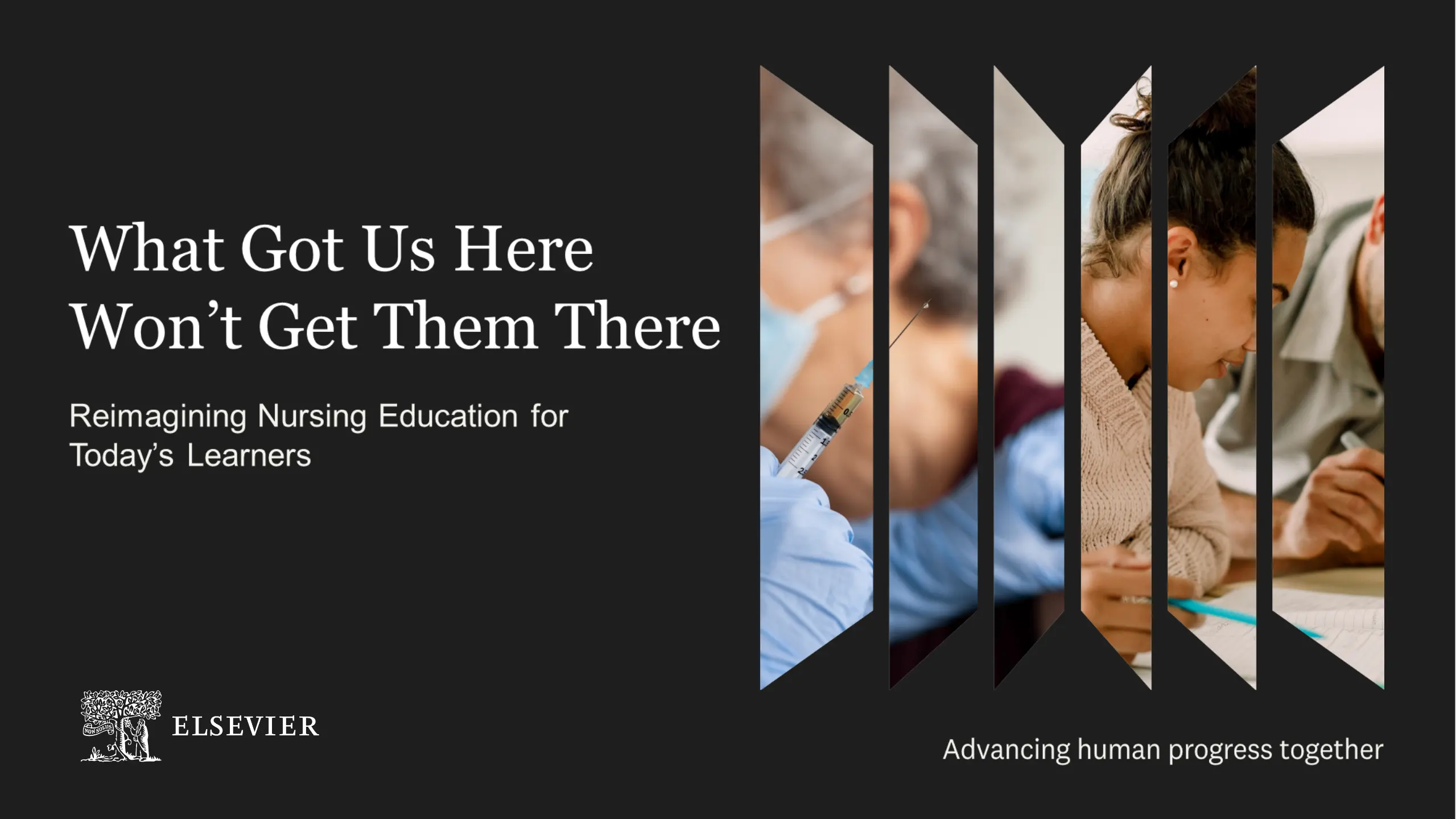
Nursing education has transitioned from task-based and lecture-driven models to more integrated, competency-based approaches. With the implementation of NGN and the Clinical Judgment Measurement Model (CJMM), faculty are increasingly focused on developing students’ ability to recognize cues, analyze data, prioritize care, and evaluate outcomes.
Panelists emphasized that today’s learners require opportunities to apply knowledge in context through case-based learning, simulation, and guided clinical experiences rather than relying solely on memorization. Simulation and skills labs have evolved from isolated skill practice to immersive, scenario-based learning environments that support decision-making and reflection.
Clinical education has also shifted toward real-time coaching and structured mentorship, helping students translate knowledge into action while developing confidence and adaptability in complex care settings. These changes are essential to bridge the gap between academic preparation and the realities of practice.
To better prepare students for practice, educators can implement targeted strategies across all learning environments:
Didactic: Use case studies, unfolding scenarios, and NGN-style questions to promote clinical reasoning
Lab and Simulation: Integrate skills within realistic patient contexts and emphasize decision-making through structured debriefing
Clinical Practice: Coach clinical judgment in real time by prompting prioritization, cue recognition, and reflection
Emerging technologies, including AI-supported learning tools, can further enhance personalization and provide insights into student performance, helping faculty identify gaps and tailor instruction.
By aligning teaching strategies across classroom, simulation, and clinical environments, nursing programs can better prepare graduates who are not only successful on the NGN, but also confident, competent, and ready for practice.
Dr. Dinez Swanson Nurse Educator, Elsevier
Dr. Julie Kelly Nurse Educator, Elsevier
Dr. Hollie Moots Director of Customer Success in Nursing Education, Elsevier
Kate Bushuk Canadian Certified Nurse Educator
Susan McCoy Nurse Educator | Former U.S. Navy Nurse
Robin Wilkerson Professor Emeritus, University of Mississippi
Natalie Kelly, Mackenzie Moots, Sydney Ryan Recent Graduate Nurses
As a global leader in nursing education, Elsevier works with healthcare educators to prepare students for successful careers in nursing with world-class content and innovative learning tools and analytics to help prepare students for healthcare practice.