Description
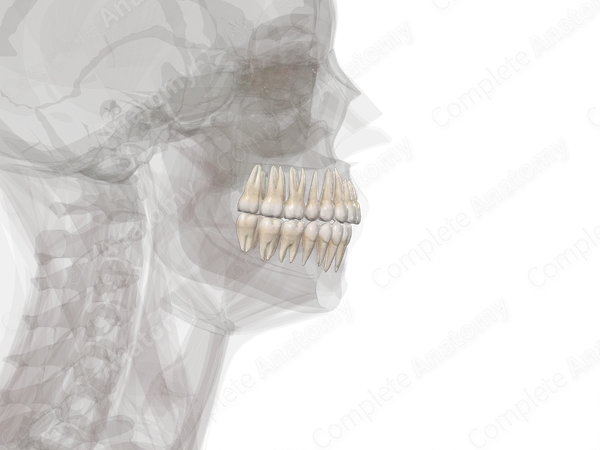
Humans develop two sets of teeth throughout their lifetime:
- the ten deciduous (primary) teeth, which begin to erupt around the sixth month after birth and begin to shed after the sixth year;
- the thirty-two permanent (secondary) teeth, which begin to erupt after the sixth year and finish erupting during early adulthood.
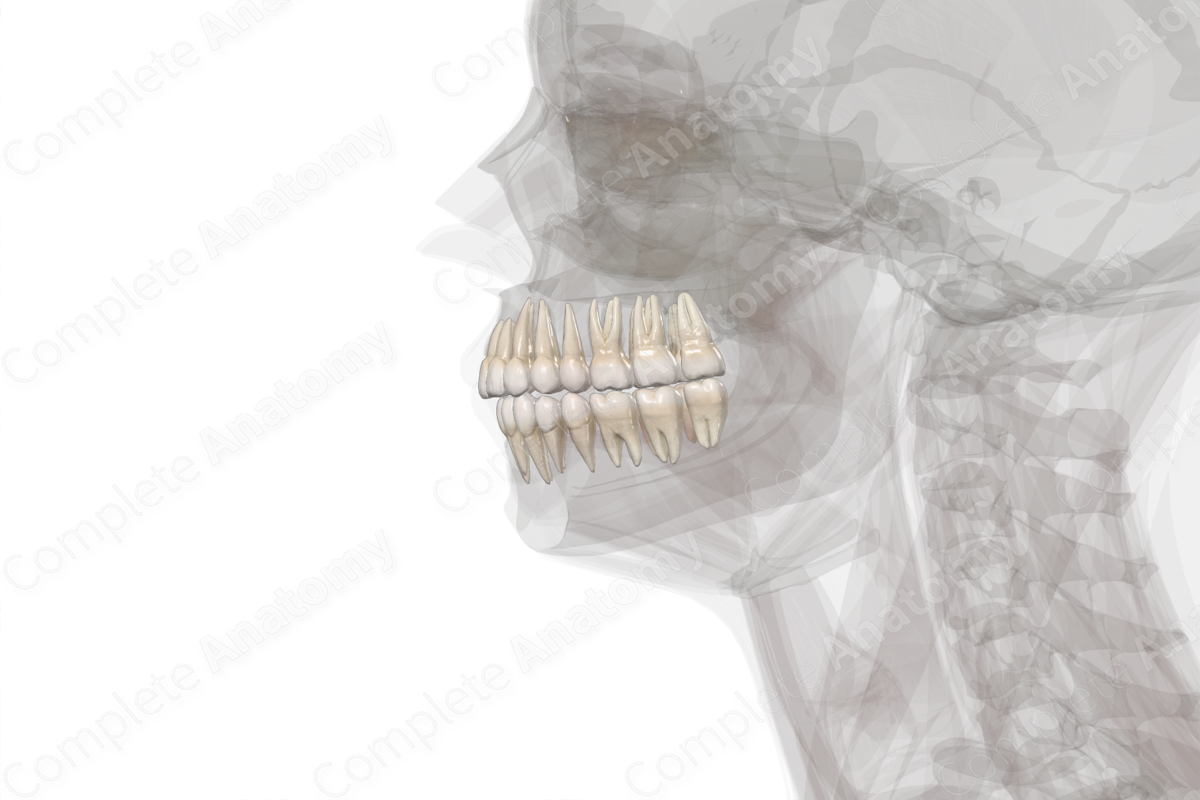
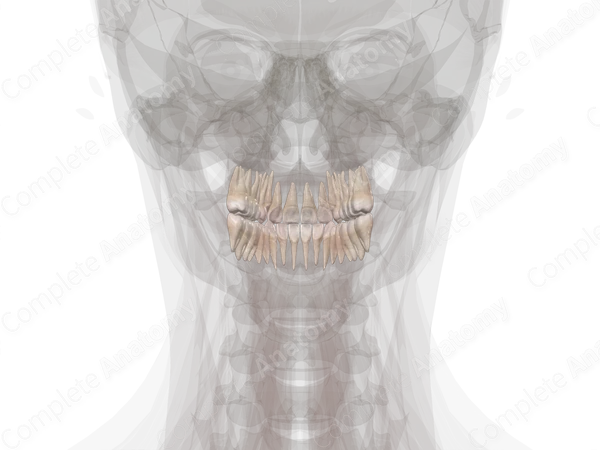
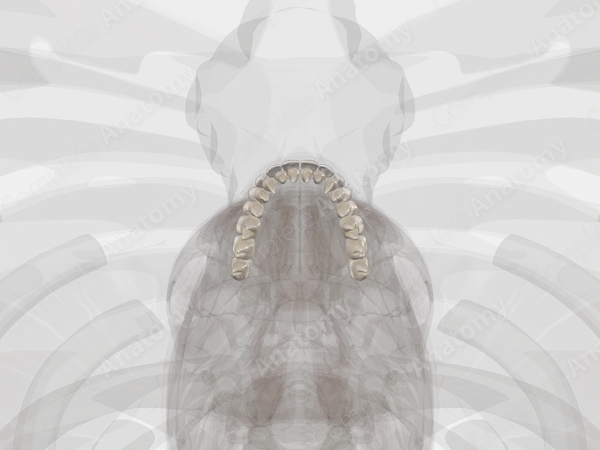
The thirty-two teeth of the adult permanent dentition are equally divided into the superiorly located maxillary dental arcade and the inferiorly located mandibular dental arcade. Each dental arcade is further equally divided into left and right quadrants.
The teeth are involved in mastication (chewing), which involves the cutting, tearing, and grinding of food. The anterior teeth also have a secondary role in the articulation of speech.
Related parts of the anatomy
Learn more about this topic from other Elsevier products
Anatomy and physiology of the teeth: Video

Master Anatomy and physiology of the teeth: structure, function, and composition. High-yield review with labeled diagrams, videos, and practice quizzes.