
Why daring to reason is an institutional responsibility
November 18, 2026
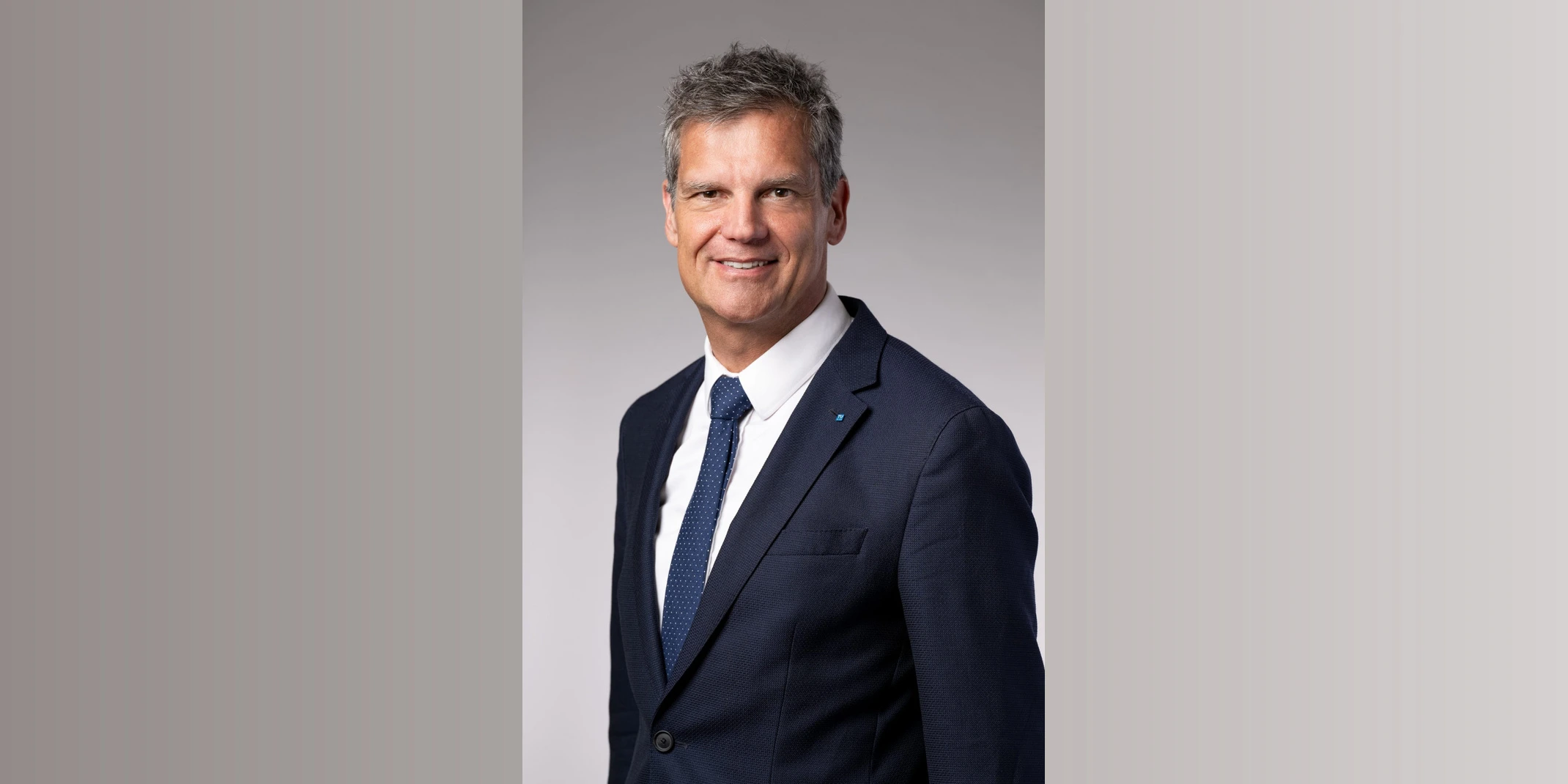
By Dr Jens Schneider, Rector, TU Wien; Vice-President, TU Austria; Co-Chair, EULiST European University Alliance
In 1784, Immanuel Kant answered the question “What is Enlightenment?” in his essay “Beantwortung der Frage: Was ist Aufklärung?” with a motto we still use today: Sapere aude — have the courage to use your own understanding. I return to that phrase more often than I ever expected to as a structural engineer. At TU Wien, we placed a version of it at the heart of our strategy: we want to be the place “where we dare to reason”.
The emphasis is on dare. Reasoning is easy when its conclusions are comfortable. It takes courage when reason leads where we would rather not go — when it overturns what we believed, what we built and what we were rewarded for believing. That courage is not a private virtue of individual scholars. It is an institutional responsibility, and I am convinced that technical universities carry a particular share of it.
Reason that has to hold
Technical universities are the places where knowledge is developed further and, together with partners in an innovation ecosystem, turned into things that work: bridges and power grids, chips and algorithms, materials and machines. Engineering is reasoning made accountable. A structure stands or it fails; a model predicts or it does not, at least with a probability that people and society are prepared to accept.
My own field taught me this in an unforgiving way. I spent much of my research life on the fracture of glass, a material that gives no warning before it breaks. Glass punishes any confidence that has not been earned through understanding. The flaw you did not look for is the one that matters. Safety in glass engineering does not come from certainty; it comes from rigorously knowing the limits of what you know, and from sound probabilistic models.
To me, that is the core of daring to reason: not the bold claim, but the willingness to keep testing your own assumptions until they either hold or break — and to keep expanding the limits of knowledge while thinking in probabilities where things remain uncertain.
An old warning, a new machine
In Plato's Phaedrus, King Thamus warns that the new invention of writing will give learners the appearance of wisdom without its substance. We hear the same warning today about generative AI. And Thamus was both right and wrong. Writing did change human memory, but it also made science, law and the university possible. My mathematics teachers said the same about the first pocket calculators in the 1980s: we would forget how to calculate, and mathematics itself would suffer. They were partly right. What many have lost is not arithmetic but a feel for orders of magnitude — the instinct that tells an engineer immediately whether a result can possibly be right. The lesson is not to reject the tool. It is to make sure that the capacity to reason stays with people, and that people know how to use the tool, understand its limits and take responsibility.
This is why I believe that AI will make universities more important, not less. A language model can produce a plausible answer, but it cannot take responsibility, be a role model or earn trust the way a teacher does — and it struggles with the leap of imagination that every real discovery requires. Educating people who can make that leap, who can judge when a machine's answer should not be trusted, and who know where they must take responsibility, is the university's main task in this century.
This responsibility does not rest with individuals alone. It is also an institutional one, and it changes what a technical university has to stand for. The questions raised by AI, by the energy transition or by biotechnology are no longer only technical. Who is accountable when an algorithm decides? What does a fair transition look like for those who carry its costs? Where should the limits lie when we can rewrite the genes of plants, animals and humans? Engineers cannot answer these questions alone. Technical universities will need the humanities and social sciences more than before — not as an ethical add-on at the end of a project, but as partners from the very first research question. In Vienna, where the Manifesto on Digital Humanism was initiated at TU Wien in 2019, we have joined forces this year with other universities in the new Vienna Center for Digital Humanism. Technology for people requires a deep understanding of people’s needs and values.
When certainty falls
I learned early how quickly certainty can dissolve. In the autumn of 1989, I was a young conscript in a supply battalion in Germany and witnessed, from close by, how a border that had defined my entire life so far disappeared within weeks. What everyone “knew” to be permanent was not. Suddenly, I could get on my bike and ride into East Germany — something we had believed would be impossible forever. Five years later, at the University of Coimbra, Portugal, I sent my first email to my uncle at Eurocontrol; his reply took three days, which seemed remarkably quick. What seemed to be a curiosity at that time has become the infrastructure of communication in everyone's life.
Both experiences shaped my understanding of what universities are for. What seems fixed can change overnight; what seems marginal can transform the world. Universities must be prepared for both. They must neither cling to what was once certain nor dismiss what is still small.
Imagination comes first
When I was inaugurated as Rector of TU Wien in 2023, I began with a simple conviction: at the beginning, there is always human imagination. Few have expressed this better than Robert Musil, one of the great Austrian novelists and an engineer by training. Musil studied mechanical engineering in Brno, earned a doctorate in philosophy in Berlin with a thesis on the theories of the physicist and philosopher Ernst Mach, and from 1911 to 1914 worked as a librarian at what is today, TU Wien. In The Man Without Qualities, he argues that if there is a sense of reality, there must also be a sense of possibility: the ability to think that everything could just as well be otherwise. A person with this sense does not only ask what is, but what could, should or must be.
This sense of possibility drives every engineer and every scientist. It is also what I mean by daring to be different: refusing to accept that the world, our technologies or our institutions must stay as they are, and having the courage to imagine — and then to reason our way towards — what does not yet exist.
What does a technical university stand for? In my inaugural speech, I described seven qualities. I call them the seven Ts.
Technology. We stand by technology and its importance for society — technology for people, not people for technology, as TU Wien has promised since its founding back in 1815.
Talent. Talent is everywhere, opportunity is not — our task is to create an environment in which talented people can grow, wherever they come from.
Tolerance. An open climate for diversity, free of any discrimination — and tolerance for ambiguity, for open questions, for ideas that are different, and for people who are.
Trust. Researchers need room for courageous decisions and the freedom to be wrong; trust creates that room, and it is what society extends to us and what we must continually earn.
Transparency. In an age of misinformation, we must show not only what we know but how we know it, including our uncertainties and mistakes.
Team. The great challenges of our time — climate, energy, health, social cohesion — cannot be solved by any single discipline, institution or country.
Truth. The constant search for truth, the honest handling of uncertainty and uncompromising scientific integrity — the T that holds the others together.
The seven Ts only work together. Truth without trust goes unheard. Trust without transparency is blind. Talent without tolerance leaves. Technology without truth becomes dangerous. And none of them can be achieved alone.
Preserve, renew, question, dare
If the seven Ts describe what a technical university stands for, the question remains what it must do. Earlier this year, invited to speak about the future of universities, I summarized my answer in four verbs. Preserve what makes a university a university: curiosity, academic freedom, autonomy and quality. Renew ourselves — our teaching, our structures and our exchange with society — before others do it for us. Question everything, including ourselves. And dare to take risks in research, in education and in how we organize ourselves. Daring is not recklessness; it is reason that refuses to be intimidated.
At TU Wien we have translated these principles into our strategy, fuTUre fit, developed in a broad participatory process with our community. Under considerable budgetary pressure, it is now being tested — and precisely when resources are scarce, we must decide clearly what we stand for and dare to set priorities.
Not alone
The title of this series could not be more fitting. No university can dare to reason on its own. At TU Wien we work closely together with our partners in TU Austria, the alliance of Austria's technical universities and tech faculties, with our European partners in the EULiST university alliance and with our global strategic partners. These partnerships are not ornaments. They allow us to share risk, combine strengths, and make diversity, European and global, a productive force rather than an obstacle.
The same applies beyond academia. Universities must be in constant conversation with industry, policymakers and citizens — of course, not to tell society what to think, but to help it think: to question, to imagine, and to find the courage to transform. This requires multilateral exchange and the ability to translate between disciplines, between cultures, and between the languages of science, of the economy and of society.
Kant's Sapere aude was addressed to every individual. Today it is also addressed to our institutions. Technical universities must keep daring to reason — even when it is inconvenient, even when it overturns what we were once sure of, and especially when it would be easier not to. And they should keep Musil's sense of possibility alive: the conviction that things could be otherwise.
Dare to reason. And dare to be different.