
Evolutions in our understanding of endocrine disrupting chemicals during pregnancy
Chicago, Illinois | 27 de setembro de 2023
Elsevier’s Molecular and Cellular Endocrinology (MCE) journal published a new special issue: Mother, placenta, and fetal health: Endocrine Disrupting Chemicals at play
We are exposed to numerous chemicals throughout our livespans. The most critical window of expsure is pregnancy, a time when not only the developing individual, but also the mother, are extremely sensitive to endocrine disruption The 7 articles contained in this Special Issueopens in new tab/window published in Elsevier’s Molecular and Cellular Endocrinology journal cover environmental and chemical exposures from conception throughout pregnancy.
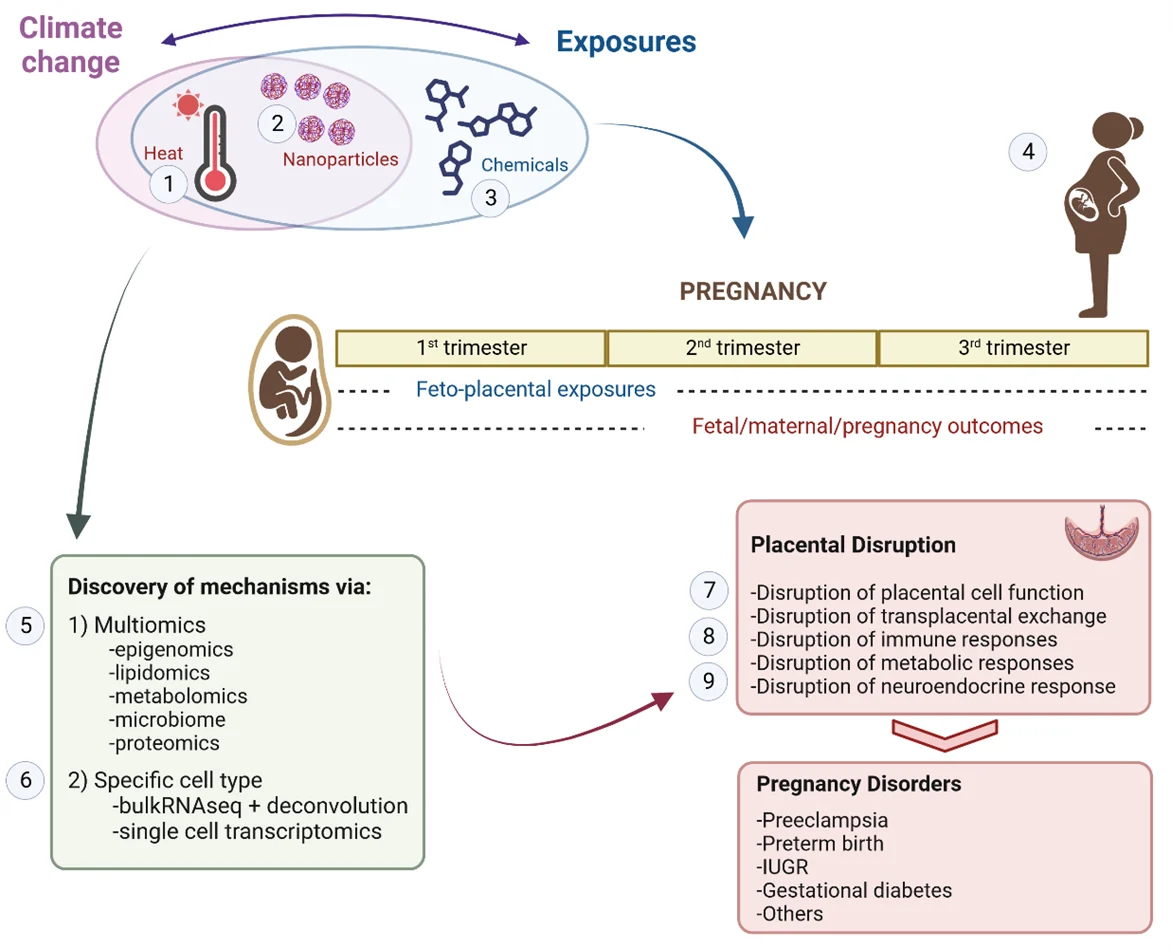
This collection of articles examines different aspects and effects of environmental and chemical endocrine disruptions during pregnancy. Its ground breaking topics pertain to: effects of temperature and stress on fetal growth, nanoparticles at the maternal-fetal interface, pregnancy related maternal physiological adaptations and fetal chemical exposure, toxicity of prenatal exposures to endocrine disrupting chemicals, toxicity and placental cells, immunological and metabolic status of women exposed to EDCs, animal studies pertaining to placenta-brain axis disruption from chemical exposure.
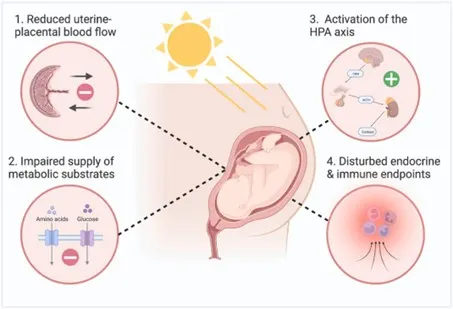
Fig 1. Illustration of putative mechanisms that may underlie associations between heat stress during pregnancy and restricted fetal growth. Ambient temperature, heat stress and fetal growth: A review of placenta-mediated mechanismsopens in new tab/window
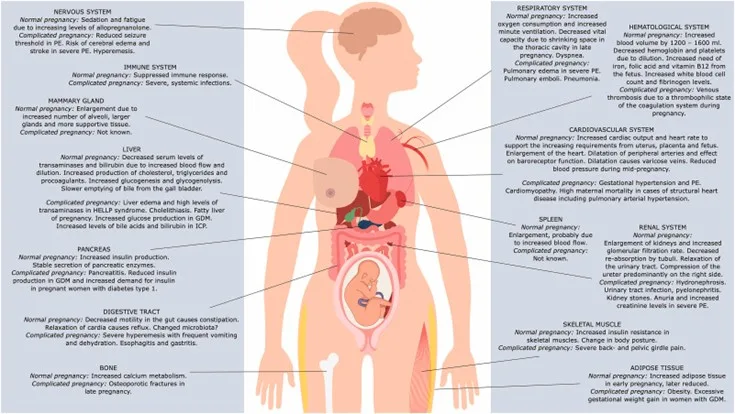
Fig 2. Overview of maternal adaptations in pregnancy. Pregnancy-related maternal physiological adaptations and fetal chemical exposureopens in new tab/window
Quote from the Comissioning Editor’s: “Pregnancy is among the most vulnerable periods in a woman’s lifetime. It is well established that environmental exposures during pregnancy can have adverse impacts on the maternal-fetal interface with effects spanning the placenta, the fetus, and the mother, at a time during which most of her organs undergo critical adaptations. Most chemicals in addition to bathing the placental bed and having a direct impact on placental function also cross the placental barrier reaching the fetus and posing a developmental risk. This Special Issue assembles a series of works that review the state of the art regarding pregnancy exposures and the impact on maternal-fetal interface that can underlie pregnancy disorders and fetal outcomes.”
This research addressing the growing need for more nuanced and complex understandings of how our bodies interact with their environments. Nothing could be more fundamental to this interaction than pregnancy itself. While these articles do not paint the entire picture of endocrine distrupting chemicals (EDC) and pregnancy, they do begin a more serious and focused dialogue that should serve as a stepping stone for future advancements in the field.
The articles contained in this special issue are:
“Ambient temperature, heat stress and fetal growth: A review of placenta-mediated mechanisms” Whitney Cowell, Natasha Ard, Teresa Herrera, Eleanor A. Medley, Leonardo Trasande (https://doi.org/10.1016/j.mce.2023.112000opens in new tab/window) Molecular and Cellular Endocrinology, volume 576, October 2023, published by Elsevier.
“Nanoparticles at the maternal-fetal interface” S. Adams, P.A. Stapleton (https://doi.org/10.1016/j.mce.2023.112067opens in new tab/window) Molecular and Cellular Endocrinology, Article in Press 2023, published by Elsevier.
“Pregnancy-related maternal physiological adaptations and fetal chemical exposure” Marie-Therese Vinnars, Marie Bixo, Pauliina Damdimopoulou (https://doi.org/10.1016/j.mce.2023.112064opens in new tab/window) Molecular and Cellular Endocrinology, volume 578, December 2023, published by Elsevier.
“Prenatal exposures to endocrine disrupting chemicals: The role of multi-omics in understanding toxicity” Margaret H. Rabotnick, Jessa Ehlinger, Ariana Haidari, Jaclyn M. Goodrich (https://doi.org/10.1016/j.mce.2023.112046opens in new tab/window) Molecular and Cellular Endocrinology, volume 578, December 2023, published by Elsevier.
“Placental single cell transcriptomics: Opportunities for endocrine disrupting chemical toxicology” Elana R. Elkin, Kyle A. Campbell, Samantha Lapehn, Sean M. Harris, ... Alison G. Paquette (https://doi.org/10.1016/j.mce.2023.112066opens in new tab/window) Molecular and Cellular Endocrinology, Article in Press 2023, published by Elsevier.
“Exposure to endocrine disrupting chemicals impacts immunological and metabolic status of women during pregnancy” Alyssa K. Merrill, Marissa Sobolewski, Martha Susiarjo (https://doi.org/10.1016/j.mce.2023.112031opens in new tab/window) Molecular and Cellular Endocrinology, volume 577, November 2023, published by Elsevier.
“Gestational exposure to FireMaster® 550 (FM 550) disrupts the placenta-brain axis in a socially monogamous rodent species, the prairie vole (Microtus ochrogaster)” William P. Marinello, Sagi Enicole A. Gillera, Yoonhee Han, Jason R. Richardson, ... Heather B. Patisaul (https://doi.org/10.1016/j.mce.2023.112041opens in new tab/window) Molecular and Cellular Endocrinology, volume 576, October 2023, published by Elsevier.
Copies of these papers are available to credentialed journalists upon request; please contact Daniel Martin at [email protected]
About Molecular and Cellular Endocrinology (MCE)
Molecular and Cellular Endocrinology was established in 1974 to meet the demand for integrated publication on all aspects related to the genetic and biochemical effects, synthesis and secretions of extracellular signals (hormones, neurotransmitters, etc.) and to the understanding of cellular regulatory mechanisms involved in hormonal control.
Sobre a Elsevier
A Elsevier é líder global em informação avançada e suporte à tomada de decisão. Por mais de um século, ajudou a avançar a ciência e a saúde para promover o progresso humano. Apoia comunidades de pesquisa acadêmicas e corporativas, médicos, enfermeiros, futuros profissionais de saúde e educadores em 170 países, fornecendo conhecimentos críticos e soluções inovadoras que combinam conteúdo científico e médico confiável com tecnologias de IA de ponta. A Elsevier promove inclusão e sustentabilidade, incorporando esses valores em seus produtos e cultura. A Elsevier Foundationopens in new tab/window apoia pesquisas e parcerias de saúde ao redor do mundo.
A Elsevier faz parte da RELXopens in new tab/window, fornecedora global de ferramentas de análise e decisão baseadas em informação para clientes profissionais e empresariais. Para mais informações, visite www.elsevier.com e siga-nos nas redes sociais: @ElsevierConnect e @ElsevierPesquisa.
Media contact
DM