
A new social contract for Higher Education - Prof Lily Kong, President of the Singapore Management University
March 17, 2026
|
5 min read
By Lily Kong
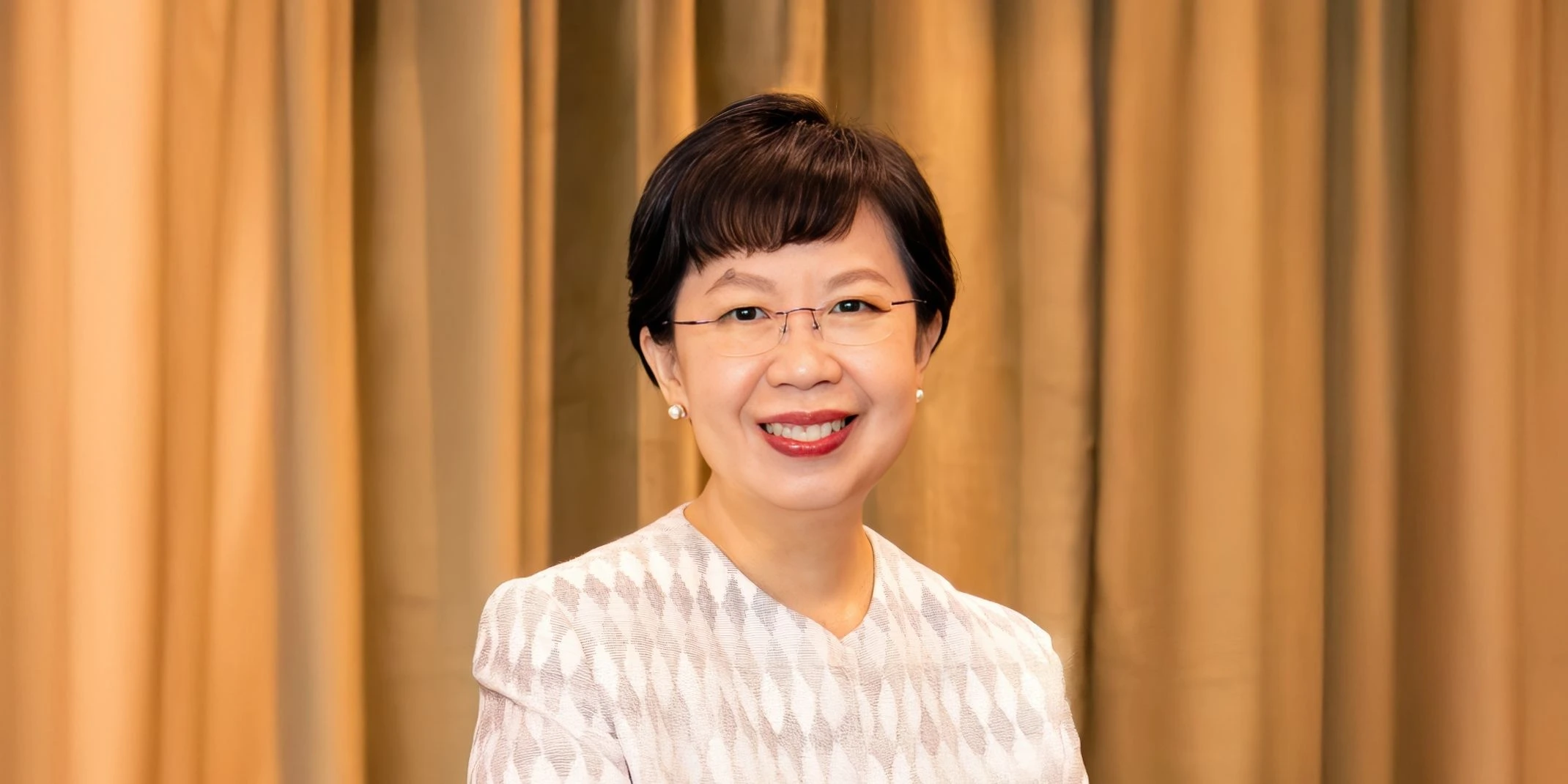
I was born in 1965, the year Singapore became an independent republic. When I entered university, higher education was still a rare privilege. Only about 8% of my cohort went on to university, and many of us were the first in our families to do so. What we learned then was expected to last a working lifetime. Education was front-loaded, careers were largely linear, and retirement marked a clear endpoint.
That world has disappeared.
Today the half-life of knowledge has collapsed from decades to years. In many fields, it is now measured in months. Those graduating in their early 20s will need to reinvent themselves repeatedly over the course of a working life that may stretch into their seventies or even eighties.
For generations, however, the social contract between universities and society has rested on a simple exchange. Universities educate the young, equipping people between ages 18 and 22 with knowledge and credentials. Society, in turn, provides funding, and jobs the graduates can step into. It is a contract designed for what Lynda Gratton and Andrew Scott call the "three-stage life" — education, then work, then retirement — with each phase following the last in orderly succession. Age equals stage, as they succinctly put it.
That assumption no longer holds.
People are living longer. Careers are less predictable. Transitions between roles, industries, and identities are now the norm rather than the exception. Singapore is already a “super-aged” society, with more than one in five citizens aged 65 and older. What we are confronting today is what many other parts of the world also face, and what still more places will soon have to tackle.
This new reality demands a new social contract. Universities can no longer function as institutions for the young only. They must become lifelong partners — institutions that accompany individuals not just at the start of their journeys, but through the multiple transitions, pivots, and reinventions that will define a 100-year life.
Why the old contract is breaking
If the first fracture in the old social contract is demographic, the second is institutional.
Despite living in an era of extended lifespans and accelerated change, universities concentrate our most intensive teaching, advising, and credentialing efforts on a narrow window early in life, assuming that learning will thereafter occur informally, episodically, or not at all.
Many universities remain anchored in models from another era: overcrowded lectures, rigid curricula, and didactic pedagogy. These approaches are increasingly ill-suited to a world in which information is ubiquitous, constantly updating, and readily synthesised by machines.
Many of us are aware that this model no longer fits. In a hundred-year life, individuals will move through multiple roles and careers, often across sectors and disciplines. Yet many professionals shaping our societies today — judges adjudicating cryptocurrency disputes, policymakers regulating AI — were trained decades earlier, in very different contexts. Knowledge and skills acquired in one’s twenties cannot plausibly sustain a working life that now extends far beyond the age at which retirement was once set, often as early as 55.
The consequences are becoming harder to ignore. In the US, public confidence in higher education fell from 57 per cent in 2015 to 36 per cent by 2024. Though there are recent signs of modest recovery in the Gallup findings, the broader trend remains troubling: the share of Americans who consider a college education "very important" has halved over the past decade. In the UK, universities have been described as part of a "crumbling" public infrastructure, with forty per cent of institutions projected to be in deficit. Across the developed world, questions about relevance, value, and graduate preparedness have grown sharper — even as expectations of societal contribution have risen.
Singapore has, so far, been fortunate. Trust in education remains high, and government investment continues. But we should not assume immunity. As our society ages and resources stretch across competing priorities, the case for higher education will need to be made with renewed clarity and conviction.
At its core, this is not simply a crisis of reputation or resources, but a crisis of fit. Universities were never designed to accompany individuals across long, non-linear lives marked by repeated transitions. Their structures, incentives, and pedagogies reflect an era in which education was a one-time investment and intervention rather than a lifelong relationship. If the old contract is fraying, it is time to forge a new one.
What would a university designed for the hundred-year life look like? It will need to differ from the traditional model in at least three fundamental ways.
From pedagogy to andragogy
First, universities would need to master not only pedagogy — the art of teaching children — but also andragogy, the art of helping adults learn. This distinction matters. Adult learners bring experience, seek relevance, and have limited time and more responsibilities. They are not "students" in the traditional sense; they are workers who have chosen—or have no choice but— to learn.
Designing for this reality requires modular pathways, stackable credentials, and flexible delivery. It also demands a willingness to relinquish some institutional control: over when learning takes place, who determines what learning is most needed, and how learning is enabled. This represents a significant shift for universities accustomed to fixed cohorts, professorial authority, and didactic styles.
Beyond cognitive intelligence
For too long, higher education has focused almost exclusively on intellectual development — comprehension, reasoning, analysis — while treating everything else as extracurricular. Yet what the 100-year life demands are precisely in those capacities that have received less formal attention: what is interpersonal, intrapersonal, and the experiential.
Interpersonal intelligence — the ability to read others, to collaborate across cultures and generations — cannot be cultivated through lectures alone. It requires immersion: living alongside difference, working in diverse teams, navigating unfamiliar environments. Intrapersonal intelligence — self-awareness, emotional resilience, the capacity to chart one's own path — is equally critical, and well cultivated beyond the classroom.
Resilience, in this context, is not merely about counselling services after a crisis. It is about deliberately creating environments where friendships are forged, mentoring relationships develop, and wellness practices become habitual. It means facilitating crucible experiences — transformative encounters that reshape identity and deepen self-knowledge. A semester abroad, an internship in an unfamiliar sector, a community project that stretches one's assumptions: these are not add-ons. They are central to preparation for a long life of transitions.
But the activity alone is not learning. It is the self-reflexivity that turns activity into learning, then into valuable experience. This is the current gap in most universities.
A university in practice
What does it look like, in practice for a university to design for the 100-year life? At my own institution, we launched SMU Academy in 2017, which now serves some 36,000 learners annually in short courses and professional programmes — more than triple our full-time undergraduate population. More recently, we became the first among our public universities to offer lifelong career support to all alumni: structured coaching, networking, and guidance available not just for the first job, but at any stage of a career.
The response from alumni has been instructive. They are asking about career pivots, industry transitions, retrenchment, upskilling and international mobility. These are the realities of navigating a longer and more uncertain working life. Yet most university career services are typically designed and resourced to support only first employment.
This brings us back to the new social contract in action. When designed well, lifelong learning can be financially sustainable and intellectually generative. It can strengthen universities’ social compact while also supporting research and undergraduate education.
The humanity imperative
There is a quieter paradox here. Just as technology advances at breathtaking speed, the humanities have steadily retreated from universities. Enrolments in fields such as English and history have fallen sharply — by roughly a third in the United States over the past decade. Governments label humanities degrees "low value", perhaps even insufficiently aligned with labour market needs.
Yet the logic should run the other way. The humanities teach us what it means to be human: empathy, ethical judgment, imagination. Through literature and history, we witness the tenderness of love and sacrifice, and the viciousness of ambition, the pain of loss and the possibility of redemption. These are precisely the capacities that machines cannot replicate.
Modern medicine extended life expectancy dramatically — but sometimes lost sight of what makes life worth living. Education risks a similar error: we may prepare people for longer careers without asking what makes a longer life meaningful. Universities must equip graduates not only with skills for work, but with the wisdom and relationships that sustain a life across many chapters. And we face not only multiple careers, but multiple reckonings with identity, purpose, mortality and meaning. Remaining employable, without having a life worth living is an impoverished ambition. The world demands deeply skilled workers, but even more urgently it needs deeper humanity.
Conclusion
At 75, Professor Rafael Bras reflects that he can still "do a day's work outside on the farm" and "read and write technical papers." He embodies the promise of an extended productive life. But he also noted, with characteristic honesty: "I won't be able to do those things forever."
This is the reality universities must now confront. The question is not whether lives will grow longer — they will. The question is whether our institutions will evolve to make those longer lives meaningful, productive, and dignified.
The new social contract asks something different of universities: not to deliver education as a one-time intervention, but to remain present across a lifetime of transitions. We failed to imagine that the lifetime itself would become so long. Societies that provide funding must recognise that such transformations require institutional experimentation and different metrics of success. Individuals must embrace learning as the rhythm of a 100-year life.
“Learn, relearn, unlearn, and learn again” is not a new idea. In 1936, Robert Maynard Hutchins wrote that the purpose of education is "to prepare the young to educate themselves throughout their lives." What was wisdom then is urgency now. The 100-year life is no longer a distant prospect. It is already here. And universities must be ready.
This article is from the Not Aloneopens in new tab/window newsletter, a monthly publication that showcases new perspectives on global issues directly from research and academic leaders.
Contributor
Lily Kong
President
Singapore Management University