
Returning to the faculty: Leadership from a new vantage point
April 15, 2026
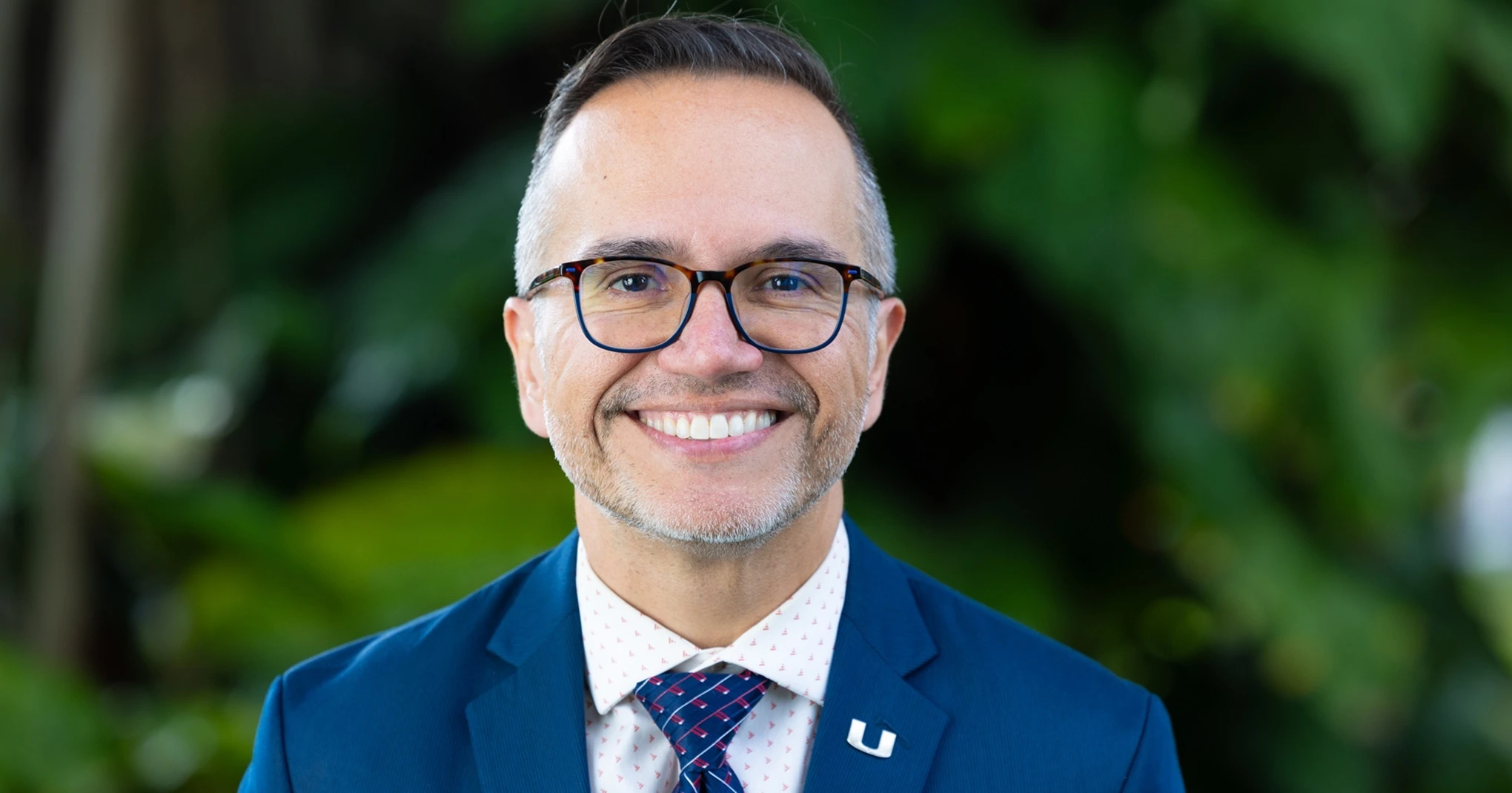
By Dr Guillermo (Willy) Prado, PhD
Transitioning from an executive leadership role in higher education to a faculty position involves redefining influence - from institutional strategy and decision-making to direct impact through teaching, scholarship, and mentorship. This shift requires recalibrating identity, authority, and daily work rhythms while drawing on leadership experience to enrich the classroom, contribute to shared governance, and advance the academic mission from a new vantage point
The moment of transition
My first day back as a faculty member offered a striking contrast to life as Provost. In that role, an eight-hour calendar of meetings was routine, often followed by evening work to catch up on decisions and correspondence. As a faculty member, the experience was very different.
I had three meetings. The day began with my research lab - an energizing way to start the day. I then met with a former PhD student, now a colleague, followed by a meeting with collaborators on an NIH-funded center. In between, I worked on service for the National Academy of Medicine, of which I am a member.
I also had lunch with a colleague I had not seen or spoken with in over a year, something the pace of leadership rarely allowed. I closed my laptop shortly after 5 p.m., a much more reasonable end to the day than what had become routine as Provost.
The contrast was clear. It also underscored something important: the nature of influence changes, but its value does not.
Redefining influence
Moving from an executive leadership role to the faculty requires redefining influence. In senior leadership, influence is often exercised through institutional strategy, major decisions, and the allocation of resources. As a faculty member, influence moves closer to the core academic mission - teaching, scholarship, research, and mentorship.
This transition requires recalibrating identity, authority, and daily work while applying leadership experience to enrich the classroom, strengthen research and scholarship, contribute thoughtfully to shared governance, and advance the academic mission from a different vantage point.
One key adjustment is resisting the instinct to lead every discussion. After years in executive roles, guiding conversations and shaping outcomes can become second nature. As faculty, it is important to allow department chairs, deans, and other leaders to lead. Letting go of positional authority is part of the transition.
This does not mean withholding experience or insight. It means learning when and how to offer it. Often, the most effective contributions occur in private conversations—providing perspective and support while respecting others’ roles..
Recalibrating professional identity
The pace of work changes as well. For those accustomed to the relentless rhythm of meetings, decisions, and sustained pressure, the transition can feel unfamiliar at first.
Faculty life rarely involves the daily crises that accompany executive leadership. There are fewer meetings and fewer simultaneous demands from boards, governance bodies, donors and senior administrators.
Instead, work follows different cycles. Research agendas unfold over months and years, and for many faculty members the calendar becomes structured around grant cycles, scholarly deadlines, and the academic semester. Six months after returning to the faculty I have submitted three NIH grants as principal investigator and expect to submit two more later this year. The workload remains substantial, but the cadence is fundamentally different.
The texture of daily work changes, too. Interactions with students again become central, whether through mentoring, supervising research, or teaching in the classroom. These exchanges are intellectually stimulating and often deeply rewarding. Faculty life also provides space for intellectual solitude, an essential ingredient for scholarship in many disciplines. And, perhaps most importantly, there is room for something often scarce in executive leadership: time for reflection and personal balance.
Leadership experience as an asset
Although the form of influence changes, leadership experience remains an asset.
Most academic leaders begin in the same place: teaching, conducting research, mentoring students, and - depending on the field - serving communities through professional practice.
Executive leadership roles are typically time limited. Faculty roles, by contrast, are enduring. Maintaining a direct connection to the academic mission during administrative service can be critical to a successful transition back to faculty life.
For me, the transition was energizing because it meant returning fully to the work that drew me into academia in the first place: conducting research that can improve community health, particularly in the region I call home - South Florida - while also contributing to knowledge at the national level.
Throughout my time in central administration - first as Dean of the Graduate School, then as Vice Provost for Faculty Affairs, and later as Interim Provost - I made a deliberate effort to stay close to the mission. I co-taught a doctoral-level course and continued leading my NIH-funded research program. I met weekly with my research lab, oversaw studies, and continued publishing manuscripts.
Even during more than two years as Interim Provost, I remained engaged in externally funded research, mentored doctoral students, and supported early-career faculty by serving as a mentor on NIH fellowship and career development grants that were eventually funded and helped launch their careers.
Those connections made the return to faculty both natural and rewarding.
Challenges in the transition
For others, the transition may be more difficult.
Some academic leaders spend many years in executive roles or enter administration later in their careers. If their primary passion lies in research and scholarship but those activities were paused during their administrative service, returning to them may require rebuilding momentum.
Fields evolve quickly. Research questions change, methods advance, and scholarly conversations move on. Returning faculty may ask: How has the field evolved? Does my research agenda need to shift? Am I ready to mentor doctoral students again? Do I want to rebuild my research program?
These questions highlight the importance of remaining connected , to scholarship and mentorship while serving in administrative roles.
Contributing from a new vantage point
Returning to the faculty also offers a new vantage point on the university.
From the Provost’s office, one sees the institution in panoramic form: strategic priorities, fundraising goals, enrollment trends, and the broad mission of each school. The day-to-day operational realities of schools are less visible.
Faculty life provides a closer view. One reconnects with the remarkable work colleagues are doing and gains a deeper appreciation for the challenges faculty and students navigate daily.
That perspective also reveals opportunities - to improve processes, strengthen collaboration, and enhance the experience of both faculty and students. Leadership experience can help identify these opportunities and contribute constructively to the academic community.
Closing
Both roles - executive leader and faculty member - are rewarding in different ways. I valued the opportunity to serve in executive leadership and help shape institutional strategy. At the same time, after 10 years in central administration, I am glad to return directly to the academic mission - the reason I entered academia.
Leadership in higher education does not end when one leaves the executive suite. It simply changes scale: from institutional strategy to the formation of minds, the mentoring of scholars, and the pursuit of research that improves lives.
One lesson stands out: Academic leaders should remain connected to the mission while serving in administration. Teach. Mentor. Publish. Pursue external funding.
Those connections sustain the work that defines the university - and make the eventual return to faculty life not only smoother but deeply fulfilling.
Contributor
DG(PP
Dr Guillermo (Willy) Prado, PhD
Distinguished University Professor Associate Dean for Research Affairs School of Nursing and Health Studies University of Miami