
Realizing the potential for research data management as a core library service
May 7, 2026
By Susan Jenkins

Three librarians who participated in a recent data services program explain how the knowledge they’ve gained is benefiting both them and their institution
Research data management (RDM) support has expanded in recent years as the rise of both funder’s data reporting requirements and open science initiatives have driven the need for centralized, in-house expertise in data management. There are signs that institutional attitudes are evolving beyond simply fulfilling data sharing requirements to a growing awareness of data management as an integral part of the research lifecycle.
This attitude shift coincides with the efforts of academic libraries who recognize the strategic value of developing RDM practices for their institutions. Libraries are well-positioned to offer this expertise: the underlying principles of information literacy and knowledge integrity that inform much of their work also underlie good RDM practices.
While research data already encompasses a rich and nuanced landscape, in the last three years, the increased use of AI technologies in research, including GenAI, has added a new dimension. As a result, RDM also needs to consider how AI influences stewardship of research data.
What is 'research data' and why is it important? The term generally refers to the results of observations or experiments that validate research findings, but which aren't published as part of a journal article. Research data can include raw data, processed data, software, algorithms, protocols, methods and materials.
The past few years have seen rapid growth in the appetite for making research data publicly available - in other words 'open'. This has been led, in part, by mounting support for open science and the reuse of data, concerns about research integrity, and the launch of initiatives such as the FAIR principles, which seek to make digital outputs Findable, Accessible, Interoperable and Reusable. At the same time, many want to see researcher evaluation expand beyond article and citation counts to include factors such as societal impact, and their support of open science - including open research data.
Professional development is an important way that librarians can acquire the skills to offer RDM services. In this article, we hear from three US-based librarians who recently completed the free data services education program developed by the Research Data Management Librarian Academy (RDMLA)opens in new tab/window and its partners.
The Data Services Continuing Professional Education (DSCPE)opens in new tab/window program, which is funded by Elsevier, helps early-to-mid career working librarians develop the skills needed to provide data services. Over 10 weeks they participate in interactive online sessions and consolidate their learning through completing a capstone project with a mentor.
Meet the 2025 DSCPE cohort participants we interviewed
Coryn Millander is a Research Librarian at the Southwest Research Instituteopens in new tab/window since 2024, following a career switch from a research career.
Motivation for taking the course: "My background is in hard science research, so data management and data sharing are all things I'm familiar with, but as a researcher. I saw the DSCPE program as an opportunity to learn more about RDM through the lens of a librarian. “

Coryn Millander
Brittney L. Thomas is the Assistant Director for Research & Data Education at the Ruth Lilly Medical Library (RLML) at the Indiana University School of Medicine (IUSM)opens in new tab/window. Ms. Thomas leads the Ruth Lilly Medical Library Research team, coordinating library services and cultivating partnership to support IUSM research activities.
Motivation for taking the course: "Right before I joined [the library], the current Data Services Librarian left for another career opportunity, and I had to step into that role as well. The DSCPE was an opportunity for me to level up my knowledge and experience on the subject quickly while I hit the ground running with my new role."
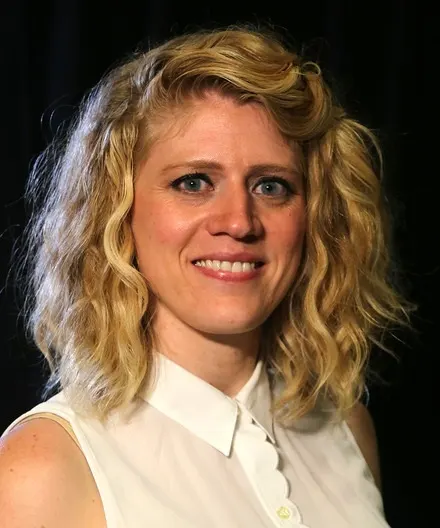
Brittney L. Thomas
Xuan Zhou, Ph.D. is Data Curation Specialist in the Research & Data Services department at Texas State Universityopens in new tab/window
Motivation for taking the course: "Although I had been working in research data support and data curation, my training did not come through a traditional library school program. Instead, I built my knowledge through hands-on work, collaboration with researchers, and responding to emerging funder and publisher requirements. This gave me practical experience but also left me aware of gaps that a structured curriculum could help me fill."

Xuan Zhou, Ph.D.
Discovering new insights and perspectives
The librarians gained more than the knowledge the program and their capstone projects offered. They also broadened their perspectives with ideas they can apply alongside their new skills.
They learned from each other’s experiences
Xuan appreciated her peers’ ideas for practical tools that support consultations, such as “creating lightweight, visual workflows, using more structured templates, and breaking large guidance materials into modular pieces researchers can digest easily. These ideas helped me broaden my toolkit and rethink how I design services, so they feel accessible and scalable.”
They gained the confidence and language for constructive conversations with stakeholders across campus
Brittney, whose capstone project focused on communicating research impact through data visualization, came away with a much better grounding in what is possible with today’s tools. "It's been very useful to have this understanding and skill set when having conversations with leadership about what we may be able to support."
And they’re better prepared for the future
For Coryn, seeing how fellow participants were organizing around AI was instructive. “How you answer a question about AI will likely be different from one week to the next. Between the time I ended this program (December 2025) and I started building a training on prompt writing (February 2026), the way prompt writing looks in AI tools has changed! There isn't room to become stagnant, especially when it comes to AI."
5 tips for growing your library’s research data services
The librarians all came away from the program with insights that can benefit other libraries – here they share their top ideas.
1. Understand the existing RDM infrastructure gaps at your institution
Coryn’s perspective on the importance of RDM shifted tremendously through the training. “Because our library is a special library - somewhere between an academic and corporate library - we do not have established RDM practices like what you might find at an academic institute (e.g., data management planning, repository services, and data curation). There’s a lot of room to grow and evolve our services.”
2. Look for quick wins
Xuan suggests “create one small, easy‑to‑use RDM tool, like a short checklist or template, and share it with your library colleagues first. It gives everyone a common starting point, builds confidence, and makes it much easier to offer clear, consistent support when researchers come with questions.”
3. Have conversations with researchers and other stakeholders about the value of data for their objectives
Brittney encourages libraries to see their data as a valuable resource for leadership: “Data commonly collected in academic libraries can be used to create a variety of graphics, visualizations, reports and dashboards using tools like Power BI. Obtain buy-in from stakeholders on what they want to see and ensure that the data collected aligns with these needs. Create impact stories by mapping available data to those institutional goals to identify what you can say and what gaps there might be.”
4. Leverage training to establish resources for researchers and fellow librarians
Coryn’s experience helped her library begin to offer a new platform of services. "I turned my final project into a series of AI trainings and workshops for staff” which included sessions on specific AI research tools, prompt/query writing, and institutional AI policies.
This led to an institutional trial of research-specific AI tools, which in turn “opened the door for our library to build an AI Resource Center (ARC) website directly supporting staff using AI.”
5. Seek mentors to help you or your staff acquire skills
Brittney notes “My appreciation for librarians who work with data in this way has grown exponentially because of this experience. It’s not an easy technical skill to learn. Give yourself the time and know there are so many willing mentors out there.”
Applying new skills through mentored projects
Each participant in the DSCPE completes a 50-hour capstone project – an essential aspect of the program where they acquire and consolidate their new skills. Participants are paired with a mentor from another US institution based on their project theme within RDM.
Coryn’s capstone – illuminating the use of GenAI in research
Coryn was partnered with Sara Samuelopens in new tab/window at the University of Michigan to explore the use of GenAI throughout the data lifecycle. “Our goal was to understand when AI is/is not useful and appropriate/not appropriate for specific tasks.”
She and Sara began with a literature review that analyzed the use of AI for data management and data sharing tasks.
“The resulting papers were divided into 10 major themes, among which Workflow Automation & Efficiency, Scientific & Academic Communication, Data Generation & Augmentation, and Software & Code Development” were the four strongest.” They revealed that data management was 72% of the researchers’ use of AI, of which 33% was within the “acquire” phase.
“This research helped us understand that AI has been most useful and appropriate for bridging data gaps, tasks within early stages of the research lifecycle (e.g., brainstorming, drafting outlines, and suggesting initial frameworks), data extraction, and multi-disciplinary synthesis.”
A spreadsheet containing all the extracted data from all the references obtained will be used for future projects (e.g., looking at other areas of study or data lifecycle stages).
Coryn notes that being able to bring her project’s findings into practical offerings in the form of AI trainings helped her build stronger relationships with her library’s patrons. “These AI initiatives have expanded the scope of my role beyond traditional research services into modern research services.”
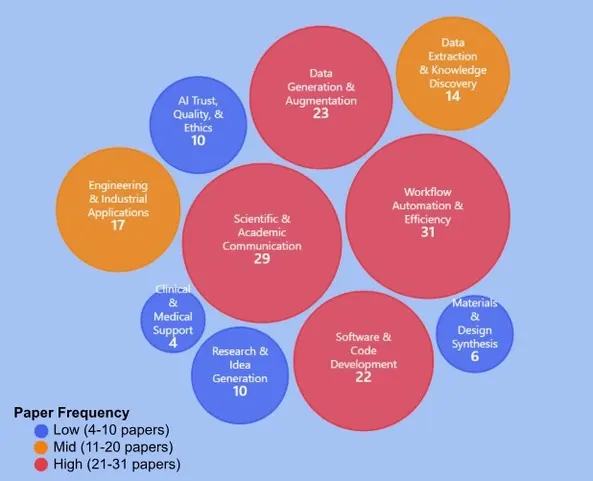
A visualization of the themes revealed through Coryn's capstone
Brittney’s capstone – visualizing and communicating library impact
Brittney was partnered with Amy Yarnellopens in new tab/window, Head of Data and Bioinformation Services at the University of Maryland, Baltimore Health Sciences and Human Services Library (HSHSL), and Christine Hislopopens in new tab/window, Open Data & Repositories Services Librarian, University of Maryland Libraries. Her project was developing a data dashboard showing library impact for HSHSL using Microsoft Power BI. The dashboard would provide a proof of concept for utilizing select HSHSL data sets to create visualizations that help library leadership make internal decisions and show impact to stakeholders.
“I first completed an environmental scan to benchmark what other libraries were communicating, prioritizing those who had created and published data dashboards for public viewing and annual reports. There weren’t many.”
Both mentors helped set the scope of the project and gave guidance on skillsets that Brittney would need to master.
"I ran into several technical challenges and a steep learning curve. I had to continue to find training that would help me learn new skills I didn't know I needed, including data modeling, using DAX expressions, and AI. It turns out creating data visualizations takes a lot of skill and is a slow and iterative process."
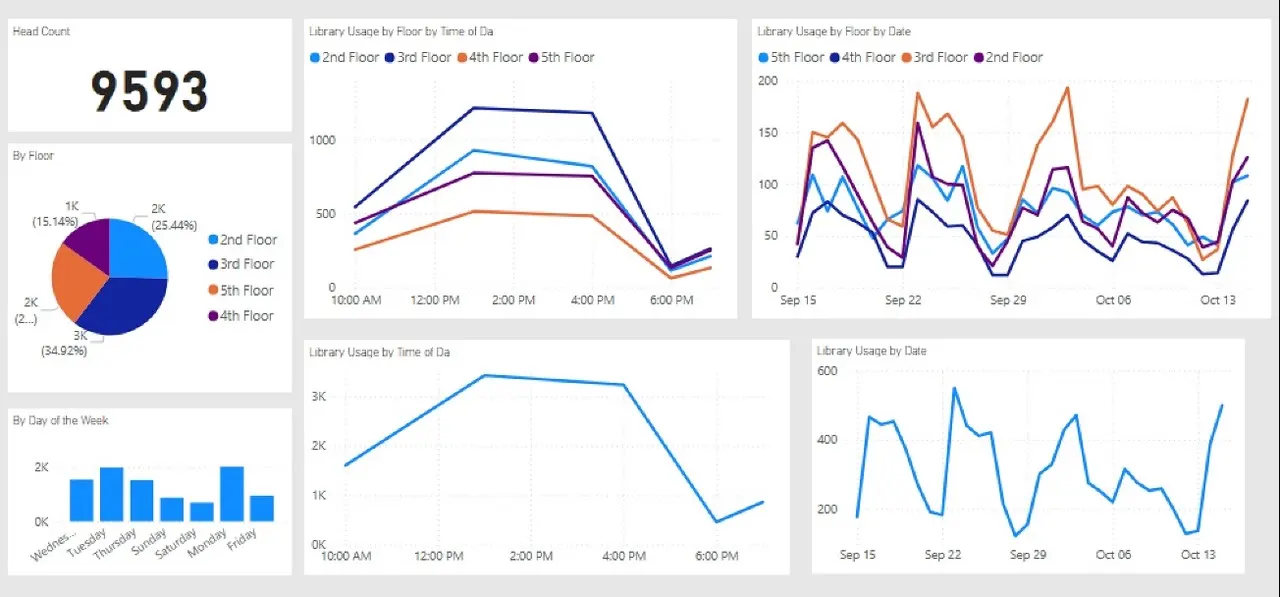
A dashboard example from Brittney's capstone
The experience gave her a bigger view of the future of data support. “Learning about the diverse needs of the mentor institutions, and, especially, the level of time and effort it took to complete all the different [capstone] projects was helpful. Ultimately, they confirmed what I already suspected - that we really did need to hire a Data Services Librarian for our library.”
Xuan’s capstone – a comprehensive suite of guidelines for the research community
Xuan’s mentor was Megan Potterbuschopens in new tab/window, Research Data Steward, Library & Research Services, Harvard Kennedy School. Together, they created a set of comprehensive, user‑friendly guidance materials for the Harvard Kennedy School (HKS) research community. The goal was to provide clear, practical support in three high‑priority areas of research data management (RDM):
RDM onboarding and offboarding checklists, including guidance on knowledge transfer
A workflow for personal data archiving to help researchers responsibly retain, review, and preserve their materials
Guidelines on complying with publisher requirements for open data and materials, including how to write a data availability statement
“Megan played an essential role in helping me refine scope, simplify language, and ensure the materials were both accurate and user‑focused.”
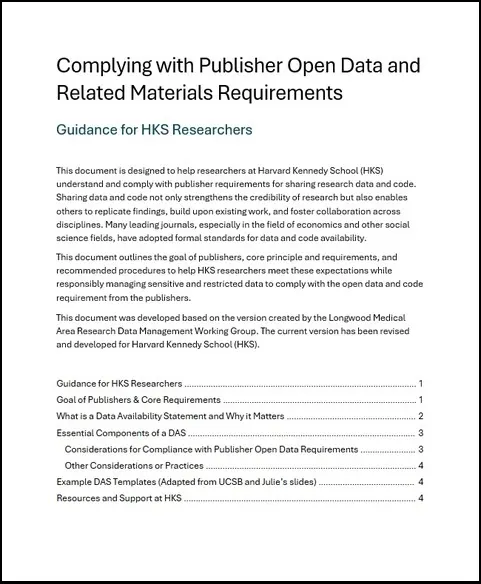
A sample document from Xuan's capstone project
The main challenges included balancing comprehensiveness with usability and ensuring the three documents functioned cohesively as a set. The result was “a polished, institution‑ready suite of materials that can meaningfully support research data stewardship and compliance across the school.”
The process also changed her view: “I gained a deeper appreciation for how interconnected RDM is with the broader research ecosystem, not just in terms of policies, but in how data practices directly influence research quality, transparency, reproducibility, and long‑term institutional memory. It made me see RDM not as an “add‑on,” but as core research infrastructure that affects nearly every stage of a project, from onboarding to publication and beyond.”
Interested in applying for this year’s DSCPE cohort?
RDMLA will offer a new DSCPE cohort in the 2nd half of this year, for participants based in the US. Applications will open on May 1, 2026. Details are available on DSCPE’s websiteopens in new tab/window.
Not in the US? RDMLA also offers a self-paced online research data management courseopens in new tab/window, as well as a new short course on AIopens in new tab/window, for librarians from any location interested in building these important foundational skills.
Contributor
