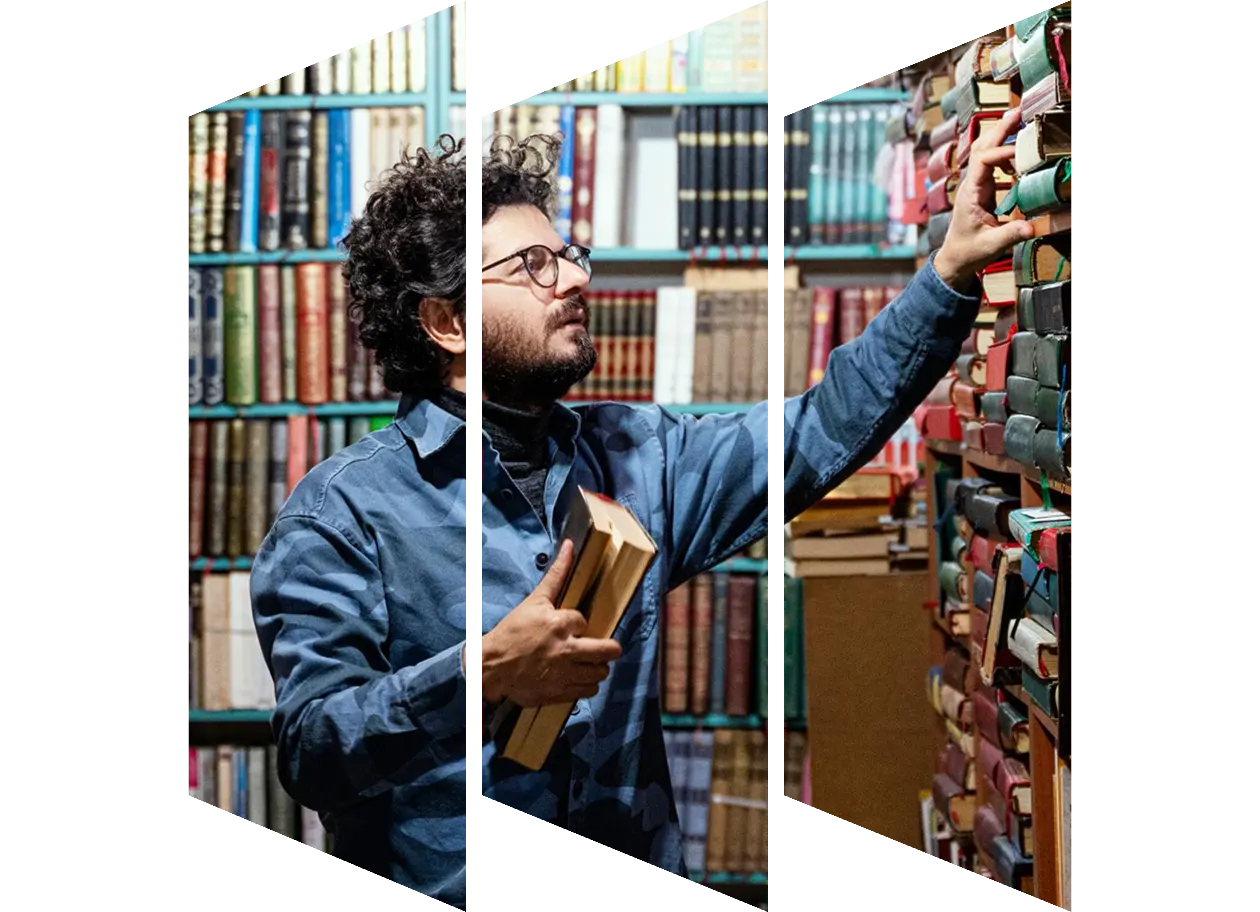
Librarians play a critical role in ensuring the whole institution thrives. Every day, all over the world, librarians are supporting students, faculty and researchers with:
Finding the right content
Navigating complex systems
Publishing open access
And yet—librarians and their contributions haven't always been fully seen or appreciated. It's time to change that. Together, let's celebrate the vital role librarians play and the incredible, but often invisible, impact they make.
Meet Erskine Hinds: Building in-house AI tools to boost librarian efficiency
Erskine Hinds has a skill for developing digital tools that help find, manage and reuse information more efficiently. In his role as Administrative Officer (Ag.) in the Library and Information Services Unit at the Central Bank of Barbados, he saw that researchers needed reliable studies, data, policy papers and archival material to support their work. Finding the right information was not always simple, with many sources hidden away in older files, complex folders and manual systems.
One recent project involved cleaning up a large server of archival photos, documents and files. Before the institution could make better use of AI, the content needed to be reviewed, organized, streamlined and supported by metadata. With his background in IT, Erskine was able to develop a set of in-house digital tools which could help more easily navigate and surface these essential hidden sources.
Most of the tools that we are using to do this were developed by me, so they’re in-house tools.
Erskine Hinds
Central Bank of Barbados 的 Administrative Officer, Library and Information Services Unit
His unique blend of librarian and IT skills has helped Erskine to take innovative approaches to institutional problems, helping save time and money, all while making the library’s research support stronger. His work helps turn scattered, buried information into sources his colleagues can easily find, trust and use with better sustainable practices.
Erskine was nominated as an impact maker by over 12 people, who all described the same blend of patience, technical skill and research support. One researcher said: "I was able to complete my published research paper with a wide range of relevant studies... He is always very thorough in his support and his technical skills are an asset to the organization.”
Others credited him with helping them prepare academic papers, locate statistical data from policy papers, improve filing and cataloguing systems and complete their academic qualifications.
For Erskine, his motivation to support research is simple. He knows what it feels like when someone has been trying for weeks to find that one article, source or piece of evidence that will change the game for their project—and he wants to be the one to say, “Here it is”.
When you get somebody the resources they actually need to do their research or finish a report… that inspires me to continue.
Erskine Hinds
Central Bank of Barbados 的 Administrative Officer, Library and Information Services Unit
Erskine’s story shows how in-house innovation can strengthen academic work. With his unique combination of library expertise, IT knowledge and real understanding of researcher needs, Erskine is able to support his community in finding the right sources for their projects, helping turn information into stronger research outcomes.
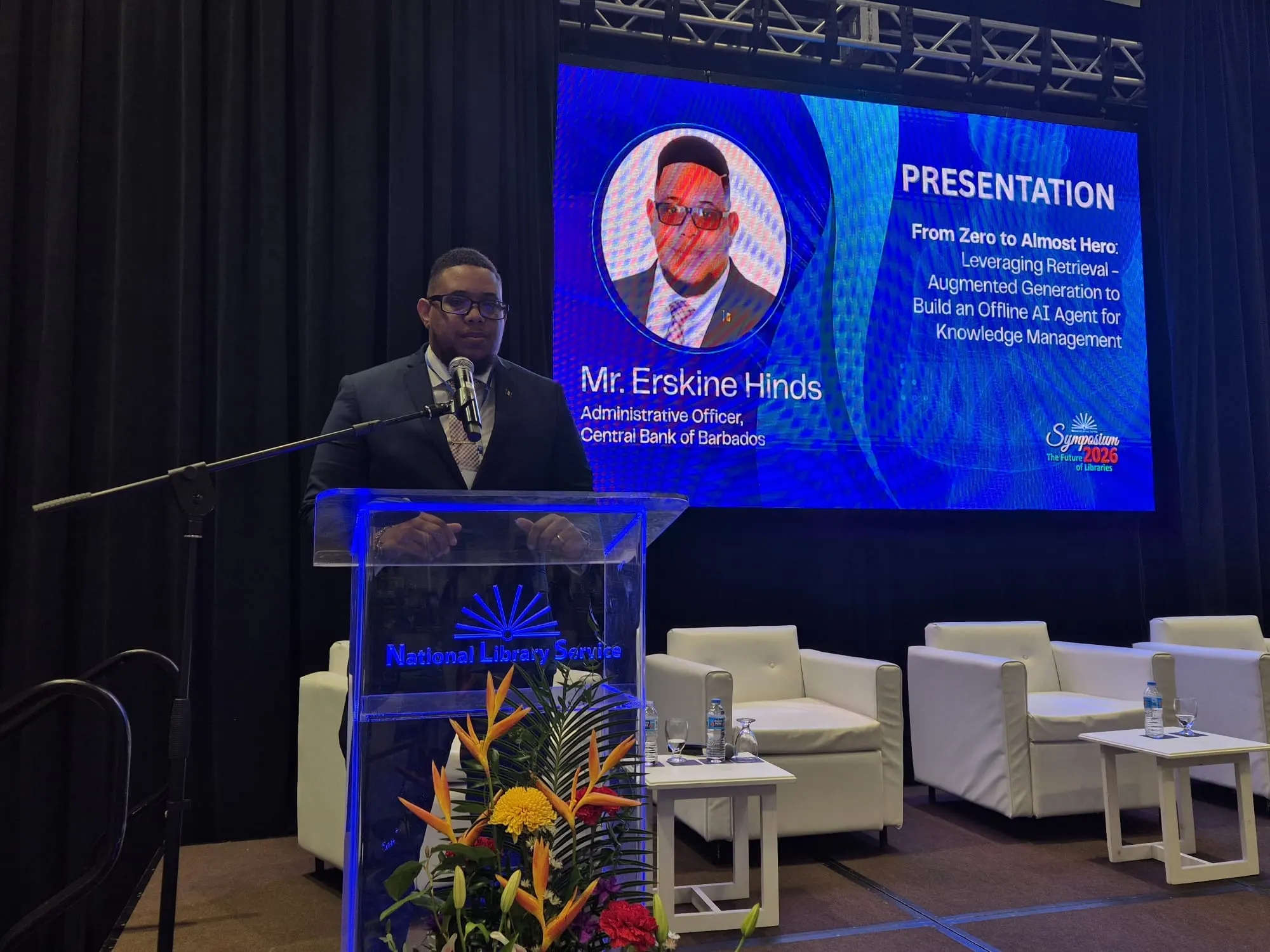
Erskine Hinds speaking at the NLS Symposium
Erskine's three tips for the library community:
Build resilient foundations: treat structure as critical infrastructure: Design file schemas, taxonomies, and metadata protocols upstream before collections expand into unmanageable silos. Digital friction begins the moment institutions neglect indexing discipline and permit duplicate or orphaned records to accumulate. Establish consistent naming conventions and strict directory hygiene from day one; doing so ensures that search systems, from traditional OPAC queries to modern semantic retrieval, deliver rapid, reliable access rather than dead ends.
Demystify emerging technology: solve everyday operational frictions locally: Stop waiting for expensive commercial software suites or top-down rollouts to modernize institutional workflows. Take ownership of practical innovation by deploying sovereign, lightweight tools to automate repetitive tasks, whether writing targeted batch or PowerShell scripts for catalogue remediation or testing private, self-hosted retrieval models for reference desks. Information professionals are uniquely positioned to lead ethical technology adoption, demonstrating how to embrace automation without compromising data privacy or source integrity.
Champion user velocity: measure success by retrieval speed, not just volume: Evaluate holdings through the eyes of the researcher rather than the archive. An extensive repository provides limited value if students, academics, or staff struggle against cumbersome interfaces to locate a single paper. Regularly audit access pathways, strip out administrative roadblocks, and construct frictionless self-service channels that connect patrons to primary sources with minimal delay.
Meet Olga Koz: supporting students with their research outputs
At Kennesaw State University, Dr Olga Koz, Collegiate Librarian and Professor, recognized a gap many doctoral students feel before they know how to name it. The students she supported were expected to produce dissertations, but the five doctoral programs she worked with did not have a dedicated course on how to find, evaluate, organize and synthesize the literature their research would depend on.
Olga understood the challenge because she had lived it herself. After completing her own doctorate, she remembered the uncertainty of moving from learning about research to creating it. She turned that understanding into practical support.
For them, it’s about using special research skills to go from learning about knowledge to creating knowledge.
Dr. Olga Koz
Kennesaw State University 的 Collegiate Librarian and Professor
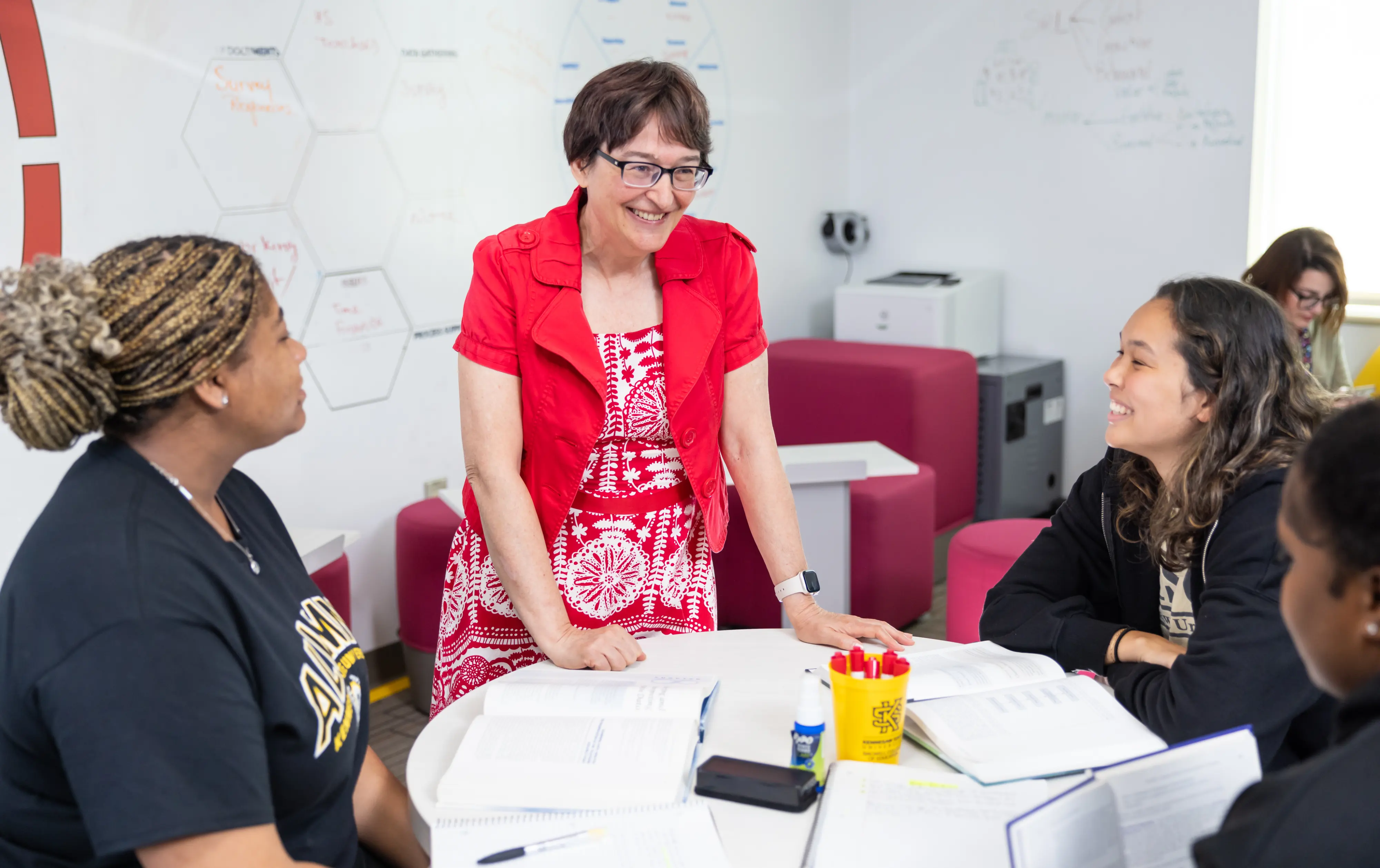
As an embedded librarian in the College of Education, Olga became part of the students’ research environment, not just someone they could consult from outside it. She went into online classes, taught students how to search, find and organize research in their field, developed accessible resources they could return to when they needed them, and created a dedicated webinar series on conducting and writing literature reviews.
Her support gave students structure at a point when many were trying to build a research foundation for the first time. It helped them move beyond simply collecting sources, and towards designing a review, evaluating evidence and synthesizing their findings with purpose.
Dr Julie Moore, Professor at the School of Instructional Technology and Innovation (SITI) in the Bagwell College of Education at Kennesaw State University, nominated Olga as an impact maker because she saw the difference her support made for students at KSU: “Our doctoral students would have struggled pulling together resources and writing up a meaningful literature review.”
Olga’s work also extends into the tools students use to learn research design. As part of the Bagwell College of Education Interactive Research Methods Labopens in new tab/window (now the Research Center), she helped develop resources to support the Hopscotch Research Design platform and the Literature Review Design (LRD) framework. The interactive Hopscotch LRD tool assists early career researchers in building robust, well-informed research designs, with more guidance in searching and reviewing evidence.
Our tool helped students to design a literature review, how to create a protocol, how to create this workflow… in the form of exploration, but structured exploration.
Dr. Olga Koz
Kennesaw State University 的 Collegiate Librarian and Professor
The balance between exploration and structure matters even more as AI increasingly becomes part of the research process. Olga sees technology as a useful support for methodological rigor, but not a replacement for it. Her work helps students understand how AI can assist them without weakening the critical evaluation and evidence synthesis they need to develop as scholars.
Olga’s story shows how an academic librarian can close a hidden gap in doctoral education. By building out the literature review education and resources students were missing, she has helped reposition the library right at the heart of the real work of creating knowledge.
Olga Koz has become part of the students’ research environment, not just someone they could consult from outside it.
Olga’s three tips for supporting students with their research output:
Treat the literature review as a skill you build over time: A literature review is not a one-off task. What a good review looks like depends on its purpose, your discipline and your stage of career, so expect your approach to evolve and to carry the skill with you.
Stay in control of your review, especially at the start: Automation can speed up searching and screening, but fully automating the process takes away your control over each methodological step. At the beginning of your research, those steps are where you learn: making decisions, checking your work and refining your thinking as you go.
Look for evidence, not just sources: “Literature” can sound like a pile of documents to find, manage and cite. But research is built on evidence, and evidence has to be weighed, not just gathered. Rather than searching for information or peer-reviewed articles, look for research and practice evidence, and ask what it can and cannot support.
Nominate a librarian
Do you know a librarian who's making a difference? Nominate a librarian today by sharing your story of how they've created impact—whether that's by guiding research, supporting publishing, or offering support in your academic journey.
Stories like Erskine and Olga's highlight the vital role librarians play in advancing knowledge and enabling success at institutions around the world. It's time to recognize the impact librarians really make on their communities. Share your story today.
I've witnessed firsthand how librarianship extends far beyond shelving books. In my role, I have become a research partner, an academic coach, and a digital literacy advocate.
Ezra Kapachika
Lake Malawi Anglican University 的 图书管理员
Resources for Librarians
Want to learn more about how librarians are creating institutional impact across topics like research integrity, AI literacy and publishing? We've curated a hub of resources which showcase the many ways librarians support the research ecosystem.
[My librarian's] proactive attitude, inclusive approach, and relentless commitment to service have transformed the library into not just a place of books, but a dynamic center for learning and growth.