Reframing libraries: From repositories to connectors of people and ideas
16 de março de 2026
Cyril Oberlander, Library Dean at Cal Poly Humboldt, on the evolving role of libraries in an age of co-creation and AI
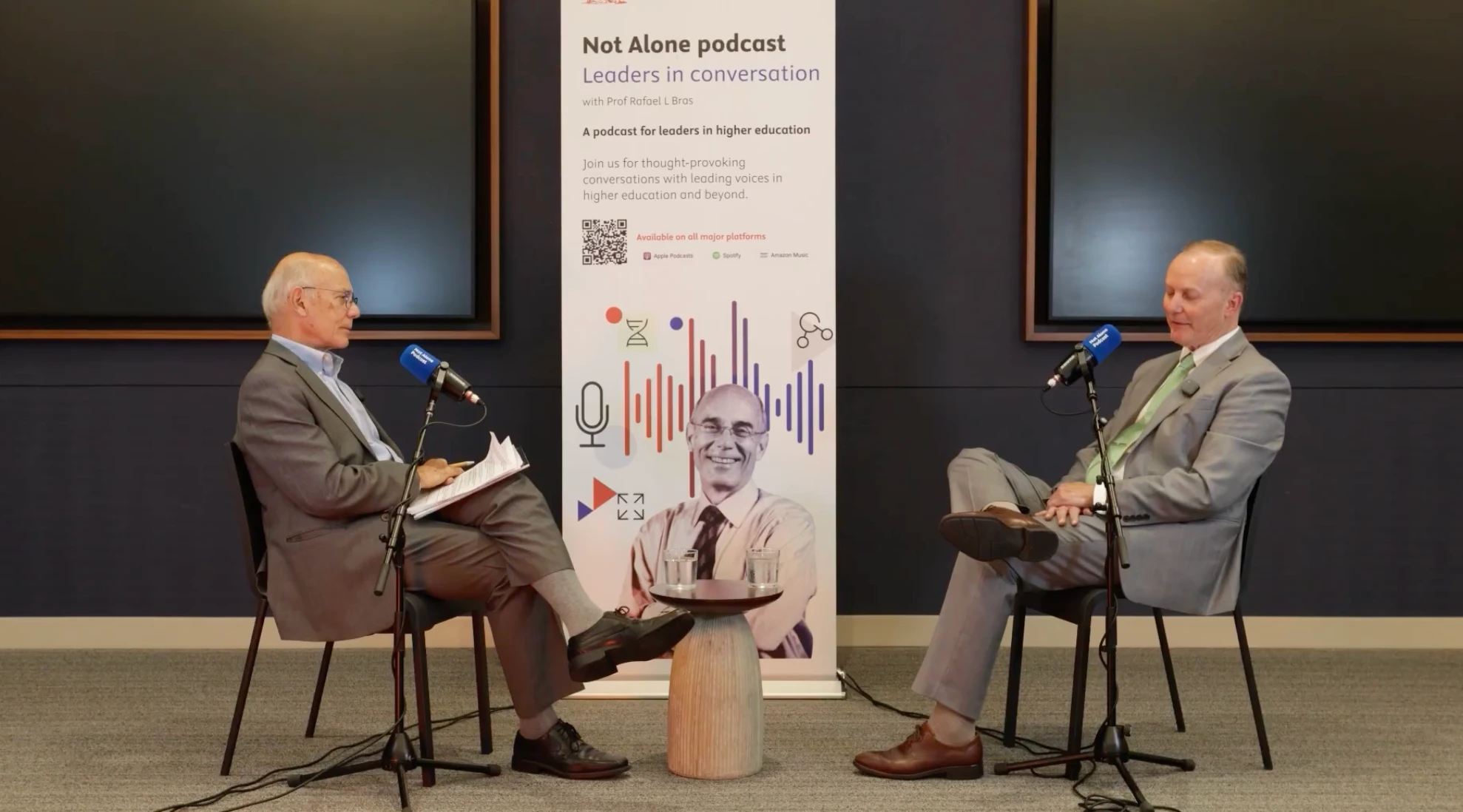
At the live podcast recordingopens in new tab/window from Elsevier Impact Conference 2025 in Chicago, Cyril Oberlander, Library Dean at Cal Poly Humboldt, offered a compelling reframing of what libraries represent today. Once viewed primarily as repositories of books and journals, libraries, he argues, are now laboratories for learning and collaboration—spaces where information is transformed into shared understanding and innovation.
“Libraries have always been learning environments,” Oberlander reflected. “But in today’s digital world, they are about connecting people and ideas.” This transformation, he explained, is not about replacing print with digital, but about expanding how knowledge is created, shared, and verified. Through initiatives like digital publishing and student co-authorship, Cal Poly Humboldt’s library empowers learners to become creators: “We want every student to publish before they graduate,” he said.
As artificial intelligence reshapes how information is consumed and interpreted, Oberlander underscored the enduring importance of citation, verification, and source quality. His team’s “Ask Alex Humboldt” project—a custom AI trained on the university’s own scholarly repository—embodies that philosophy. “The source still matters,” he noted. “If we can trace back to it, we empower our learners and researchers with verifiable information.”
Beyond technology, Oberlander sees libraries as essential to rebuilding trust in knowledge itself. In an era of fragmented information ecosystems and declining media literacy, libraries can serve as connectors that help communities navigate truth together. “We have to ask what’s eroding trust,” he said. “Libraries are uniquely positioned to reconnect people through shared information and shared understanding.”
From co-publishing with students to integrating AI responsibly, Oberlander’s message is clear: libraries are no longer static archives—they are dynamic catalysts for connection, creativity, and credibility in the pursuit of knowledge.
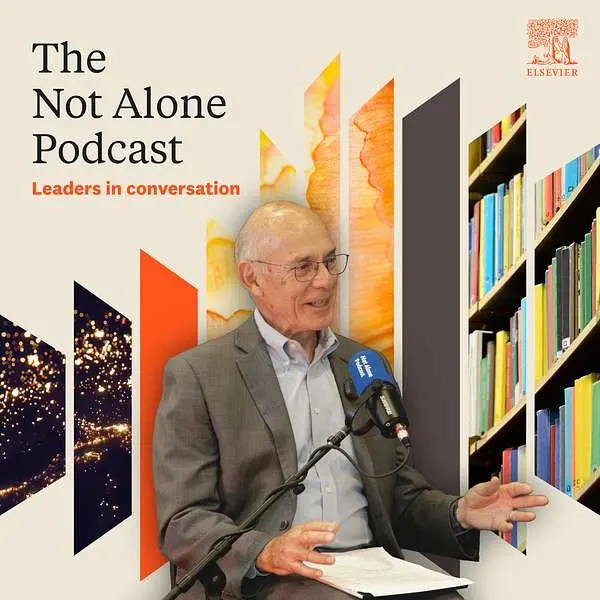
Not Alone: Leaders in conversation is a collaboration between Elsevier and Prof Rafael Bras. We bring unfiltered perspectives on global issues by research and academic leaders.
Follow Not Alone for more contentopens in new tab/window on your preferred platform, and never miss a new episode.