
Profil
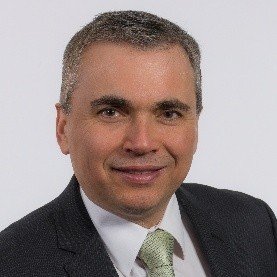
Prof. Stefan Kasapis
Professor of Food Chemistry & Biophysics
RMIT University, Australia
Bio:
Stefan Kasapis is Professor of Food Chemistry & Biophysics at RMIT University. His research focuses on bridging the gap between advances in fundamental scientific knowledge and their direct application to food product development, addressing the growing need for science-driven innovation. His technological research has secured more than AUD 13 million in research grants and commercial contracts, supporting the food industry in bringing novel formulations to market. These include liquid breakfast products fortified with wholegrain oats and soy protein, oriental foods, high-protein nutritional supplements for the elderly, thickened liquid systems for dysphagia, alternative proteins derived through precision fermentation and plant sources, and innovations supporting the circular economy through food waste valorisation.
He is the recipient of the Food Group Junior Medal of the Royal Society of Chemistry for the best published work in Food Chemistry in the UK. He has published 320 articles in peer-reviewed journals, edited two books and filed 12 patent applications in collaboration with the food industry. He has served on the Editorial Boards of Carbohydrate Polymers and BCDF and is currently an Editor of Food Hydrocolloids, a leading journal in food science, with an impact factor of 13.8. He chaired the 9th and 15th International Hydrocolloids Conferences, held in Singapore and Melbourne, Australia.
In 2022, he received the inaugural Glyn O. Phillips Prize at the 16th International Hydrocolloids Conference, held at the University of Guelph. He is regularly invited to deliver plenary and keynote lectures internationally, including at the universities of North Carolina, Guelph, Wageningen, Sydney, Melbourne, Massey and Tokyo, as well as in Taipei, Shanghai, Nanchang and Dalian, and at SCUT in China. He features in Stanford University's 2025 ranking of the world's top 2% of scientists, placing in the top 0.17% in food science. His published work has received 14,628 citations, and his h-index is 67.