Unfortunately we don't fully support your browser. If you have the option to, please upgrade to a newer version or use Mozilla Firefox, Microsoft Edge, Google Chrome, or Safari 14 or newer. If you are unable to, and need support, please send us your feedback.

Elsevier
Publish with us

Corporate R&D of the Future

Discover how R&D organizations are using data, evidence and AI to make confident decisions, and what it will take to connect them.

Middle Aged Caucasian Female Team Leader and Young Indian Scientist Talking in a Research Center with a Futuristic Quantum Computer Device. Specialists Discussing Machine Learning Development

The report

R&D teams are confident in their evidence, yet it is often scattered, incomplete or hard to interpret. Meanwhile, AI is moving into everyday R&D workflows.

The Corporate R&D of the Future report draws on a global survey of R&D and R&D connected professionals. It shows how organizations use data, evidence and AI to make decisions, where the barriers lie, and what they expect from the next five years. Dive into the findings to see how views differ by region, organization size and seniority, and why connected data, trusted evidence and AI are set to define the future of R&D.

Download the full reportopens in new tab/window

Key findings

Confidence is high, but fragmented evidence holds decisions back

Confidence is strong. 84% say their teams can access the evidence they need, and 83% trust its quality. 

But evidence is often incomplete. 45% say important decisions are made before all the evidence is available, and 63% say their organization has acted on evidence later found to be flawed. 

Fragmentation is the top barrier. 38% say evidence is scattered across too many disconnected sources. 
AI is going mainstream, and trust will decide how far it goes

Adoption is widespread. 55% say their organization uses AI regularly in R&D, and a further 32% are piloting it. 

But integration is lacking. 83% feel well prepared for AI, yet 72% say it is effectively integrated into R&D workflows. 

Trust is essential. Willingness to use AI rises when it fits existing workflows (55%), complies with regulations (52%) and is trained for factual accuracy (51%). 

The future of R&D is connected

Connection is an advantage. 93% say organizations that connect internal and external data will have a competitive edge. 

AI will transform decisions. 88% say AI will fundamentally change how R&D decisions are made, and 88% say those who combine it with trusted evidence will outperform. 

But scaling is hard. 38% expect implementing AI at scale to be a significant challenge. 

Stuart Whayman_thumbnail_640x463

Watch the video

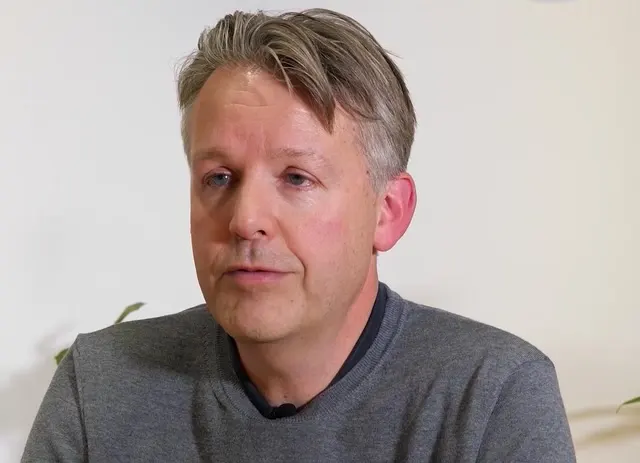
Stuart Whayman, President of Corporate Markets at Elsevier, discusses the report's findings.

What single change would make the biggest difference?

63% of organizations have made an important R&D decision on evidence later found to be flawed. Asked what would help most, respondents pointed to five changes: 

  • Connect internal data with external scientific evidence 

  • Capture and reuse organizational knowledge, including failed experiments 

  • Strengthen trust in evidence and AI through governance and validation 

  • Tailor AI to organizational knowledge and workflows 

  • Turn data into actionable insights 

Explore the full report for deeper insights by region, industry and organization size. 

Download the full reportopens in new tab/window

Corporate R&D of the Future - Report Cover

Read the latest findings from the Corporate R&D of the Future report

See what they're saying opens in new tab/window