
Participate
Submit abstract
We are still open for late breaking poster submissions - submit here >opens in new tab/window
Conference topics
1. Industrial Transformation and Cleaner Production
Clean production processes and industrial ecology
Industrial transformation towards net-zero emissions
Cleaner materials and technologies
Cleaner logistics and sustainable supply chains
2. Energy and Climate Solutions
Cleaner energy systems
Renewable energies and energy efficiency
Decarbonization strategies
Energy storage and smart distribution
3. Water, Waste and Resource Management
Biowaste as a bioresource
Circular economy frameworks and practices
Cleaner water systems
Cleaner waste systems
4. Agriculture, Food, and Bioeconomy
Sustainable agriculture and food systems
Food security and climate resilience
Green and Blue biotechnology
Cleaner and circular bioeconomy
5. Sustainable Cities and Built Environment
Sustainable urban planning and metabolism
Cleaner built environment and construction
Sustainable transportation and mobility
Regional transition strategies towards sustainability
6. Life Cycle Thinking: Pathways to Cleaner Processes
Cleaner environmental systems
Life cycle based tools and methodologies
Eco-design and other tools for sustainability
7. Digitalization and Technological Innovation
Artificial Intelligence in cleaner production
Big Data and IoT for sustainability and efficiency
Blockchain for traceability across supply chains
Digital twins and simulation for sustainable design
Digital Product Passport
8. Governance, Policy and Sustainability Transitions Instruments
Sustainability assessment, indicators and reporting
Cleaner and responsible consumption
Circular society
Sustainable business models
Voluntary sustainability standards, ecolabels and life cycle approaches
Social drivers, barriers and enablers of clean technology adoption
Participatory and collaborative approaches for sustainability transitions
Education for sustainability and behaviour change
You can submit as many abstracts to the conference for review as you would like. If, after the review by the committee, you have more than one paper accepted for the conference, you will need to register to attend and pay an additional paper fee for each additional paper (i.e., for the 2nd, 3rd, 4th papers – not the 1st). Please note this is for papers that you are the presenting author of, not papers that you are co-author of.
Successfully submitted abstracts will be acknowledged with an electronic receipt including an abstract reference number, which should be quoted in all correspondence. Allow at least 2 hours for your receipt to be returned to you. Once the paper is accepted, at least one of the authors must register for the conference and present the paper at the conference.
Abstracts of all accepted contributions will be included within the online abstract system which will be distributed to all registered conference participants.
Generative AI policy
We support the responsible use of generative AI Tools in the preparation of conference abstracts, posters, and presentations. Any use of such tools must be transparently disclosed, including the tool used and how it was applied. Authors remain fully responsible for the accuracy and integrity of their work.
Please see our full author policy, which also applies to conference submissions: https://www.elsevier.com/about/policies-and-standards/generative-ai-policies-for-journals
For revisions or queries regarding papers already submitted:
If you do not receive acknowledgement for your abstract submission or you wish to make any essential revisions to an abstract already submitted, please DO NOT RESUBMIT your abstract, as this may lead to duplication. Please contact the Conference Content Executive (opens in new tab/windowPlease do not email credit card information under any circumstances) with details of any revisions or queries. Please quote your reference number if you have one.
Workshops
Communicating Science with Impact: Writing, Framing, and Publishing Research for Scholarly Audiences
Date: Monday 26 October 2026 Time: 9:00 – 11:30 Fully booked
Led by Professors Raúl Muñoz Torre, University of Valladolid, Spain and Kathleen Aviso, De La Salle University, Philippines
The workshop, Communicating Science with Impact: Writing, Framing, and Publishing Research for Scholarly Audiences focuses on the principles of effective research communication as a foundation for successful scholarly publication.
Beyond the technical aspects of manuscript preparation, emphasis will be placed on how researchers can clearly and convincingly communicate the significance, novelty, and contribution of their work to the intended academic audience.
The course will review the significance and content of the different sections of a research paper. Special emphasis will be given to:
The selection of the most appropriate journal
The structure of the different sections in scientific research papers
The ethics in publications
The current process of paper submission.
Both theoretical and practical aspects will be reviewed and discussed with the audience to clarify the main doubts and questions of early-stage career researchers. The session will also explore how journal expectations, disciplinary conventions, and editorial perspectives shape the way research should be framed and presented.
The session will also highlight common reasons for manuscript rejection, particularly issues related to weak framing or misalignment with journal scope and will provide guidance on interpreting reviewer feedback constructively. Through practical examples, participants will gain insights into how to present their research more effectively and position it within the broader scholarly conversation.
The workshop is offered free of charge to PhD students, Postdocs and early career researchers.
Places are limited and should be reserved via the online registration system.opens in new tab/window
Water Efficiency in Industry: Practical Pathways to Circular Water Use
Date: Wednesday 28 October Time: 11:00-12:45
Led by Dr. Johann Poinapen, KWR Water Research Institute, The Netherlands & Francesco Fatone, Università Politecnica delle Marche, Italy.
This interactive workshop will explore how industries can move from conventional water management towards more circular, resource-efficient and climate-resilient systems.
Drawing on lessons from the EU Horizon 2020 AquaSPICE project, the session will introduce the Water Efficiency Framework as a practical approach for assessing water use, identifying reuse and efficiency opportunities, integrating digital monitoring and supporting implementation. Real industrial case studies will illustrate how water reuse, process optimisation and circular solutions can be applied in practice. A panel and audience discussion will address key barriers, enabling conditions, scalability and collaboration needed to accelerate industrial water circularity.
From Messy Data to Credible Impact Estimates: AI-Powered Scope 3 Assessment
Date: Wednesday 28 October Time: 16:30-17:30
Led by Dr. Ron-Hendrik Hechelmann, Universität Kassel, Germany
How can artificial intelligence turn fragmented procurement data into credible estimates of environmental impact?
In this interactive workshop, participants explore the approach behind the use of AI in scope 3: identifying materials and products in unstructured datasets, matching them with suitable emission factors, and transparently communicating uncertainty through confidence scores and traceable sources.
Using a practical Scope 3 case, we will examine where AI can substantially improve speed and data coverage—and where methodological expertise and human validation remain essential. Participants will discuss data quality, uncertainty, auditability, and the scientific limits of AI-supported impact assessment, gaining a practical framework they can apply in research, teaching, and collaborative projects with industry.
Circular Economy Workshop
Date: Thursday 29 October Time: 14:45-15:45
Led by Dr. Luana Ladu, Technische Universität Berlin, Germany and Dr. Enrica Imbert, UnitelmaSapienza, University of Rome, Italy.
This workshop will introduce how circularity and social indicators can be used to assess the circular performance of industries and products. It will combine technical presentations with discussion on implementation challenges and regulatory alignment.
Conference dinner
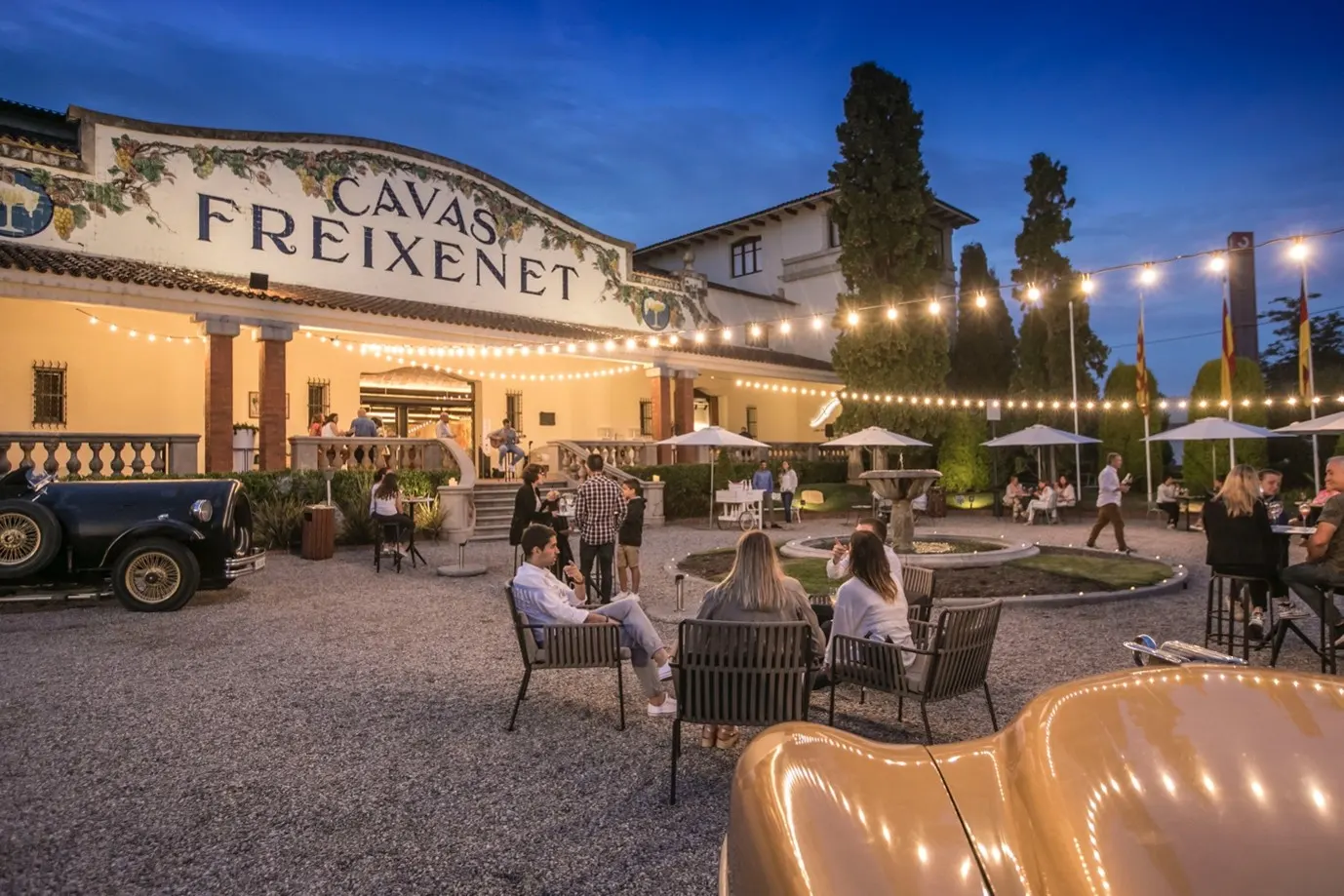
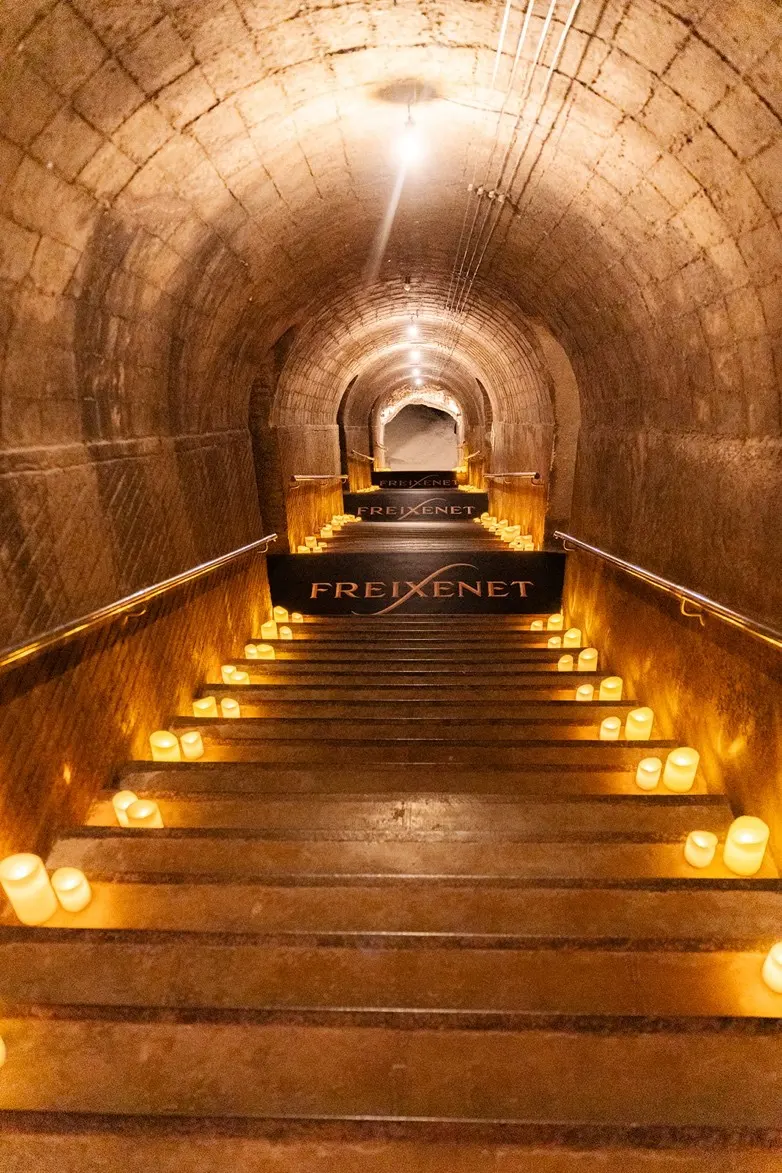
Join us for the Conference Dinner at the Freixenet Wineryopens in new tab/window on Wednesday, 28 October 2026 for the opportunity to network in a relaxed environment.
The Freixenet Winery is located in the heart of the Penedès region in Sant Sadurní d’Anoia and blends centuries of winemaking tradition with vast underground cellars that house millions of bottles.
Tickets are priced at €75 + VAT 21% (€90.75) and include a three-course meal with drinks, return transportation from the conference hotel and musical entertainment.
Please make us aware of any dietary requirements upon registering.
Places are limited so please book early via the online registration systemopens in new tab/window.
Conference app
Everything you need for the conference, in one app. Build your personalised programme, browse the full scientific programme and posters, access all abstracts, connect with fellow attendees, and find your way around — all from your phone (or tablet/computer) . Available exclusively to registered attendees.