
AI agents in action: Uncovering our inner mutants
2026年2月3日
|
所要時間: 約14分
Maaly Nassar
TEK IMAGE/SCIENCE PHOTO LIBRARY Via Getty
Turning variants of unknown significance into life-saving insight—from patient genomes to antimicrobial resistance.
VUSという略語の背後には、人々の深刻な現実があります。毎年、何千人もの患者が「Variant of Unknown Significance(意義不明の変異)」と記された遺伝子検査結果を受け取りますが、これは答えではなく、不確実性をもたらします。
DNAのたった1文字の変化は、何の意味も持たないこともあれば、すべてを左右することもあります。生物学的な背景情報がなければ、VUSは臨床医と家族を希望と不安の狭間に閉じ込め、時には生死を分ける要因となってしまいます。ガーディアン紙で取り上げられたopens in new tab/windowある母親と息子の事例は、まさにその一つです。息子のSCN1A遺伝子変異は当初、VUSと分類されました。症状が悪化した際、診断システムはこの変異の真の重要性を認識できませんでした。数年後、母親は、同じ変異がすでに科学文献に記述され、疾患に関連する変異として特許にも記載されていたことを知ります。この事実が明らかになった時にはすでに手遅れでした。ゲノムデータと既存の科学的知見とのつながりが見落とされたために、息子は命を落としてしまいました。
彼女の経験は、現代のゲノミクスが抱える重要な課題を浮き彫りにしています。ClinVaropens in new tab/windowやHGMDopens in new tab/window(ヒト遺伝子変異データベース)といったデータベースが既知の変異を管理している一方で、数百万もの変異が未リンク・未注釈のまま、あるいは研究論文・症例報告・実験データの中に埋もれたままになっています。
早期診断は命を救います―ただし、すべてのエビデンスが結び付けられ、理解できる場合に限ります。
Decoding genomic sequencing into a life-saving network of insight
近年のハイスループット・ゲノムシーケンシングの進展により、ヒトDNAの解読スピードは大きく変わりつつあります。2025年、ロシュ・ダイアグノスティックス社は、生サンプルからバリアントコールファイル(VCF)に至るまで、ヒトゲノム全体をわずか4時間opens in new tab/windowで生成できる次世代シーケンシングプラットフォームを発表しました。かつては数日や数週間かかっていた作業が、今では1回の臨床シフト内で完了できるようになりました。
この加速は大きな可能性をもたらす一方で、より本質的な課題も浮き彫りにしています。シーケンス解析の規模拡大に伴い、ヒトゲノムおよび微生物ゲノム全体で毎年数百万もの新たな変異が検出されています。その多くはVUSに分類され、生物学的・臨床的な影響が依然として明らかになっていません。
高速シーケンシングは「何が異なるのか」を教えてくれますが、「それが何を意味するのか」までは示してくれません。そこで登場するのがMutAgentです。
Inside the MutAgent framework: From sequencing to reasoning
MutAgentフレームワークopens in new tab/windowは、ゲノムから知見に至るまでの全プロセスをシームレスかつ説明可能なものにするために設計されました。4つの専門エージェント(VariantAgent、SemanticAgent、KnowledgeGraphAgent、MutAgent)が連携して、生のゲノムデータを根拠に基づき追跡可能な知見へと変換します。
これらのエージェントは、現代のシーケンシング技術の終点である Variant Call Format(VCF)から、以下の地点まで連携して機能します:
VariantAgent:HGVS (Human Genome Variation Society)表記と確立されたバイオインフォマティクス、および配列解析ツールを用いてゲノム変異を標準化
SemanticAgent:公開文献および規制データセットから得た変異とエビデンスを、オントロジーおよびLLM駆動型の正規化されたエンティティと関係性を用いて、SciBite Search上でセマンティックに索引付け
KnowledgeGraphAgent:セマンティックなコンテンツをカスタムEmBiologyデータセット(ライセンス取得済みの全文から得た生物学的コンテキスト)に統合し、キュレーション済みエンティティ・関係性を、LLM生成エンティティ・関係性、およびベクトル化された文脈的エビデンスで拡充
MutAgent:ベクトル検索、ナレッジグラフ探索、ならびにLLMを用いたエビデンスの検証と統合を通じて推論と情報取得を行い、基盤データに裏付けられた説明可能な知見を提供
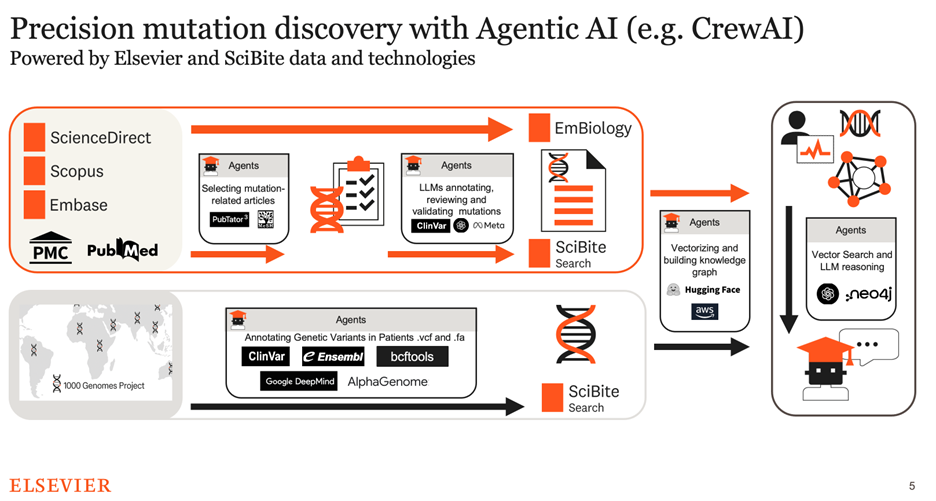
Slide of "Precision Mutation discovery with Agentic AI"
VariantAgent—Turning raw genomes into searchable knowledge
MutAgentにおけるすべてのプロセスは、VCFファイルから始まります。これは、高速な臨床シーケンス実行時に生成される場合もあれば、1000 Genomes Projectopens in new tab/windowのような大規模な集団リソースから生成される場合もあります。
VariantAgentは、この段階で作動し、bcftoolsやAlphaGenomeといった確立されたバイオインフォマティクスおよび配列解析ツールを用いて、ゲノム変異を解析、正規化し、参照配列を考慮したコンテキストでアノテーションを行います。任意のVCFファイルをHGVS表記に正規化し、dbSNP、ClinVar、Ensembl、NCBIのキュレーション済み識別子で強化された変異プロファイルに変換します。これにより、リファレンス、データセット、種、そしてヒトおよび微生物ゲノムを問わず一貫性のある、構造化された機械可読な表現を生成します。
その結果、患者・微生物・集団・研究間で比較可能な、統一された変異プロファイルが得られます。
この基盤が整ったことで、各変異は次のMutAgentフレームワークの段階で、文献・パスウェイ・生物学的コンテキストとセマンティックに結び付けられる準備が整います。
SemanticAgent—Linking variants to knowledge in one semantic space
SemanticAgent は、VariantAgent によって標準化された変異を SciBite Search に取り込み、変異と文献、さらにはカスタム構造化データセットを、単一の統合されたセマンティック環境内で索引付けします。
SciBite Searchは、FAIR原則に準拠したオントロジー駆動のアノテーションを、バリアントおよびすべてのインデックス対象リソースに適用します。さらに、LLMによって生成されたエンティティや関係性も取り込み、LLMベースの評価エージェントによって検証されたうえで、オントロジーに正規化され、セマンティック検索に活用されます。すべてのデータが共通の生物学的エンティティで充実されることで、SSQLクエリを用いて、VCF由来の変異を関連する文献、データセット、さらには生物学的知見へとシームレスに結び付けることが可能になります。
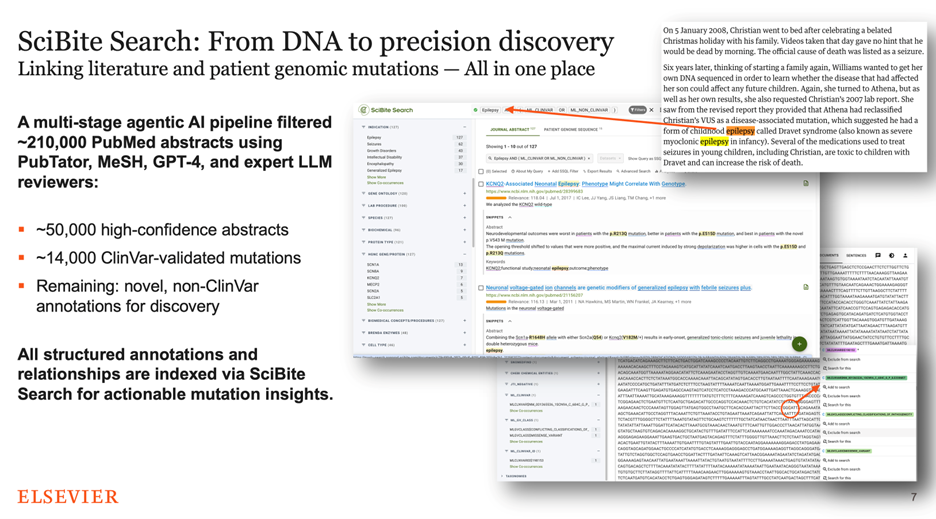
Slide of "SciBite Search: From DNA to precision discovery"
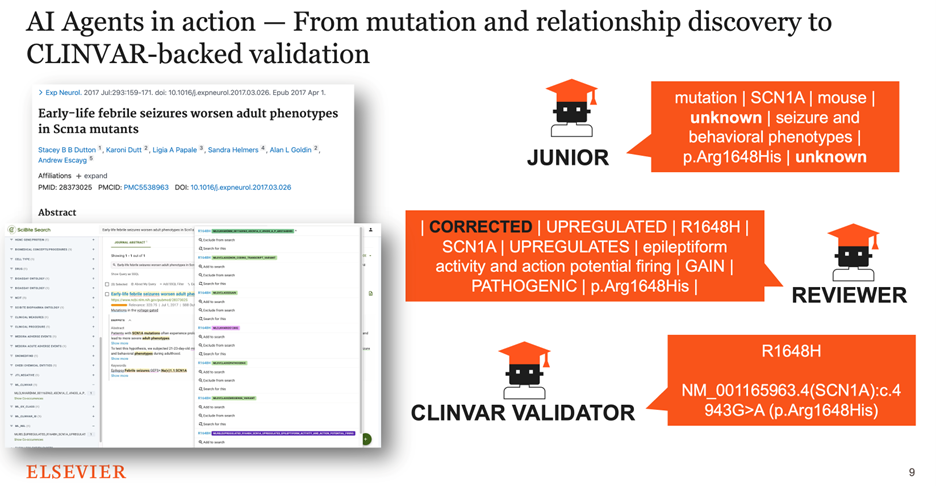
Slide of "AI Agents in Action - From mutation and relationship to discovery to CLINVAR-backed Validation"
この共通のセマンティック環境において、すべての変異は相互に関連付けられ、クエリ可能なエビデンスの単位となり、MutAgent の最終ハブである EmBiology ナレッジグラフへのさらなる統合が可能になります。
KnowledgeGraphAgent—The EmBiology hub turning knowledge to insight
SciBite Search から得られるすべての注釈付きエンティティは、エルゼビアがキュレーションした生物学的ナレッジグラフ EmBiologyに統合されます。ここでKnowledgeGraphAgentは、EmBiologyのフルテキスト論文に基づく既存のノードと関係性を基盤に、オントロジー駆動のカスタムデータセット(患者のゲノム変異、公的文献や規制リソース、製薬企業の独自データなど)を組み合わせて拡張し、文脈に応じたエビデンスのベクトル表現を用いて充実させることで、セマンティック検索や後続の推論を支援します。
この統一されたグラフは、各変異をパスウェイ、調節因子、表現型、機序、治療ターゲット、そしてそれを裏付けるエビデンスといった、より広い生物学的ネットワークへと結びつけます。
例えば、SCN1A変異は、神経シグナル伝達経路、てんかんの表現型、そしてキュレーション済みデータとカスタムデータセットから浮かび上がる候補治療戦略へと結び付けられます。
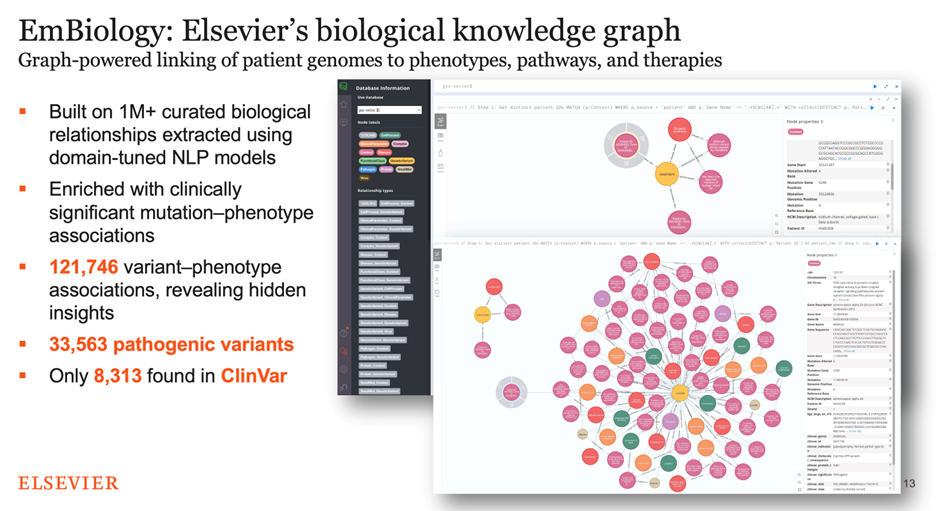
Slide of "EmBiology: Elsevier's biological knowledge graph"
KnowledgeGraphAgentは、これまでサイロ化されていたデータを相互に結び付いた生物学的ネットワークへと転換することで、MutAgentが実現する「命を支える知見のネットワーク」の基盤となります。
MutAgent—The reasoning agent making sense of the hub
フレームワークの最上位に位置するのが、推論を担うMutAgentです。EmBiologyナレッジグラフ・ハブを通じて流れるあらゆる関係性を解釈し、その意味を明らかにします。MutAgentは、すべての変異体、データセット、関係性、そしてエビデンスを横断的に解析し、複雑な生物学的ネットワークを、精度の高い実用的な知見へと変換します。
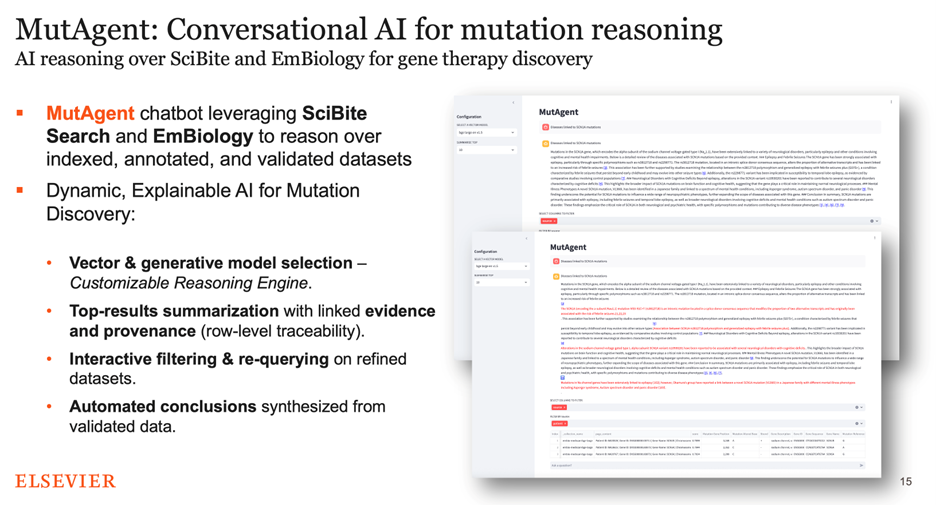
Slide of "MutAgent: Conversational AI for mutation reasoning"
対話型AIインターフェースを通じて、臨床医、科学者、規制当局者は、文字通りデータと対話することができます。
例えば、以下のような自然言語での質問が可能です:
“Diseases linked to SCN1?” 「SCN1に関連する疾患は?」
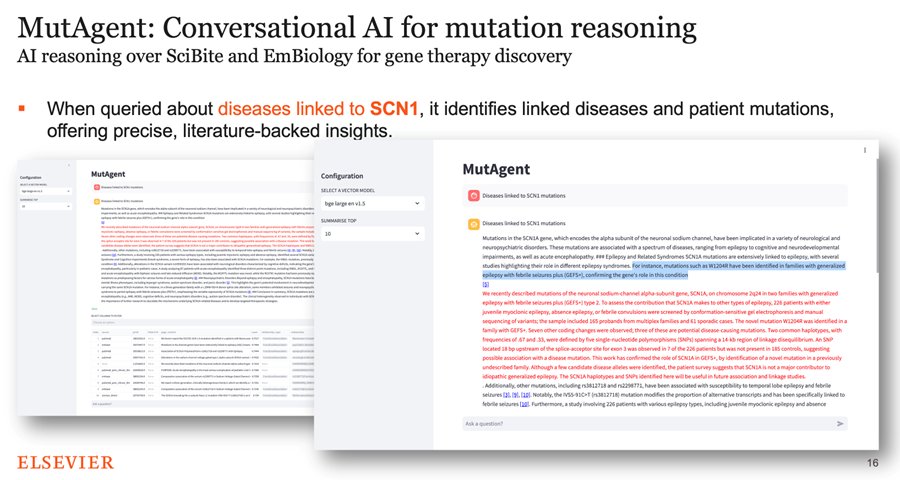
Slide of "MuAgent-Conversational AI for mutation reasoning"
“Patients with SCN1 mutations?” 「SCN1 変異を持つ患者は?」
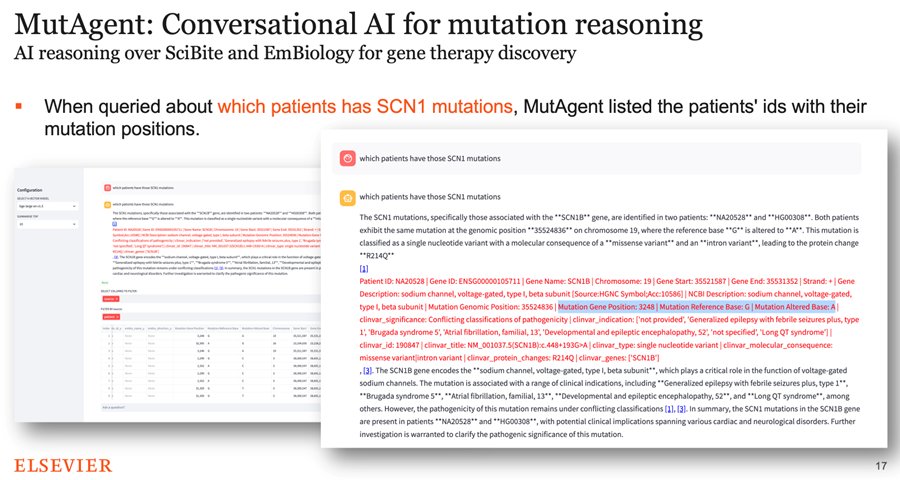
Slide for “Patients with SCN1 mutations?”
“SCN1 mutations to target with gene therapy and which gene therapy approach to use?” 「SCN1遺伝子変異を遺伝子治療の標的とするには、どの遺伝子治療アプローチを用いるべきか?」
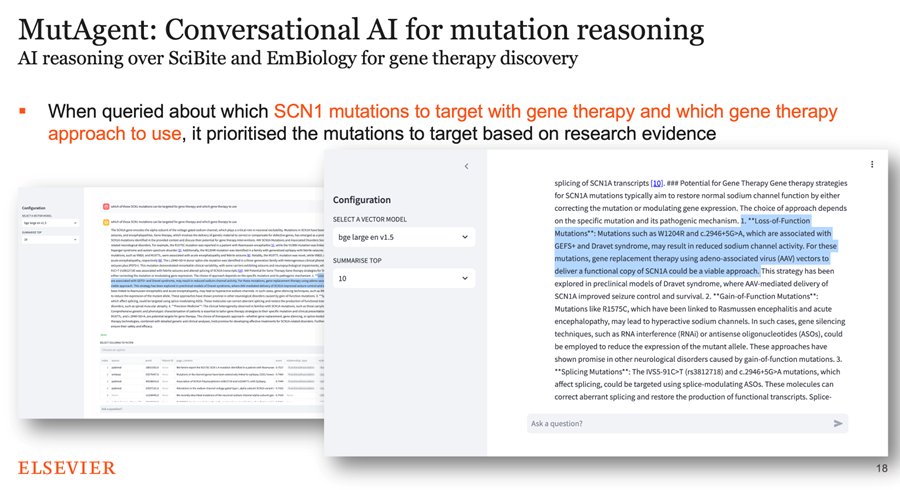
Slide of “SCN1 mutations to target with gene therapy and which gene therapy approach to use?”
バックグラウンドでは、MutAgentのエージェント型AIモデルがインデックス化された変異・文献・ナレッジグラフの関係性を横断的に推論します。ベクトル埋め込み、オントロジーマッピング、LLMベースの検証を用いて検索、解釈、説明し、根拠となるエビデンスまで追跡できる形で示します。
Back to the future: A unified environment for precision insight
もし前述のGuardian紙の記事に登場する母親が、最初に息子の遺伝子報告を受け取った時点で MutAgent が利用できていたら、ゲノム解析からその意味の理解へ至るまでの道のりは全く異なっていたでしょう。VUS という結果で立ち止まるのではなく、シーケンシングデータ、既存文献、生物学的知識を単一の連結された環境で統合的に評価し、より早い段階で適切な判断につなげることが可能だったはずです。
シーケンスデータ、科学文献、生物学的知識をひとつのシステムに統合することで、MutAgent は断片化された情報を精密な知見へと変換します。患者の変異から公開論文エビデンスへの追跡可能な推論、ヒトと微生物の変異間の領域横断的な関連付け、そして早期診断と情報に基づいた臨床判断を支援する、対話型で説明可能な回答が可能になります。
決定的に重要なのは、この統合された視点により、変異メカニズムを治療の可能性と結びつけられる点です。exa-celのようなパスウェイ再活性化戦略から、pz-celのような遺伝子補正アプローチ、さらにはZolgensmaで用いられているアデノ随伴ウイルス(AAV)ベースの遺伝子補充療法まで、MutAgentは、変異検出にとどまらず、最も重要な局面で、既知の情報と実行可能な情報を明らかにします。
SciBite Search、EmBiology、そしてエージェントAIを単一の推論フレームワークに統合することで、MutAgent は断片化したゲノムと文献のエビデンスを、相互に結び付いた“知のシステム”へと変革します。これにより精密医療は、重要な知識が見逃されることなく、エビデンスがサイロ化されず、疾病関連の変異が既存のエビデンスから切り離されたまま放置されることのない未来へと近づきます。
Beyond humans—Bringing MutAgent to antimicrobial resistance
MutAgentは、微生物ゲノミクスにおいて変異情報を一元的に集約するリポジトリが存在しない抗菌薬耐性(AMR)の分野においても、同様の推論フレームワークを適用しています。
MutAgentは、メタゲノムopens in new tab/window配列に環境情報、耐性状態、微生物間相互作用を付加するEMERALDプロジェクト由来のアノテーション済み微生物由来のゲノム変異に加え、CARD、NCBIの病原体およびAMRopens in new tab/windowデータセット、さらにはEBIのAMR変異に関するデータベースいったリソースを組み合わせることで、微生物の耐性に関する構造化されたビューを構築します。
この統合されたパイプラインを通じて、MutAgentは、生合成遺伝子クラスター(BGC)内の自己耐性遺伝子、その調節因子、および水平遺伝子伝播イベントopens in new tab/windowなど、抗菌薬耐性を引き起こす細菌ゲノム変異を解明します。SciBite Searchにインデックス登録されると、これらの微生物変異は、公表されている耐性メカニズム、代償的経路、そして潜在的な治療戦略とセマンティックに結び付けることが可能になります。
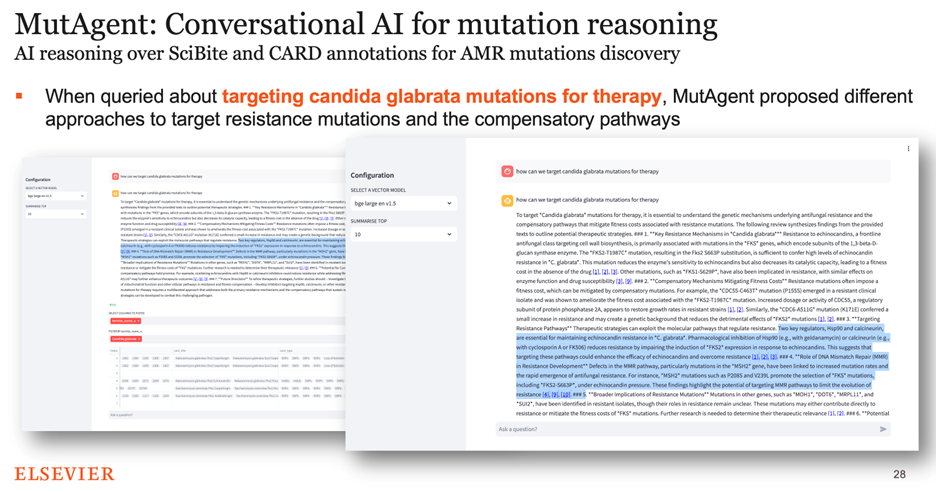
Slide of "MutAgent: Conversational AI for mutation reasoning"
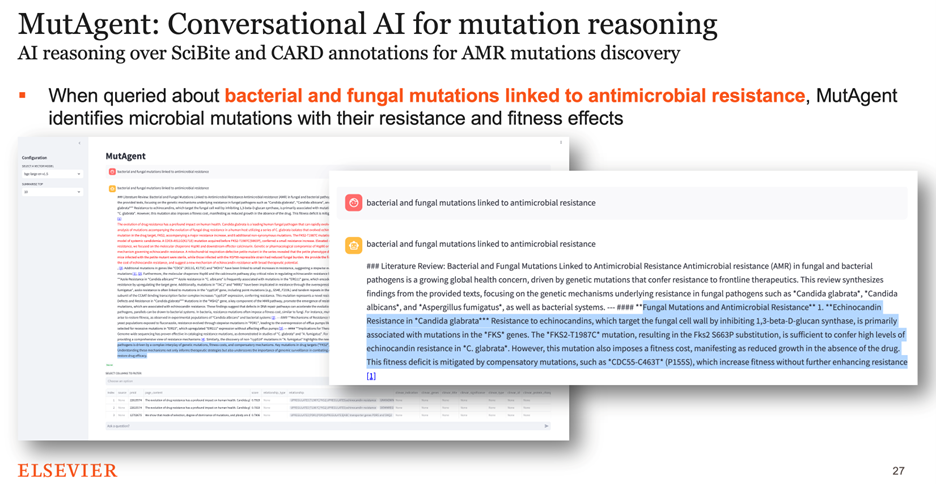
Side of "MutAgent: Conversational AI for mutation reasoning"
こうした取り組みにより、MutAgentはヒトおよび微生物の変異に関する推論を、単一の説明可能なAI環境に統合します。これにより、精密医療の高度化と、グローバルなAMR解明の双方を支える基盤を提供します。
Learn more
詳細については、エルゼビアのプロフェッショナルサービスチームとSciBiteチームよりご紹介します。
貢献者
Maaly Nassar
Senior Data Scientist
SciBite