
The microbiome: how the bubble burst and what came back
1 September 2026
By Steve Korver
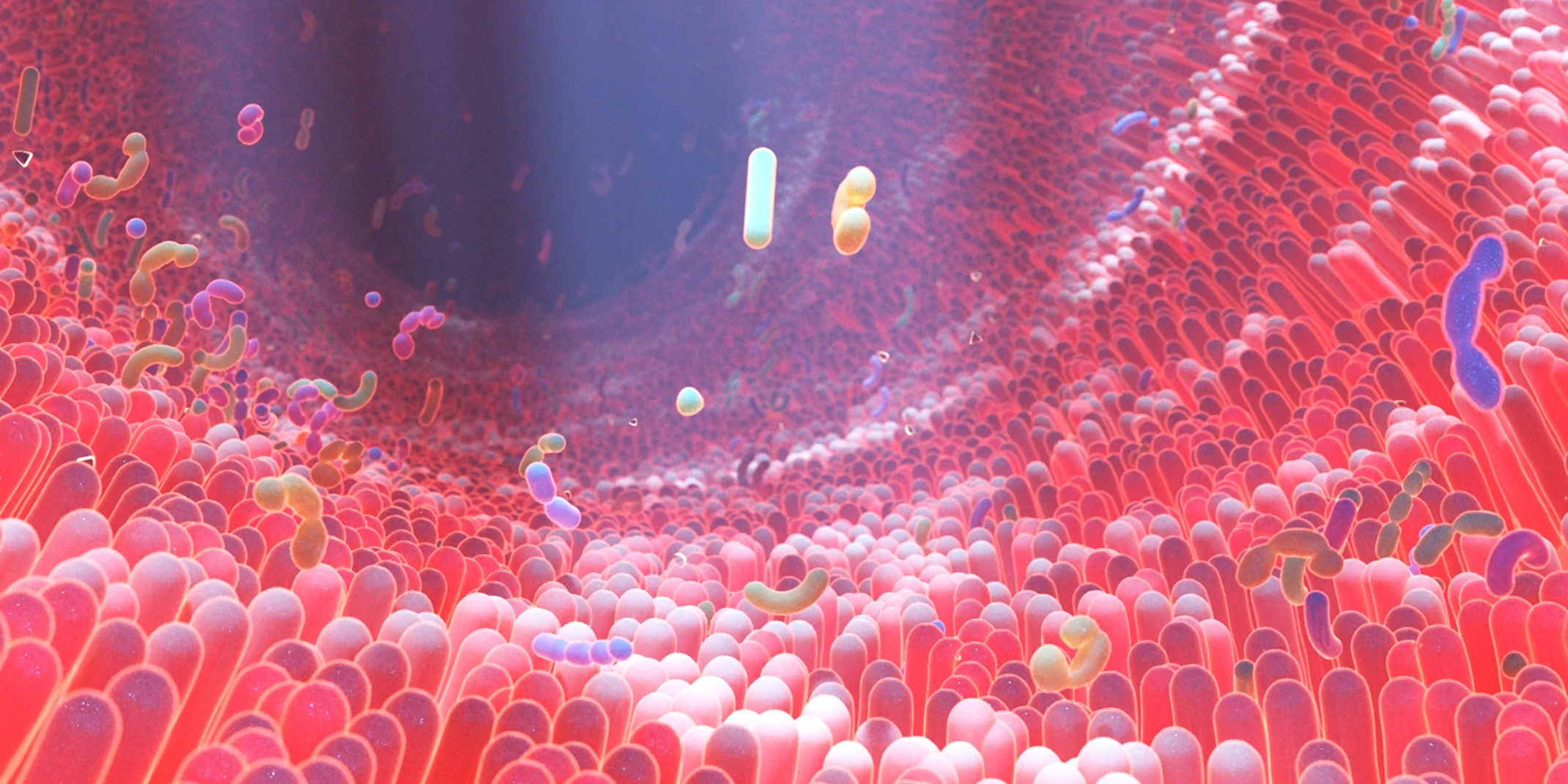
One lived through the microbiome bubble. The other builds the maps for sciences that won’t sit still.
Fifteen years ago, the gut microbiome was medicine’s next frontier. Sequencing had revealed hundreds of species no one could grow in a dish, and for a while it seemed poised to explain bowel disease, obesity, and depression. But there was more excitement than evidence. Small studies made sweeping claims, microbiomes were “found” everywhere from the brain to the placenta, and the supplement aisles filled with cure-alls. Then the field went quiet. What returned is smaller and holds up.
“There was definitely a lot of overpromising,” says Dr Dries Buddingopens in new tab/window, CEO of the Amsterdam diagnostics company inbiomeopens in new tab/window, who was in it for the whole cycle and pivoted the moment the evidence stopped supporting the ambition.
George Georghiouopens in new tab/window, Senior Knowledge Strategy Manager at Elsevier, has built a career on structuring scientific literature, so software and AI can help researchers tell signal from noise.
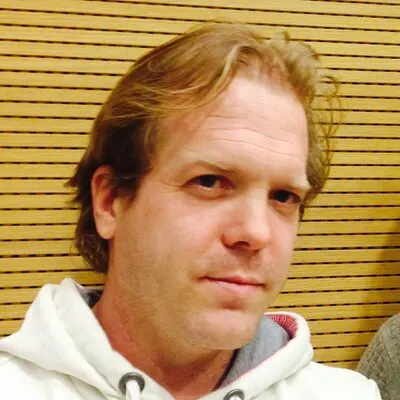
Dr Dries Budding, CEO of inbiome
Pivoting to bacterial diagnostics
At his office lab in Amsterdam’s Science Park, Dries keeps a wide range of excrement, and its accompanying rainbow of bacteria, in freezers that must never defrost. The crown jewel came out of Siberian permafrost: samples he and fellow physician-microbiologist Bas Wintermans took from a mammoth in 2015, from which a Leiden University team in 2019 germinated sporesopens in new tab/window dormant for some 28,000 years.
Like many, Dries was set off by a 2005 Stanford paperopens in new tab/window showing the gut held hundreds of species, not the 20 or so anyone could culture. For his PhD he built IS-pro, a way to read that complexity in a clinical sample. By 2014 it could profile a gut microbiome in hours. “The hope was that it would crack the unexplained inflammatory diseases of the gut, such as Crohn’s and ulcerative colitis.”
The signatures proved too non-specific for the clinic – and will likely remain that way until much larger studies catch up. His clinician colleagues wanted something more direct: “Why don’t we use this for routine bacterial diagnostics? We wait days for a culture. It would be amazing if we could detect specific bacteria in a few hours.”
So Dries and his team built it. Molecular Cultureopens in new tab/window, now inbiome’s flagship assay, identifies bacterial species directly from a sample in about five hoursopens in new tab/window, detects roughly 50% more pathogens than culture, and runs in 20 hospitals in Europe and the U.S. “So what started as microbiome research now makes it possible to get a reliable result for basically all your infections the same day.” In spring 2026, the NATO Innovation Fund co-led a 16-million-dollar Series Aopens in new tab/window to further develop and scale this technology – after all, infection is also a battlefield problem.
Building (and rebuilding) the map
While Dries was learning what the microbiome could and couldn’t do in the clinic, George was working the other end: the structures you, and now AI, need to make sense of a field. Ontologies are machine-readable maps of how a scientific domain fits together, and the microbiome is close to the worst-behaved domain you could build one for. The names refuse to sit still. New species, new categories and new corrections arrive by the month.
“Ontologies and taxonomies are not static. They’re snapshots of what is known at the time. You don’t need to cling to legacy concepts or terminology. You have to be flexible enough to let go of what you’ve already built so you can rebuild it. It’s tedious, but you need to plan for it.”
Or you can build on what’s already out there. For example, MedDRAopens in new tab/window is the gold standard for coding adverse events and uses the vocabulary regulators expect. “But if you want to apply logic over it to pull out all disorders that are cardiac or renal adverse events, it’s damn near impossible in its current structure.”
So George’s team reclustered and recurated it, adding the broader categories the standard doesn’t natively support. “It’s still MedDRA, but it’s got some extra bits to help us search for information more applicable to our users’ needs.”
The microbiome craze: too much hype, not enough science
Dries’s account of the microbiome bubble has obvious echoes now. “After the initial hype, the first conclusion was that the field was far more complex than we anticipated. Everyone was chasing the quick win,” he says. “But clinical studies take a long time.”
The early literature was a mess of small studies. Twenty Crohn’s patients, 20 healthy controls and far-reaching conclusions “most of which turned out to be untrue or unreproducible.” Partly that was method: “You can end up with a result that’s unique to your lab and your procedure.” Partly arithmetic, since the natural variation between gut microbiomes is so vast that saying anything solid takes huge cohorts. “And even with these big groups, there’s often still no clear answer. Will there be microbiome cures for these inflammatory diseases? Nobody knows yet.”
Meanwhile, non-microbiologists arrived and began sequencing anything. “Wild claims appeared in very high-profile journals like Nature and Cell. Most of these turned out to be lab contamination.” The placental microbiome fell firstopens in new tab/window. The cancer one took longeropens in new tab/window because it had already attracted major investment. “It wasn’t a purely scientific discussion anymore; it was for a large part about money and vested interests.”
Money shapes the data side too. “We’re so beholden to what we’ve built that we go, ‘oh, the job is too big and expensive to rebuild from scratch,’ even when we know that’s the right approach,” says George. “It’s also funny to see how much emotion plays into it: ‘I built something, and I’m proud of it.’”
What survived
With the microbiome, what survives is narrow. “It has now boiled down to the low-hanging fruit applications, where there’s very clear evidence that the microbiome is an important factor and it’s easily treatable,” says Dries.
The famous one is Clostridioides difficile. C. diff is a spore-forming gut bacterium that shrugs off most antibiotics, and it causes severe diarrhoea and colitis, mainly in older hospital patients who have just finished a course of something else. The mechanism is a vacancy: antibiotics wipe out a gut microbiome, the resistant organism takes the empty niche, and the fix turned out to be a fecal transplantopens in new tab/window. “If you give these people a transplant, they’re cured in about 90% of cases. That was the ‘Wow, this actually works’ moment.” It also turned up something strange: “there turned out to be ‘super donorsopens in new tab/window‘ who could cure almost everyone, and less-super donors who’d only cure about 50%.” One of the approved productsopens in new tab/window is now a capsule course, because the FDA wants something regulable “and people don’t love the idea of ingesting stool.”
His own strongest example is premature infantsopens in new tab/window. “They’re the classic blank slates.” No microbiome, no medical history, no dietary history. They die mainly of necrotizing enterocolitis (NEC) and sepsis, and probiotics given in the first days of life cut severe NEC by 62%opens in new tab/window. “The first probiotic with a really large effect.”
In September 2023, the FDA disclosed that an American infant weighing under a kilo died of sepsis, with sequencing tracing the infection to the probiotic it had been givenopens in new tab/window. Within a month, both products then in use in American NICUs were off the marketopens in new tab/window, and nothing has replaced them. Europe kept its probiotics. “It’s insane,” says Dries. “You’re saving tens of thousands at the cost of maybe one in 10,000.”
With Tim de Meij’s group at Amsterdam UMC, Dries has spent a decade collecting preterm fecal samples. The payoff: “you can predict a large share of the premature sepsis cases up to five days in advance.” Protective species deplete, pathogens rise, and you can watch it happen.
George’s instinct with a moving target like the microbiome is to build the structure and never let the map claim more than is known. “You can’t harden a correlation into a cause; you say they ‘contribute towards,’ or ‘may play a role in.’ And if there’s disagreement, it’s not for an AI to decide, it’s for the human to decide, based on the evidence.”
Dries never had a problem with shifting taxonomies, because his assay was never reliant on names. “We look at molecular signatures so we don’t really care. We just give them a name or just a number, and you can do what you like with the data.” In any case, the stretches of genome he reads are conserved enough that a reshuffle rarely reaches them: “The sequences we use have probably been around for more than three billion years.”
Humans still driving progress – and sometimes blocking it
George cites Chris Mungallopens in new tab/window‘s group at Lawrence Berkeley National Laboratory and its AI-assisted curation tools, CurateGPT and OntoGPTopens in new tab/window, which use schemas to pull structured knowledge graphs and taxonomies out of large document sets. “You then fill in the details. It speeds things up tremendously.”
There is still a limit: “How many AI-designed drugs have been approved by the FDA or EMA and made it to market this year [2026]? None. Not a single one. I’m sure this will change, but the magnitude remains limited. Is AI creative? Does it have that sense of wonder? It’s still human curiosity and imagination that drive breakthroughs.”
Dries, “a huge fan of AI”, runs it across his data team but won’t let it write the interpretive algorithms, in part because you can’t train it on the cases that matter most. “Recognizing cats in internet pictures is fine, because there are millions of examples available. But to reliably identify a bug we’ve only ever found in a handful of samples, how are you going to train that?”
The bigger problem is adoption. “Every time you want to convince a hospital to start using our assay, that can take a year, when in that same time we know we could already have saved hundreds of patients in their hospital. This slowness to change is the most frustrating thing I deal with.”
Which brings us back to the freezer. The Leiden group has now used the mammoth feces to culture a previously unknown bacterial genus, isolated 15 members and screened them for antibiotic production. “Many of them produced antibiotics, and from that there are now three novel antibiotic candidates. So that’s pretty cool.”
The material never changed. The questions did. And this makes the microbiome less a theory of everything than a well-kept archive – worth whatever someone thinks to ask it next.
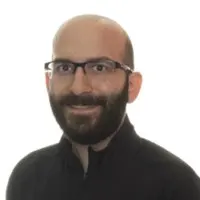
George Georghiou, Senior Knowledge Strategy Manager at Elsevier
Contributor
SK