
Attention is all we have (left)
9 September 2026
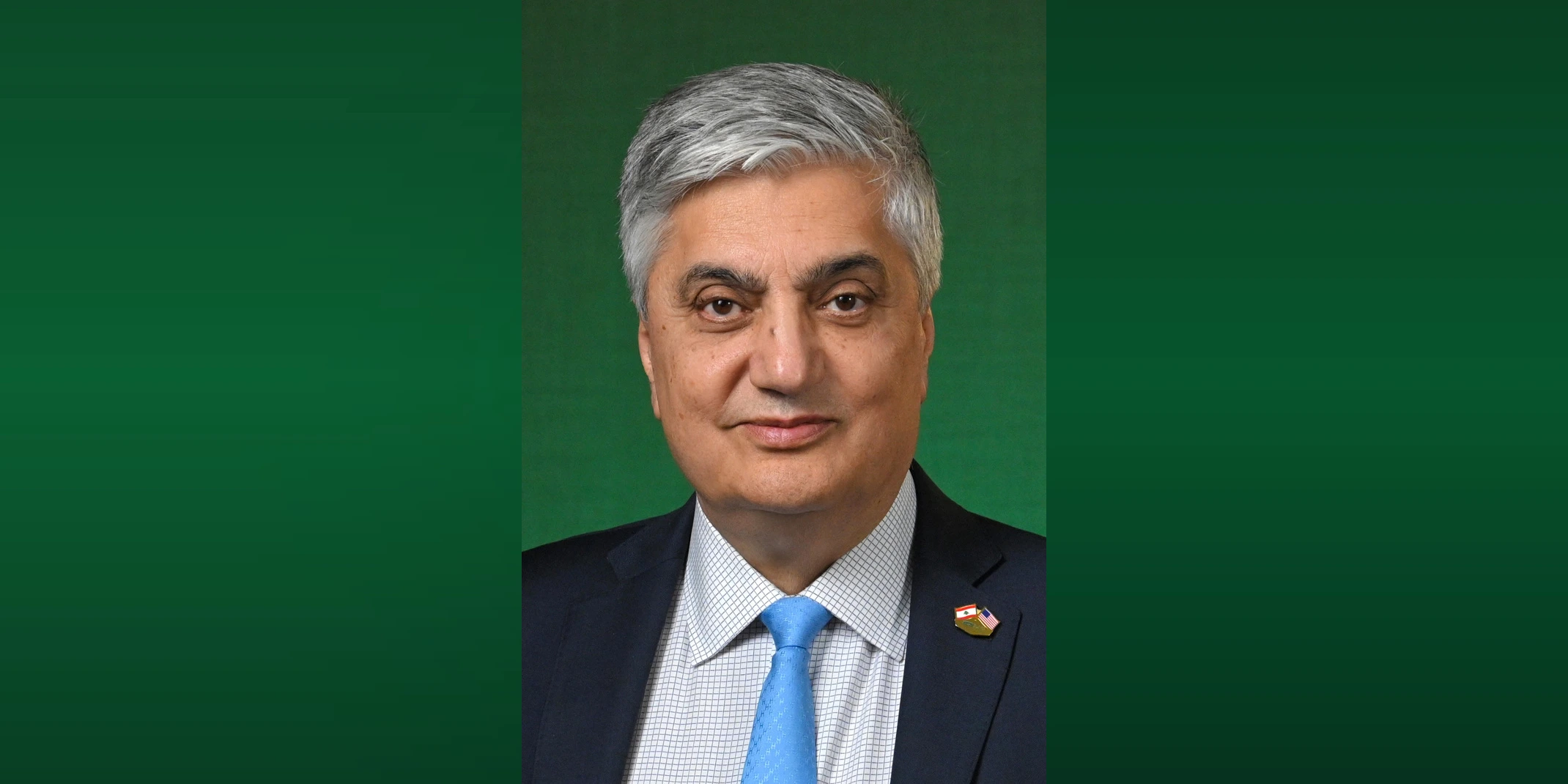
By Dr Chaouki Abdallah, President, Lebanese American University
Civilizations are remembered as much for what they squandered as for what they created. Some have exhausted natural resources and treasures, and, at times, human lives. Ours may be remembered for wasting something less tangible but no less essential: attention.
Attention loss is easy to miss because it leaves no visible ledger entry. We have learned to measure computational power in exquisite detail — parameters, tokens, terabytes, watts — yet have almost no language for the slow erosion of our capacity to linger on concepts or sustain thought. That matters because attention, unlike most other resources, combines three characteristics: It is finite, non-renewable, and constitutive of who we are. Once spent, it is simply gone. Attention is not merely measuring how we spend our time. It is how we spend ourselves.
I do not fear artificial intelligence because it can simulate how we may think, or because it may one day outthink the best of us. I worry about AI because it makes it easy for us not to think. Just as we have built our most powerful intellectual tools, we are becoming less adept at exercising the one faculty those tools cannot substitute.
Mine is not an anti-AI argument. I use AI tools daily, in my own research and in leading my university, and I have even used them in writing this essay. My argument is that AI should be, but is not yet, forcing us to rediscover something we have started taking for granted. Understanding cannot be downloaded and it has always had one true currency: attention.
An old idea, rediscovered
In 1759, Samuel Johnson addressed a complaint he heard often in London: that memory was failing. His diagnosis then holds today. “The true art of memory,” he wrote, “is the art of attention.” Reading does not leave a trace on a mind that is wandering. What we retain is what we attended to fully and what we merely glance at disappears as if it had never been read.
I find it fitting that when computer scientists proposed the architecture now underlying every large language model, they named its central mechanism “attention.” Two hundred and fifty-eight years separate Johnson’s essay from the Transformer architecture, yet the same insight sits at the center of both: A system, biological or artificial, becomes capable of coherent thought only by deciding, moment by moment, what deserves its focus.
Ordinary language already made this obvious. We do not say we “give” attention or that we “have” it. In English, we pay it — an economic metaphor so worn we no longer notice it, but it is exact: attention spent on one thing is unavailable for another. The etymology runs deeper still. Pay descends from the Latin pacare, to settle a debt. Other languages price the same transaction differently — French and Spanish speakers lend attention, expecting a return; German speakers schenken it, gift it, expecting nothing. Whichever metaphor a language settles on, none treats attention as free.
Where the bottleneck moved
For most of history, the scarcest resource was information, and universities existed largely to generate, curate, and distribute it because books and libraries were rare and experts were few. That constraint has now dissolved. With ever-increasing connectivity, a person anywhere can today access, in seconds, a lucid explanation of tensor calculus, the latest scientific discovery, historical events, philosophical concepts or constitutional law. Herbert Simon foresaw this shift in 1971: “A wealth of information creates a poverty of attention.” At the time, it read as an observation. Today, it reads as prophecy.
This is the shift university boards and presidents need to internalize: University moats are breached one by one, and the learning bottleneck has moved from access to allocation. When a resource becomes abundant, its scarce complements typically become more valuable, not less — electricity didn’t devalue appliances, it made them indispensable. And as AI makes explanation and synthesis abundant, it makes discernment, judgment, and attention itself more valuable, not less. This is the strongest argument I know for why universities, properly steered, will never become obsolete.
What this means for how we lead
If information and expertise exclusivity are no longer universities’ major comparative advantage, we need to make clear what should be. It is not the lecture as a distribution mechanism, and for many people it will not be the credentialing. It is the slower, less “efficient” work: the seminar, the laboratory, the dissertation defense, the office hour — environments built to cultivate sustained attention rather than transmit facts. It is also the slow maturing of the minds and the social ties that cannot be duplicated online. A doctoral thesis was never really the product; the scholar who produces it is. The same is true of a hospital residency, a design studio and a research apprenticeship.
This has a direct and, I think, underappreciated implication for higher education leadership and management, namely cognitive debt. Just as financial debt may finance genuine investment or merely disguise consumption, delegating cognition to AI can build capability or quietly erode it, depending on what gets delegated. A scientist who asks AI to organize hundreds of papers loses little. A scientist who asks AI to form her scientific judgment loses the very capacity science depends on. The distinction is fundamental: we must never outsource the part of thinking when we are trying to learn; but we may freely outsource what has already become routine or mastered.
Let us be more precise about what can and what should not be delegated. You can hand off driving, calculating, translating, drafting, even large parts of research synthesis. You should not hand off curiosity. You cannot hand off judgment or the slow formation of wisdom or the discomfort of realizing you were wrong. Those are acts of attention, and attention is the one resource that cannot be delegated without changing the person who delegates it.
There is also a leadership responsibility hiding here that I am routinely reminded of: One of the core functions of leadership is deciding what an institution will attend to and what it should give up. Boards, presidents, and deans do not just make decisions; we steward with resources and initiatives the collective attention of thousands of people, semester after semester, year after year, one strategic plan after another.
This stewardship has consequences beyond strategy for the people we lead. Simone Weil wrote nearly a century ago that “attention is the rarest and purest form of generosity.” I think about that sentence every time I am tempted to half-listen in a meeting while drafting my next response, and recall when as a younger and less experienced administrator, I glanced at my phone or iPad during a meeting. The greatest thing any of us can give a colleague, a student, or a patient is not advice or distilled knowledge. It is undivided attention — and there is no AI system that can perform that act on our behalf. It can draft the email. It cannot sit across the table and be present. As our calendars fill with tools that promise to save us minutes, the scarcer and more valuable currency in any organization becomes the leader and colleague who can give someone else their full and undistracted mind.
The courage to be wrong
One more principle from my own technical field, control theory, belongs here. No system improves without a feedback error signal; a controller that ignores error becomes unstable, and so does an institution that says, “We already know how to do it.” Karl Popper made the same point about knowledge generally: A theory earns its worth not by being confirmed but by being falsifiable. Success rarely teaches much — we usually attribute it to our own skills. Failure demands explanation, which is why aviation investigates every crash and hardly studies safe landings at all. Institutions that treat disconfirming evidence as a threat rather than a resource are the ones overtaken by assumptions that quietly stopped being true. And dedicating careful attention to learning what we do not yet know and examining what we cannot explain, is the investment we make in progress.
Where this leaves us
As stated at the beginning, every civilization is remembered as much for what it preserved as for what it built. Ours is building astonishing physical and cognitive capabilities. I hope we also preserve attentive minds, because the future will not belong to the civilization with the most intelligent machines. It will belong to the one that remembers why intelligence mattered in the first place.
We do not become what we know. We become what we repeatedly pay attention to. In an age increasingly influenced by artificial intelligence, attention may be the most profoundly human thing we have left to protect — and, for those of us who lead universities, this may be the clearest mandate we have been given in a long time.
Contributor
DCAPLAU