
簡介
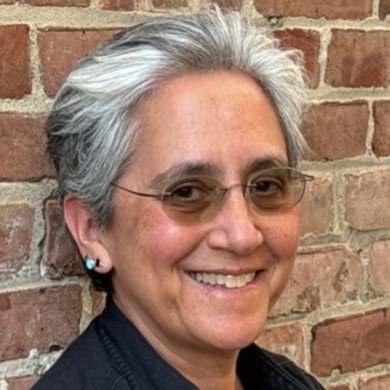
Nancy Krieger
Harvard University, USA
Nancy Krieger is Professor of Social Epidemiology and American Cancer Society Clinical Research Professor, in the Department of Social and Behavioral Sciences at the Harvard T.H. Chan School of Public Health (HSPH) and Director of the HSPH Interdisciplinary Concentration on Women, Gender, and Health. She received her PhD in Epidemiology from the University of California at Berkeley in 1989. Dr. Krieger is an internationally recognized social epidemiologist, with a background in biochemistry, philosophy of science, and the history of public health, combined with over 35 years of activism linking issues involving social justice, science, and health. In 2004, she became an ISI/Clarivate highly cited scientist (reaffirmed in 2015, 2022, 2023, and 2024), a group comprising “less than one-half of one percent of all publishing researchers.” In 2013 she received the Wade Hampton Frost Award from the Epidemiology Section of the American Public Health Association, and in 2015, she was awarded the American Cancer Society Clinical Research Professorship, and re-awarded its renewal in 2020. In 2020, she was also awarded the American College of Epidemiology’s “Outstanding Contributions to Epidemiology” award and also “best paper of the year” from two journals: American Journal of Epidemiology, for her team’s study on historical redlining and cancer stage at diagnosis (the first ever study on this issue), and Journal of Public Health Policy for her paper on “Climate crisis, health equity, and democratic governance: the need to act together.” In 2021, she was appointed as member of the UNESCO International Scientific Committee for the Routes of Enslaved Peoples Project: Resistance, Liberty, Heritage. In 2023, she was awarded the Sedgwick Memorial Medal for Distinguished Service in Public Health by the American Public Health Association, its “oldest and most prestigious medal.”
Informed by an analysis of the history and politics of epidemiology and public health, Dr. Krieger’s work addresses three topics: (1) conceptual frameworks to understand, analyze, and advance the people’s health, including her ecosocial theory of disease distribution, focused on embodiment and equity; (2) etiologic research on societal determinants of population health and health inequities, including structural racism and other types of adverse discrimination; and (3) methodologic research to improve monitoring of health inequities.
She is author of Epidemiology and The People’s Health: Theory and Context (Oxford University Press (OUP), 2011; 2nd edition: 2024) and Ecosocial Theory, Embodied Truths, and The People’s Health (OUP, 2021); the latter is one of the books in the OUP series she edits, “Small Books Big Ideas in Population Health” (which includes: Political Epidemiology & The People’s Health, by Jason Beckfield, OUP, 2018; Climate Change & The People’s Health, by Sharon Friel, OUP, 2019; Critical Epidemiology & The People’s Health by Jaime Brielh, OUP, 2021; and Causal Inference & The People’s Health by Sharon Schwartz and Seth Prins, OUP, 2025)). She also is editor of Embodying Inequality: Epidemiologic Perspectives (Baywood Press, 2004) and co-editor, with Glen Margo, of AIDS: The Politics of Survival (Baywood Publishers, 1994), and, with Elizabeth Fee, of Women’s Health, Politics, and Power: Essays on Sex/Gender, Medicine, and Public Health (Baywood Publishers, 1994).
In 1994 she co-founded, and still chairs, the Spirit of 1848 Caucus of the American Public Health Association, which focuses on links between social justice and public health.