
Honoring the 2025 Nobel Laureates
2025年10月6日
Ian Evans
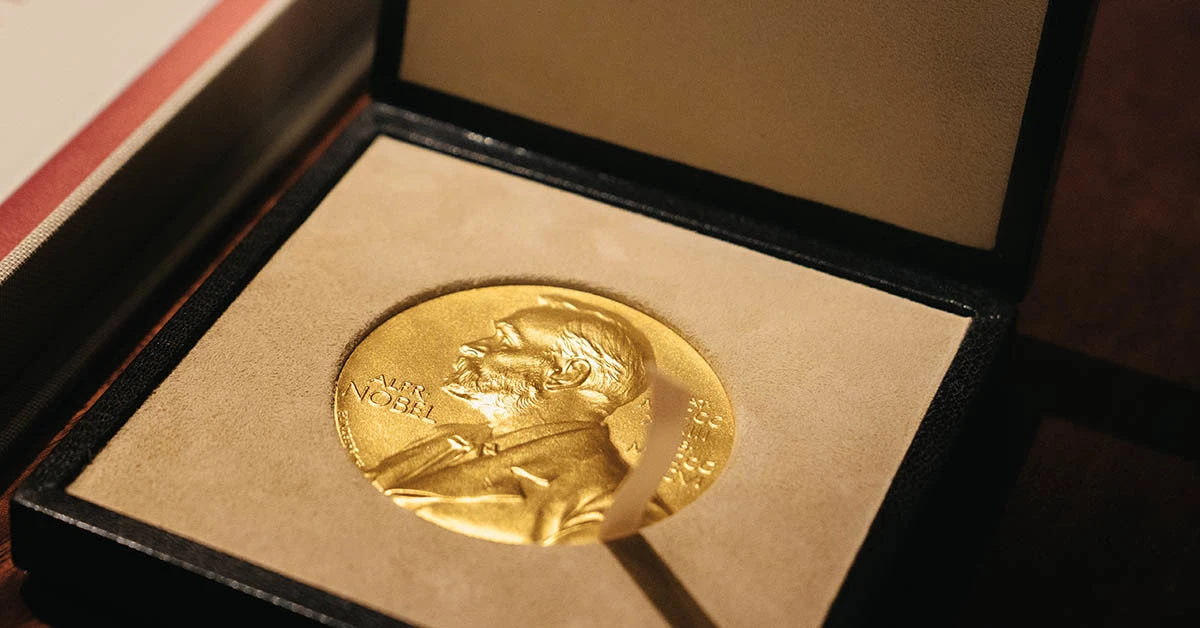
Pictured above: The medals and diplomas are prepared and packed at the Nobel Foundation to be sent to the home countries of the Nobel laureates. (© Nobel Prize Outreach. Photo: Clément Morin)
Read research from the 2025 Nobel Prize winners
Editor's note: This article will be continually updated with information about the newly announced Nobel Prize winners and access to their research.
In the coming days, the 2025 Nobel Laureates will be recognized for their significant contributions to science. That recognition reflects years of dedicated research that helps advance human progress for all.
The achievements of this year’s Laureates highlight the importance of rigorous, reproducible, and transparent research. Their work expands the boundaries of knowledge and sets a standard for scientific integrity, ensuring that the generations of researchers who follow them can build their own discoveries on the most reliable foundations.
Most importantly, all these researchers are part of a global community that collaborates across disciplines and borders to address complex challenges. By upholding high standards of transparency and accountability, they help maintain trust in the scientific process and inspire the next generation of scientists.
We congratulate the 2025 Nobel Laureates and celebrate their commitment to advancing science for the benefit of all.
Nobel Prize in Physiology or Medicine
The 2025 Nobel Prize in Physiology or Medicine has been awarded to Mary E. Brunkowopens in new tab/window (Institute for Systems Biology, Seattle), Fred Ramsdellopens in new tab/window (Sonoma Biotherapeutics, San Francisco), and Shimon Sakaguchiopens in new tab/window (Osaka University, Japan) for their discoveries concerning peripheral immune tolerance.
This year’s Nobel Laureates have fundamentally advanced our understanding of how the immune system distinguishes between harmful invaders and the body’s own tissues. Their research revealed the critical role of regulatory T cells—immune cells that act as “security guards,” preventing the immune system from attacking healthy organs. It's a discovery that has reshaped the field of immunology and opened new avenues for treating autoimmune diseases, cancer, and improving transplantation outcomes.
Shimon Sakaguchi’s pioneering work in 1995 challenged prevailing theories by identifying a previously unknown class of immune cells responsible for protecting the body from autoimmune diseases. Until then, it was widely believed that immune tolerance was solely established in the thymus through the elimination of harmful cells. Sakaguchi’s findings demonstrated that the immune system’s regulation is more complex, involving peripheral mechanisms. Shimon Sakaguchi is currently an advisory board member of the Cell Press journal Immunityopens in new tab/window.
Building on this, Mary Brunkow and Fred Ramsdell discovered in 2001 that mutations in the Foxp3 gene lead to severe autoimmune disorders in both mice and humans. Their work provided a genetic explanation for immune tolerance and linked Foxp3 to the development of regulatory T cells.
Sakaguchi later connected these discoveries, showing that Foxp3 is essential for the formation of regulatory T cells. Together, these breakthroughs have launched the field of peripheral tolerance and inspired new therapies, some of which are now in clinical trials.
Selected research by Physiology or Medicine Laureates
Mary E. Brunkow Disruption of Fnip1 Reveals a Metabolic Checkpoint Controlling B Lymphocyte Developmentopens in new tab/window
Proto-oncogenes in mammalian developmentopens in new tab/window
Frederick Ramsdell
Foxp3 and Natural Regulatory T Cells: Key to a Cell Lineage?opens in new tab/window
Fas and FasL in the homeostatic regulation of immune responsesopens in new tab/window
Shimon Sakaguchi
Natural regulatory T cells: mechanisms of suppressionopens in new tab/window
The dichotomous role of IL-2: tolerance versus immunityopens in new tab/window
Nobel Prize in Physics
The 2025 Nobel Prize in Physics has been awarded to John Clarkeopens in new tab/window (University of California, Berkeley), Michel H. Devoretopens in new tab/window (Yale University and University of California, Santa Barbara), and John M. Martinisopens in new tab/window (University of California, Santa Barbara) for their discovery of macroscopic quantum mechanical tunnelling and energy quantisation in an electric circuit.
This year’s Nobel Laureates have addressed a fundamental question in physics: How large can a system be and still exhibit quantum mechanical effects? Through a series of ground-breaking experiments in the mid-1980s, Clarke, Devoret, and Martinis demonstrated that quantum phenomena, once thought to be limited to the atomic scale, can manifest in systems large enough to be held in the hand.
Their work centered on superconducting circuits, specifically Josephson junctions, where superconducting materials are separated by a thin insulating layer. By carefully designing and measuring these circuits, the researchers showed that the collective behavior of charged particles could be controlled and observed as a single macroscopic quantum system.
In their experiments, the system initially remained in a zero-voltage state, trapped behind an energy barrier. Remarkably, the system escaped this state through quantum tunnelling - a process where particles pass through barriers that would be insurmountable in classical physics. The transition was detected by the appearance of voltage, providing clear evidence of quantum mechanics at work on a macroscopic scale.
The team also demonstrated energy quantisation in the circuit, confirming that the system could only absorb or emit specific amounts of energy, as predicted by quantum theory.
These discoveries have expanded our understanding of quantum mechanics and paved the way for new technologies, including quantum computers, quantum cryptography, and advanced quantum sensors.
Elisa De Ranieri, Editor-in-Chief of the Cell Press journal Newton commented,
"The editorial team at Newton congratulates Drs. John Clarke, Michel Devoret, and John Martinis on receiving the 2025 Nobel Prize in Physics. Their discoveries in the early 1980’s helped bring the elusive principles of quantum mechanics within the grasp of our everyday experience.
"By using electronic circuits with superconducting elements, they demonstrated both quantum tunnelling and energy quantisation on a macroscopic scale. Awarded in the centenary year of quantum mechanics, this Nobel Prize highlights the enduring impact of the theory on both our understanding of nature and the technologies that shape our future."
Selected research by Physics Laureates
John Clarke
Resonant activation of a Josephson junctionopens in new tab/window
Michel H. Devoret
John M. Martinis Application of ion-impact energy measurement to electrospray ionization mass spectrometry of proteins and protein mixturesopens in new tab/window
Nobel Prize in Chemistry
The 2025 Nobel Prize in Chemistry to Susumu Kitagawa (Kyoto University, Japan), Richard Robson (University of Melbourne, Australia), and Omar M. Yaghi (University of California, Berkeley, USA) for the development of metal-organic frameworks (MOFs).
This year’s Nobel Laureates have revolutionized materials chemistry by creating molecular architectures with vast internal spaces—structures that can capture, store, and transform a wide range of substances. Known as metal-organic frameworks, these porous materials are built from metal ions connected by organic molecules, forming crystalline networks with large, customizable cavities.
The story of MOFs began in 1989, when Richard Robson combined copper ions with specially designed organic molecules to create a spacious, ordered crystal. While this early structure was unstable, it laid the groundwork for further innovation. In the following years, Susumu Kitagawa demonstrated that gases could flow in and out of these frameworks, and predicted that MOFs could be made flexible. Omar Yaghi then developed highly stable MOFs and showed that their properties could be tailored through rational design.
Today, chemists have synthesized tens of thousands of different MOFs, each with unique capabilities. These materials are already being explored for a range of applications, from capturing carbon dioxide and storing toxic gases to harvesting water from desert air and catalyzing chemical reactions. MOFs also hold promise for environmental cleanup, such as removing PFAS from water and breaking down pharmaceutical residues.
Selected research by Chemistry Laureates
Susumu Kitagawa Interface chemistry of conductive crystalline porous thin filmsopens in new tab/window
Omar M. Yaghi
Evolution of MOF single crystalsopens in new tab/window
Digital Reticular Chemistryopens in new tab/window
Molecular weaving of chicken-wire covalent organic frameworksopens in new tab/window
Mass transfer in atmospheric water harvesting systemsopens in new tab/window
Richard Robson
Sveriges Riksbank Prize in Economic Sciences in Memory of Alfred Nobel
The Royal Swedish Academy of Sciences has awarded the 2025 Nobel Prize in Economic Sciences to Joel Mokyr, Philippe Aghion, and Peter Howitt for their groundbreaking work on the role of innovation in driving long-term economic growth.
For most of human history, economic progress was slow and sporadic. Despite occasional breakthroughs, growth would eventually stall, and living standards remained largely unchanged. Over the past two centuries, however, the world has experienced sustained economic growth, lifting millions out of poverty and transforming societies. This year’s Nobel Laureates have provided key insights into how and why this transformation occurred.
Joel Mokyr’s research draws on historical sources to explain how a continuous flow of innovation became possible. He showed that for progress to be self-sustaining, it is not enough to know that something works—scientific understanding of why it works is also essential. Mokyr highlighted the importance of a society that is open to new ideas and willing to embrace change, creating an environment where innovation can thrive.
Philippe Aghion and Peter Howitt contributed a mathematical model of “creative destruction,” a process where new technologies and products replace outdated ones. Their work explains how innovation drives growth by constantly renewing the economy, but also creates challenges for established firms and industries. Managing these conflicts constructively is crucial; otherwise, entrenched interests may block progress and stall economic development.
Together, the Laureates’ research underscores that sustained economic growth is not automatic. It depends on maintaining the conditions that allow innovation to flourish and ensuring that the process of creative destruction is managed in a way that benefits society as a whole.
Selected research by Economics Laureates
Joel Mokyr
The past and the future of innovation: Some lessons from economic historyopens in new tab/window
Cardwell's Law and the political economy of technological progressopens in new tab/window
Philippe Aghion
Taxation, corruption, and growthopens in new tab/window
Peter Howitt
Unemployment: A symptom of stagnation or a side-effect of growth?opens in new tab/window
Market Structure and the Growth Processopens in new tab/window
貢献者
