
Feeding behavior traits may be an indicator of feed efficiency in Holstein cows
Philadelphia | 28 de septiembre de 2022
New research in the Journal of Dairy Science® shows a slower eating rate is correlated with feed efficiency
Genetic selection is a powerful tool to improve livestock production, given that genetic gains are cumulative and permanent, and feeding behavior in cows may be used as an indicated trait for feed efficiency. In a new reportopens in new tab/window in the Journal of Dairy Science®opens in new tab/window, published by FASS Inc. and Elsevier, eight researchers from the University of Wisconsin (Madison, WI), Council on Dairy Cattle Breeding (Bowie, MD), and Michigan State University (East Lansing, MI) concluded that measures of feeding behavior could be useful indicators of dairy cow feed efficiency, and individual cows that eat at a slower rate may be more feed efficient.
Due to the lack of feeding behavior genetic studies in lactating dairy cattle and the potential for using these traits as indicators of feed efficiency, the objective of this study was to investigate different feeding behavior traits and their genetic associations with feed efficiency traits in lactating US Holstein cows. Researchers estimated genetic parameters for feeding behavior traits using daily records.
“Interestingly, some feeding behavior traits were strongly genetically correlated with feed efficiency,” said lead researcher Ligia Cavani, PhD, Department of Animal and Dairy Sciences, University of Wisconsin. The research team found that feeding rate showed a strong positive genetic correlation with dry matter intake, metabolic body weight, and residual feed intake in particular.
The researchers used data from daily feeding behavior records of 1,328 Holstein cows in 31 experiments conducted from 2009 to 2020 in a facility at the University of Wisconsin-Madison Emmons Blaine Dairy Cattle Research Center (Arlington, WI). The facility used an automated intake recording system, which permits one animal to access the feeder at a given time. The feeding behavior traits considered included number of feeder visits per day, number of meals per day, duration of each feeder visit, duration of each meal, total duration of feeder visits, intake per visit, intake per meal, feeding rate per visit, and feeding rate per meal.
“Overall, our results suggest that measures of feeding behavior could be useful indicators of dairy cow feed efficiency and that individual cows that eat at a slower rate may be more feed efficient,” said Cavani.
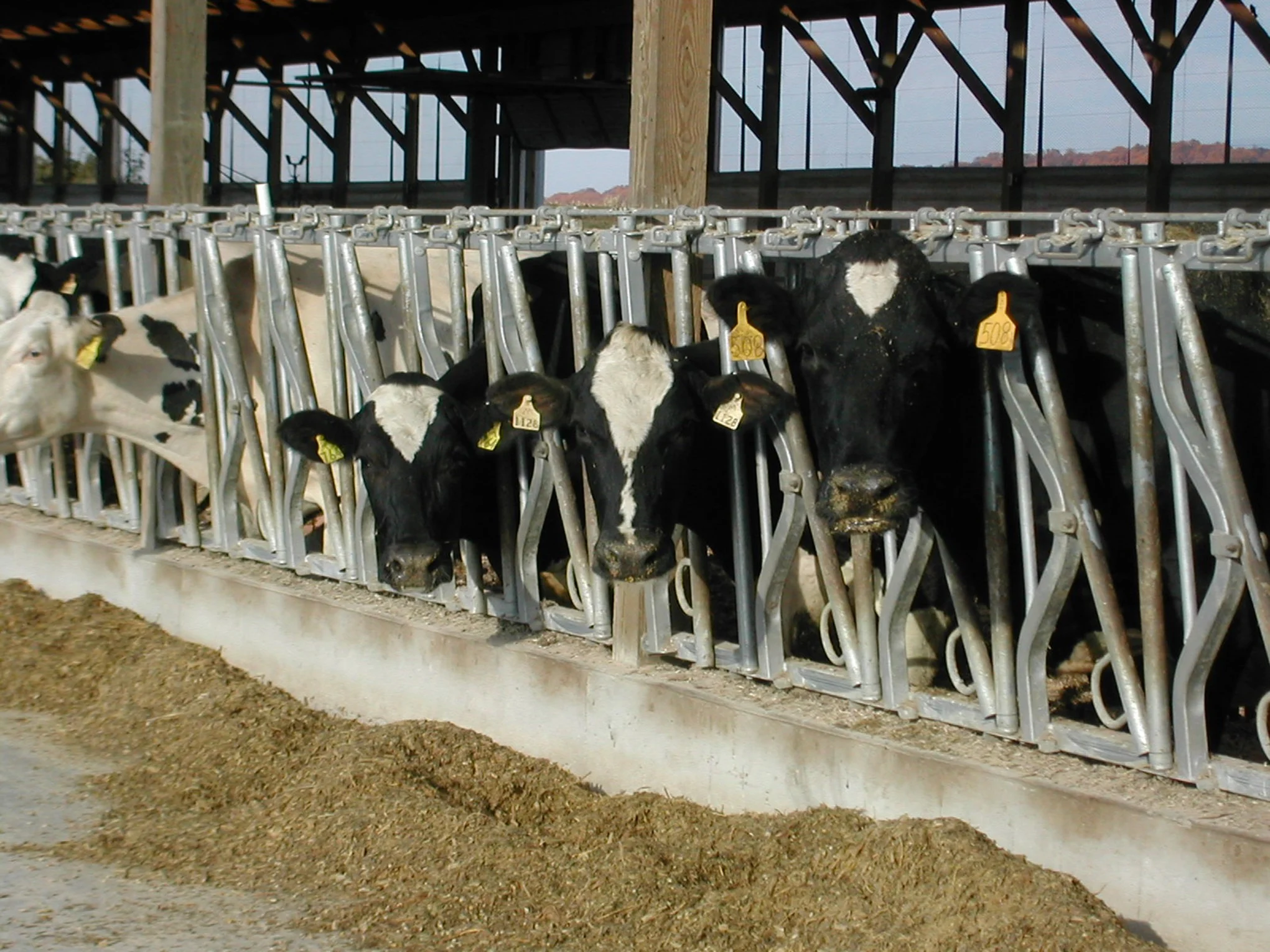
New research on Holstein cows finds that measures of feeding behavior could be useful indicators of dairy cow feed efficiency, and cows that eat at a slower rate may be more feed efficient (Credit: Ken Olson, PhD, PAS).
---
Notes for editors
About the Journal of Dairy Science
The Journal of Dairy Scienceopens in new tab/window® (JDS), an official journal of the American Dairy Science Association®, is co-published by Elsevier and FASS Inc. for the American Dairy Science Association. It is the leading general dairy research journal in the world. JDS readers represent education, industry, and government agencies in more than 70 countries, with interests in biochemistry, breeding, economics, engineering, environment, food science, genetics, microbiology, nutrition, pathology, physiology, processing, public health, quality assurance, and sanitation. JDS has a 2021 Journal Impact Factor of 4.225 and five-year Journal Impact Factor of 4.987 according to Journal Citation Reports™ (Source: Clarivate™ 2022).
About the American Dairy Science Association (ADSA®)
The American Dairy Science Associationopens in new tab/window (ADSA) is an international organization of educators, scientists, and industry representatives who are committed to advancing the dairy industry and keenly aware of the vital role the dairy sciences play in fulfilling the economic, nutritive, and health requirements of the world's population. It provides leadership in scientific and technical support to sustain and grow the global dairy industry through generation, dissemination, and exchange of information and services. Together, ADSA members have discovered new methods and technologies that have revolutionized the dairy industry.
About FASS Inc.
Since 1998, FASSopens in new tab/window has provided shared management services to not-for-profit scientific organizations. With combined membership rosters of more than 10,000 professionals in animal agriculture and other sciences, FASS offers clients services in accounting, membership management, convention and meeting planning, information technology, and scientific publication support. The FASS publications department provides journal management, peer-review support, copyediting, and composition for this journal; the staff includes several BELS-certified (www.bels.orgopens in new tab/window) technical editors and experienced composition staff.
Acerca de Elsevier
Elsevier es líder global en información avanzada y soporte para la toma de decisiones. Durante más de un siglo, ha ayudado a avanzar la ciencia y la salud para promover el progreso humano. Apoya a comunidades de investigación académicas y corporativas, médicos, enfermeras, futuros profesionales de la salud y educadores en 170 países, proporcionándoles conocimientos críticos y soluciones innovadoras que combinan contenido científico y médico confiable con tecnologías de IA de vanguardia. Elsevier promueve la inclusión y la sostenibilidad incorporando estos valores en sus productos y cultura. La Elsevier Foundation respalda investigaciones y asociaciones de salud alrededor del mundo.
Elsevier forma parte de RELX, proveedor global de herramientas de análisis y decisión basadas en información para clientes profesionales y de negocios. Para más información, visite www.elsevier.com y síganos en redes sociales: @ElsevierConnect.
Contacto
EL
KOPP
Ken Olson, PhD, PAS
American Dairy Science Association
+1 630 237 4961
Correo electrónico Ken Olson, PhD, PAS