
Authors' Update - keeping journal authors in touch with industry developments, support and training

Leider unterstützen wir Ihren Browser nicht vollständig. Wenn Sie die Möglichkeit dazu haben, nehmen Sie bitte ein Upgrade auf eine neuere Version vor oder verwenden Sie Mozilla Firefox, Microsoft Edge, Google Chrome oder Safari 14 bzw. eine neuere Version. Wenn Sie nicht dazu in der Lage sind und Unterstützung benötigen, senden Sie uns bitte Ihr Feedback.
23. September 2015
|
3 Min. zur Lektüre
Von Paul Doda
In an articleopens in new tab/window published in September last year we highlighted the fraudulent ‘call for papers’ emails that were going around. Recent feedback from authors have made us aware of additional fraudulent emails requesting payment for publication.
We urge you to use caution if you receive an email requesting payment from Elsevier (or any other company for that matter). If your gut feeling is “this doesn’t feel right” then it probably isn’t.
Here are some signs to look out for:
Email address
If the "From" email address ends in anything other than “@elsevier.com” please delete.
Ignore all emails coming from free email services such as Gmail, Yahoo, Hotmail etc.
Block capitals
Too many words spelled with block capitals is regarded as “shouting” and not very professional.
Errors / misspelling
We all make mistakes of course, but these emails often contain a higher proportion of misspelled words.
Casual language
The use of words such as “hi”, “cheers” and “thanks” to name a few, are signs that the email may not be legitimate.
Signature
Emails requesting payment will never be signed by senior management.
Below is an example of a fraudulent email. The most obvious sign that this email is fraudulent is the email address that it originates from.
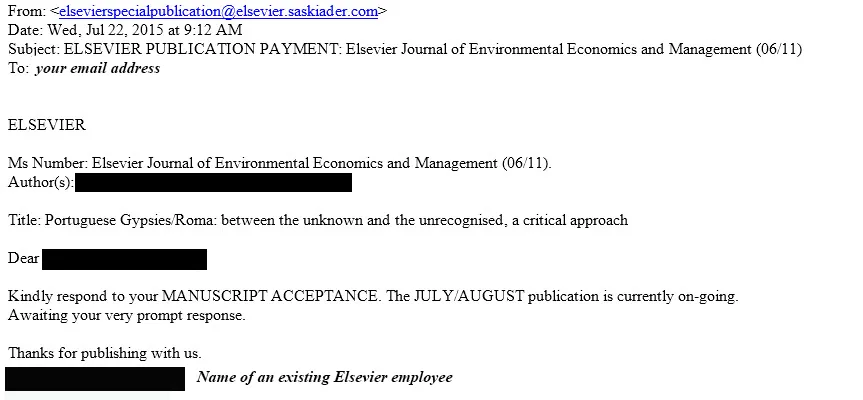
Example of fraudulent email
One final note: If you are publishing open access with Elsevier, bear in mind we will never request payment before the paper has been accepted.
If you receive any emails that appear to be a part of this fraudulent solicitation, please do not respond to the message and do not open any attachments it might contain. Delete it, block the sender and report it as spam.
If you have any concerns, please contact our Researcher Support team.opens in new tab/window
