
Zum Hauptinhalt wechseln

Leider unterstützen wir Ihren Browser nicht vollständig. Wenn Sie die Möglichkeit dazu haben, nehmen Sie bitte ein Upgrade auf eine neuere Version vor oder verwenden Sie Mozilla Firefox, Microsoft Edge, Google Chrome oder Safari 14 bzw. eine neuere Version. Wenn Sie nicht dazu in der Lage sind und Unterstützung benötigen, senden Sie uns bitte Ihr Feedback.

Wir würden uns über Ihr Feedback zu diesen neuen Seiten freuen.Sagen Sie uns, was Sie denken

Elsevier
Bei Elsevier publizieren

Learn more about university rankings and how research activities contribute

While rankings are not the sole indicator of an institution’s reputation and academic excellence, they help benchmark universities nationally, regionally, and globally. Many factors contribute to rankings, including research output and collaboration.

Explore these resources for a deeper look into how rankings work, and learn about analyzing and tracking research activities that are counted — so you can better support your rankings objectives.

Get notified of new content

Meeting top view

Guides & perspectives

University rankings are constantly evolving. New ranking reports, shifting methodologies, changing priorities and a growing global emphasis on interdisciplinarity, impact and collaboration continue to reshape the landscape. To support those guiding institutions through these changes, we’ve curated a collection of guides, resources and insights to help you navigate — and deepen your understanding of — rankings.

Global university rankings guide: A closer look for academic leaders

University rankings

The World University Rankings guide provides an overview of how major global rankings are developed, what they aim to measure and where their limitations lie. It is intended to support university leaders and research offices in their pursuit of interpreting and understanding rankings alongside other indicators of research performance and institutional activity.


Read the guide

Subject Rankings: A comprehensive guide

Subject Rankings: A comprehensive guide

The Subject Rankings guide explains what rankings by subject are, how they differ from overall rankings and why they matter for universities. It outlines the methodologies behind subject-focused comparisons, highlights the kinds of indicators used and discusses how these rankings can offer a more nuanced view of institutional strengths in specific academic areas — while also underscoring their limitations and appropriate use. Read the guide

University Rankings: Dates to know

University Rankings: Dates to Know infographic

Tracking the release dates of key global academic rankings is easy, but keeping up with the intricate, year-round processes that produce each ranking can be challenging. The University Rankings Dates-to-Know Tracker provides a concise overview of some of the key dates for rankings activities for major ranking bodies such as: THE, QS, CWTS and Shanghai.

View the infographic

We have always believed these rankings are not designed to say that one university is better than another. It is more about being able to look at the institution through a variety of lenses, whether it’s teaching, research, knowledge transfer or international visibility.Universities are increasingly investing in an evidence-based approach to develop a clear understanding of their position and progress. They are increasingly using a basket of diverse metrics to understand their strengths, set goals, chart their progress, and make budgetary decisions. Rankings are just one of the tools they can use.
M’hamed el Aisati

M’hamed El Aisati

VP Analytical and Data Services, Elsevier

Interested in this topic?

Get notified when new resources about university rankings and research activities become available.

The data and methodologies behind university rankings

Ranking methodologies rely on data inputs from a range of external resources. These resources often include university and researcher data, relevant data on human resources, student administration, finances and data from reputation surveys — each varying based on a ranking's niche and focus. Explore insights into the varying methodologies underpinning some key rankings and learn where and how Elsevier contributes.

Quick guide to 7 major university rankings

This guide offers an overview of several widely recognized university ranking systems to help you gain insight into their methodologies, data sources and contexts of use.

Note: Methodology information and data sources are current as of November 5, 2025. However, ranking methodologies are updated periodically by their respective organizations; therefore, indicator definitions, weights or data sources may change from year to year.

Read the guide

Bibliometric data and THE University Rankings

Bibliometric data from SciVal

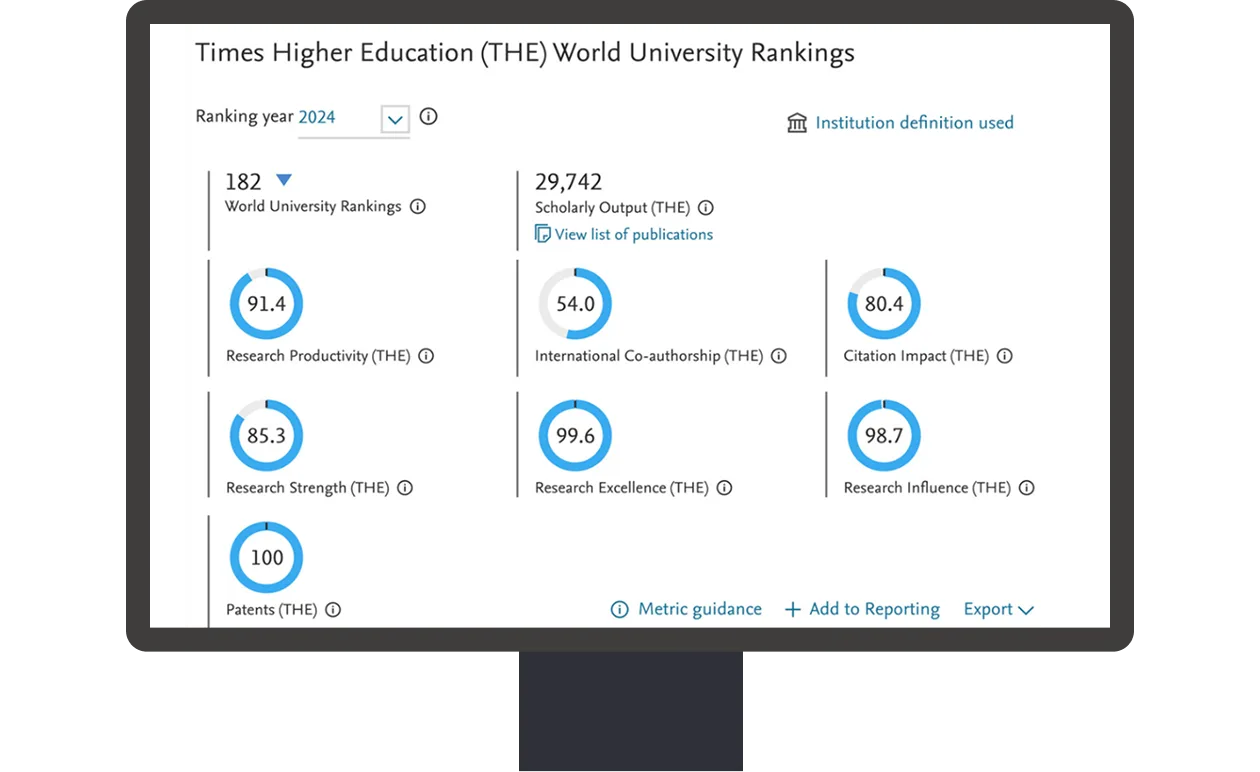
To calculate their rankings, THE collects data from multiple external sources including bibliometric data. Discover the significance of this data, its contribution to their methodology and the valuable insights it offers.

Read the article

Bibliometric data and QS Rankings

A man standing in front of a group of peers and presenting.

The QS rankings, including both their World University Rankings and Ranking by Subjects reports, use bibliometric data to calculate their results. Over the past years, they have made enhancements to their methodology to include new metrics. Learn more about how bibliometric data influences QS rankings.

Read the article

About THE Impact Rankings, Scopus & SciVal

Business woman looking over the city at sunrise

For their Impact Rankings, THE uses research-related metrics and metrics based on the university's own data and evidence supporting progress. Learn about their methodology and the insights Scopus and SciVal provide.

Read the article

U.S. News & World Report: 2024 Best Colleges Rankings Methodology Quick Guide

U.S. News & World Report

Recognizing the importance of evolving formulas and indicators over time, U.S. News & World Report has made significant methodological changes initiated with the 2024 Best Colleges ranking, by modifying its weights of several other factors, and introducing a few new ones. This guide offers a concise overview of the national ranking and its new methodology.

Learn more

We can help you support your institution's ranking and reputation goals

Get quality bibliometric data and analytical tools to inform your university's ranking strategy

Meeting in an office

Scopus and SciVal enable university staff to plan, progress and evaluate institutional research activities with bibliometric data and analytical tools that align with ranking organizations' methodologies.

Learn more

U.S. News partners with Elsevier

Female author working on laptop in office

U.S. News & World Report has chosen to leverage the quality and breadth of Elsevier's Scopus data in its Best Colleges — National Universities rankings and Best Graduate Schools rankings for Engineering Schools to accurately measure the research output of U.S. universities. These rankings assist prospective students in making informed decisions about their higher education choices.

Learn more

Interested in this topic? Get notified when new resources about university rankings and research activities become available.

Businesswomen collaborating in office meeting using laptop and documents