
Structural racism persists in radiotherapy
2023년 11월 30일
|
Philadelphia
An article in the Journal of Medical Imaging and Radiation Sciences emphasizes the urgent need for new, more inclusive modern medical terminology and grading tools to help reduce racial bias in radiotherapy treatment and education
Everyone should get quality care, no matter the color of their skin. However, implicit bias, micro-aggressions, and a lack of cultural understanding persist, leading to oppression and unequal treatment in healthcare. An insightful articleopens in new tab/window in the new themed issue of the Journal of Medical Imaging and Radiation Sciencesopens in new tab/window on specialized populations, published by Elsevier, highlights this serious problem, specifically addressing the assessment and treatment of radiation-induced skin reactions (RISR) in patients across the world undergoing external beam radiotherapy.
The article provides a stark example of how outdated perceptions and racialized myths have resulted in inadequate care for people of color globally. It discusses widely used assessment tools originally designed for white skin, which do not account for the diverse skin tones of patients. As a result, patients of color often face delayed recognition and management of adverse reactions, causing significant distress and burden on healthcare systems.
The article presents a historic clinical case from a Society of Radiographers special interest group in which a black patient with head and neck cancer was advised that their skin should be more resistant to radiation damage. The patient described the subsequent reaction to radiotherapy as their skin “was on fire,” causing them significant distress. The incident led to the patient seeking psychological support and reporting they felt “helpless.”
Radiation can harm anyone's skin, no matter its color. The way we check for skin problems during treatment doesn't always work for everyone.To address this issue, the author calls for a more inclusive and ethnically conscious approach in medical education and clinical practice. He emphasizes the importance of understanding and acknowledging the unique characteristics of brown and black skin, including the visual and tactile differences in how RISR presents.
The healthcare industry is urged to adopt new, more inclusive medical terminology and grading tools to ensure that patient-centered care is provided to individuals of all racial backgrounds. The article underscores the critical need for education and collaboration to mitigate implicit biases and improve care for people of color.
Author Naman Julka-Anderson, Research Radiographer at The Royal Marsden NHS Foundation Trust and The Institute of Cancer Research, London, explains, “It is essential that new and more inclusive guidance is developed for clinicians who deliver radiotherapy, ensuring that treatment and care are appropriately tailored to people of color. Understanding the diverse skin tones of patients and addressing the structural racism that exists within healthcare are imperative steps to ensure equitable care for all individuals.”
The article concludes with a call for a more inclusive and ethnically conscious approach in medical education and clinical practice, emphasizing the importance of understanding the diverse skin tones of patients. The author suggests that addressing these issues is crucial to reducing racial bias, racial health disparities, and structural racism within healthcare services and ensuring patient-centered care for everyone.
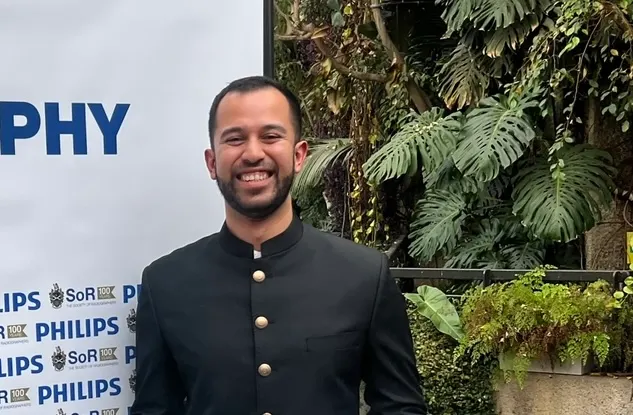
Caption: Author Naman Julka-Anderson (Credit: Naman Julka-Anderson).
Notes for editors
The article is “Structural racism in radiation induced skin reaction toxicity scoring,” by Naman Julka-Anderson (https://doi.org/10.1016/j.jmir.2023.09.021opens in new tab/window). It appears in the Journal of Medical Imaging and Radiation Sciences, volume 54, issue 4 (December 2023), published by Elsevier.
This article is openly available for 30 days at https://www.jmirs.org/article/S1939-8654(23)01872-6/fulltextopens in new tab/window.
Full text of the article is also available to credentialed journalists upon request; contact Eileen Leahy at +1 732 238 3628 or [email protected]opens in new tab/window. Naman Julka-Andersonmay be reached for comment at [email protected]opens in new tab/window.
About the author
Naman Julka-Anderson is an advanced therapeutic radiographer who co-founded the multi-award-winning podcast Rad Chatopens in new tab/window, and is an Allied Health Professional Clinical Advisor for Macmillan Cancer Support. He is passionate about equity, diversity, and inclusion, as well as health inequalities, radiotherapy, Indian food, and long-distance events such as Ironman triathlons.
About the Journal of Medical Imaging and Radiation Sciences (JMIRS)
The Journal of Medical Imaging and Radiation Sciencesopens in new tab/window (JMIRS) is the official bilingual, peer-reviewed journal of the Canadian Association of Medical Radiation Technologists (CAMRT)opens in new tab/window. We aim to influence practice within the rapidly evolving fields of radiological, nuclear medicine, MRI, and ultrasound technologists and radiation therapists, grounded in our circular tagline "research informing practice - informing research.” JMIRS provides an essential platform for Canadian and international medical radiation technologists and therapists to publish and discover their own body of knowledge to define and inform their practice, enabling translation to a global audience. Published by Elsevier, JMIRS is included in MEDLINE and CINAHL. www.jmirs.orgopens in new tab/window
About the Canadian Association of Medical Radiation Technologists (CAMRT)
The Canadian Association of Medical Radiation Technologistsopens in new tab/window (CAMRT) is the national professional association and certifying body for radiological, nuclear medicine and magnetic resonance imaging technologists and radiation therapists. Recognized at home and internationally as a leading advocate for the profession of medical radiation technology, the CAMRT is an authoritative voice on the critical issues that affect its members and their practice. Established in 1942, the CAMRT today represents over 11,000 members. www.camrt.caopens in new tab/window
엘스비어 소개
엘스비어는 첨단 정보와 의사결정 지원 분야의 글로벌 선도 기업으로 100년 넘게 과학과 헬스케어의 발전을 지원하며 인류 진보에 기여해 왔습니다. 우리는 170개국 이상에서 학술 및 기업 연구 커뮤니티, 의사, 간호사, 미래의 의료 전문가와 교육자들을 지원합니다. 근거에 기반한 신뢰할 수 있는 과학·의학 콘텐츠와 최첨단 AI 기술을 결합해 중요한 통찰과 혁신적인 솔루션을 제공해, 의미있는 성과를 이루도록 돕고 있습니다. 또한 다양성과 지속 가능성을 제품과 기업 문화 전반에 내재화하며, 우리가 속한 커뮤니티와 협력합니다. 엘스비어 재단opens in new tab/window은 전 세계에서 연구와 보건 파트너십을 지원합니다.
엘스비어는 전문가 및 기업 고객에게 정보 기반의 분석과 의사결정 도구를 제공하는 글로벌 기업 RELXopens in new tab/window의 일원입니다. 자세한 내용은 www.elsevier.com에서 확인할 수 있으며, 소셜미디어 @elsevierconnect를 통해 최신 소식을 받아보실 수 있습니다.
연락처
EL