
‘Do me a favor: make my job easier by making your R&D simpler’
2025년 11월 18일
저자: Ann-Marie Roche
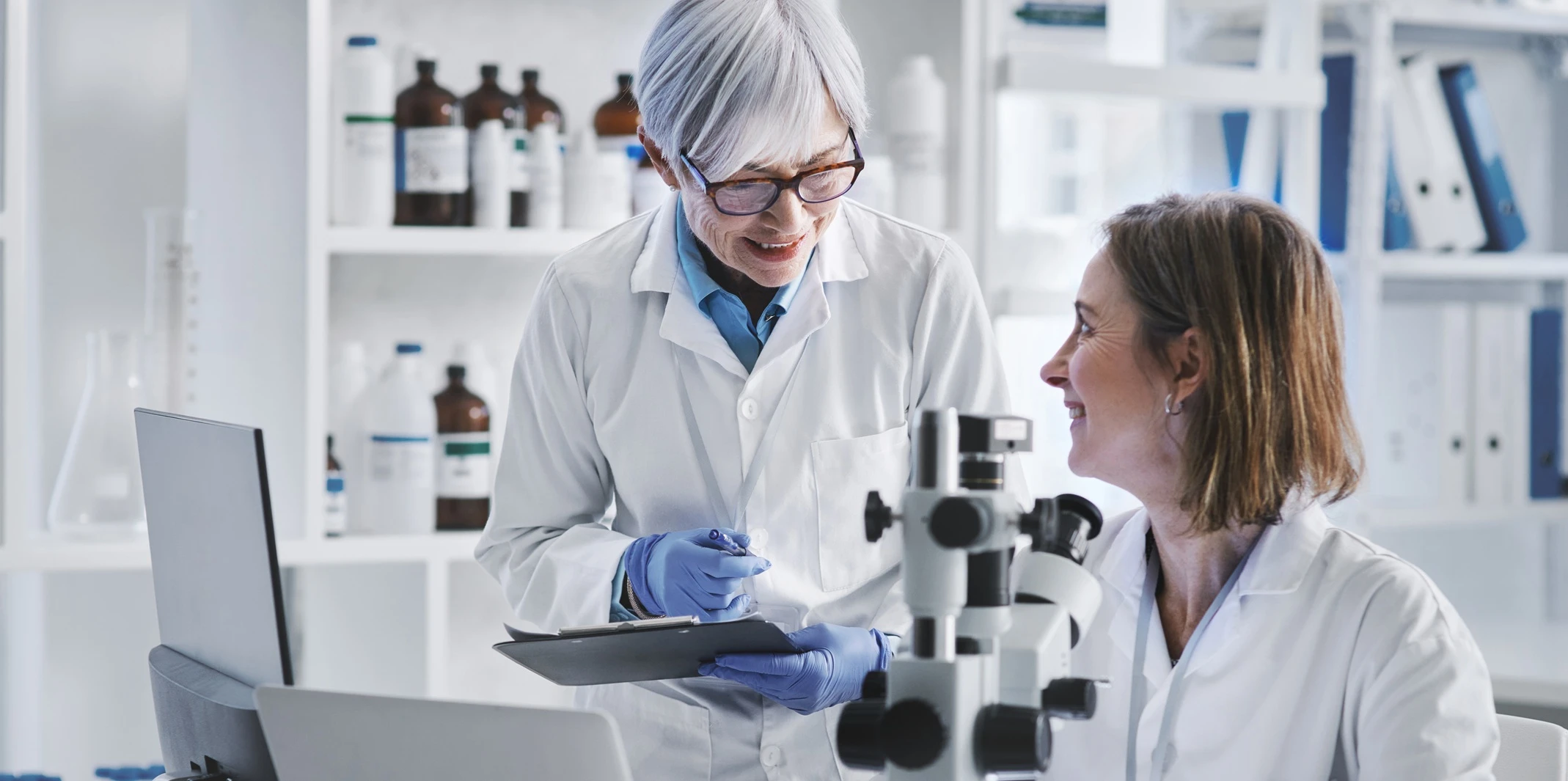
Want to explore the future of chemistry? Just talk with Jayesh Mistry.
If someone could embody the catchphrase, ‘There has never been a better time to be a chemist!’, it’s Jayesh Mistryopens in new tab/window. The senior product manager for Reaxys, the chemistry database that optimizes small molecule discovery, was behind the recent launch of Reaxys AI Search, which he describes as “just the beginning of the radical enhancements we have in mind.” And he’s had a front-row seat to see Reaxys evolve since working with its precursor as a chemistry student and later as a medicinal and process chemist at companies like Pfizeropens in new tab/window and Merck Sharp & Dohmeopens in new tab/window.
And Jay’s enthusiasm remains undimmed. So, we decided to have a chat to see if we could tap into this infectious energy.
The kid who broke things
So, what first sparked little Jay’s passion for science?
Well, you know those kids who break things and then try to put them back together? I was that kid. Simple things like my glasses – I wanted to understand how they worked. If they broke, I would try to fix them. And whenever my parents bought me a new watch or gadget, I would dismantle it and attempt to reassemble it. Yes, that kid. [laughter]
I’ve always been intrigued by puzzles and the process of solving them. Chemistry was just one of those fields that piqued my interest: there was a click, and I had an affinity for it. I love how chemistry provides fundamental knowledge for all types of science. It’s also very all-encompassing. Everything you touch or use every day has a chemical aspect, whether it’s a cup, a pencil or an ink cartridge. It’s about finding the best recipe to create something – whether it’s a cake or a life-saving drug – from a molecular perspective.
I always planned to follow one of two paths: either designing molecules that help people or creating gadgets that help people. It’s also a family trait. My brother is a scientist specializing in biotechnology, and my father is a mechanical engineer. So, clearly, these two paths – science and useful gadgets – were already part of my background. I ultimately chose the science route.
Which led you to the lab – the chemistry lab.
After graduating, one of my first roles was as a scientist at Merck US, where I mainly focused on neuroscience. My initial projects centered on Alzheimer’s. I found the work fascinating and took pride in our achievements. Research is a field where success isn’t guaranteed – there’s often a lot of failure before discovering that one breakthrough that could potentially lead to a treatment. But we managed to publish and share our findings.
At the same time, I had many opportunities to prove my chemistry chops, as they say, in a very complex research environment. I enjoyed it, despite many failures and successes, because it’s not just about making molecules. It’s about creating them, testing them, determining if they work for your purpose, and then monitoring that progress.
Leaving the lab
Yet, you decided to leave the lab and join Elsevier… Can you briefly describe your post-lab job?
I’m the person who sits there, sips tea, nibbles on biscuits and chats with very smart people about how great Reaxys is. [laughter]
But clearly, moving from pharmaceutical research to Elsevier is very different. Of course, I was already very familiar with Elsevier, but it was a completely new role for me. After nearly 11 years of research, I sought to apply my chemistry knowledge in a different capacity, and this opportunity presented itself as a product sales manager.
I remained deeply connected to the chemistry world, albeit in a different role: discussing the value of these solutions and how we could genuinely accelerate scientific progress. I could still leverage my subject matter expertise in a new way while also acquiring some new skills – specifically, commercial skills – because I believed this would significantly expand my opportunities.
Reflecting on 14 years at Elsevier, what makes you the most proud?
I believe my industry experience has boosted my credibility in this field. Even now, colleagues come to me with questions about chemistry or Reaxys, and I feel confident in my knowledge, which is comforting since I haven’t been actively involved in research for quite some time. Mentoring junior colleagues is also always very rewarding. The third thing I’m very proud of is the trust: being trusted to handle complex, challenging projects. Additionally, our end users need to trust that we’re creating something that will be meaningful and useful for them. This aligns perfectly with the core principle of the Reaxys product team: our end users as our primary focus.
Innovation through simplification
When we spoke earlier, I appreciated how you mentioned that when it comes to innovation and the rapid pace of change, the real trick is simplification.
Exactly. One key aspect is that we don’t introduce features arbitrarily – we closely align them with user expectations and pain points. Additionally, expectations shift as end-users adopt other tools, and as new scientists enter academia and industry, their way of searching for information also differs. They tend to be less patient, which makes easier access and simplicity essential.
This is where technology, especially AI, can help simplify the process by enabling natural language queries, integrate different data sources, and offer reliable summarizations – offering new ways to explore reaction types and structure information.
Is there anything you wish everybody knew that would make your job a lot easier?
Besides, ‘Reaxys is amazing, and every chemist should be using it’? [laughter]
Well, that’s a nice takeaway for our readers! [more laughter]
Here’s the thing: I sit here, and I’m comfortable saying that because I've also used competitor solutions. I’ve worked in the field as a researcher. Reaxys is one of those tools that has everything a chemist needs. I believe that, regardless of the type of chemist you are: having easy access to such trusted information from the vast amount of available documentation is invaluable. You can find the gold dust you need… And this was what fueled the development of Reaxys AI Search.
Spreading the bug
Yet, many are still slow to embrace all these new developments. What’s the barrier?
Human nature. Once people accept one way to work, it’s hard for them to change. With smaller companies, it’s easier to show the value. With bigger companies, it can take longer. But then it’s less about a lone salesperson; it’s a team effort, one that includes people within that company who are your champions. And when that’s the case, you know you are on the right track.
And what’s happening with the next generation of Jays? Do your children already have the science bug?
It’s too soon to tell. I’m a father of two very energetic young ladies, and right now, they are only experts at breaking toys and pulling them apart. I’m the one who ends up putting them back together. So, I’m not the one doing the breaking anymore. Instead, I’m more focused on scratching my head and trying to put them back together again.
So, in a way, you’re back at the lab! Enjoy those moments! Thanks, Jay!
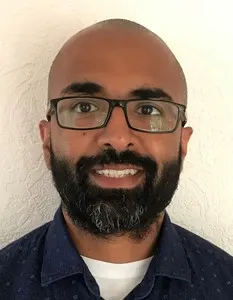
Jayesh Mistry, Senior product manager for Reaxys
Watch the ‘AI in Chemistry – opportunity or threat?opens in new tab/window‘ webinar on-demand. Jayesh is joined by Prof. Dr. Alexander Hillischopens in new tab/window, Executive Director and Head of “Digital Molecule Discovery” at UCBopens in new tab/window, to discuss and answer questions about the true impact of AI.
For more on Reaxys, visit Reaxys Unleashedopens in new tab/window.
기여자
