
Cancer Essentials: Inequalities in cancer care — a perspective from the European Cancer Organisation
2022년 6월 6일
저자: Nicolò Matteo Luca Battisti, MD, Hendrik Van Poppel, MD, PhD
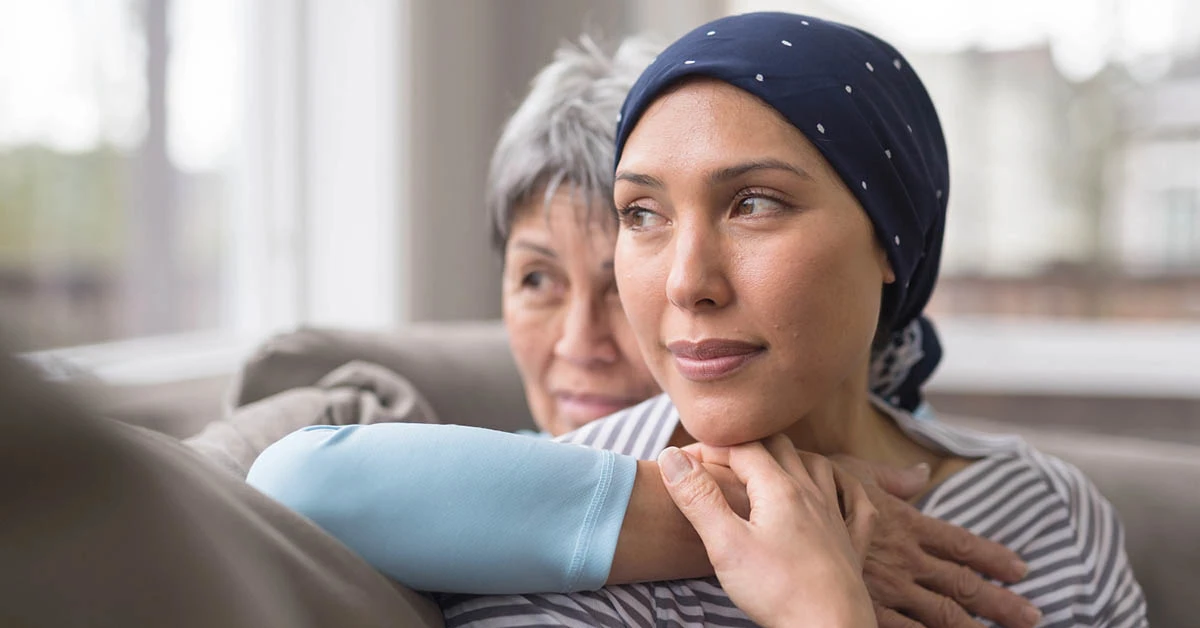
Explore current research on inequalities in cancer care with free-to-download content from Elsevier’s books and journals
Editor’s Note: Cancer Essentials is a quarterly collection that provides current content on timely topics at the forefront of cancer research and oncology. It's curated by the editors of Trends in Canceropens in new tab/window (Cell Press Reviews) and the publishing staff of Elsevier’s Oncology Journal Network and Elsevier's reference books on cancer.
In this editorial, Dr Nicolò Matteo Luca Battistiopens in new tab/window and Dr Hendrik Van Poppelopens in new tab/window, Co-Chairs of the European Cancer Organisation’s Inequalities Networkopens in new tab/window, introduce some of the work they’re doing in Europe to defeat inequalities in cancer care.
The choice we must make: choosing against cancer inequality
Inequality is a choice.
So wrote the Nobel Prize-winning economist Joseph Stiglitz in his agenda-setting book The Great Divide: Unequal Societies and What We Can Do about Themopens in new tab/window. Stiglitz laid out how inequality is not inevitable; it is frequently the product of policy decisions we adopt. In that sense, some inequality is a choice we make (whether consciously or not) about the way we arrange, prioritize, and incentivize systems.
Inequality in cancer care is a global concern. The World Health Organizationopens in new tab/window has been rightly encouraging greater international attention to the topic. A 2022 WHO reportopens in new tab/window referenced that comprehensive cancer treatment is reportedly available in more than 90% of high-income countries but less than 15% of low-income countries, and that breast cancer survival five years after diagnosis now exceeds 80% in most high-income countries compared with 66% in India and just 40% in South Africa.
In this spirit, and with an eye to the European dimension of cancer inequalities, the European Cancer Organisation formed the Inequalities Networkopens in new tab/window two years ago, bringing together healthcare professionals, patient representatives and other stakeholders from across public health, academia and other spheres.
From the outset, the Network highlighted problems and promoted solutions to inequalities across the cancer care continuum: prevention, detection, diagnosis, treatment, follow-up care, research, survivorship and quality of life. It highlighted inequalities between countries, including the “East-West Divide” in Europe, and within countries or regions based on race and ethnicity, sexual identity, gender, age or socioeconomic status and health literacy and patient education.
It can be done: beating inequalities in cancer care
An early focus of our Inequalities Network, which includes representatives from more than 40 organizations, was to help reach some consensus about inequalities. For this purpose, at the end of 2020, the Network held a public roundtable to hear from experts on the scale and nature of the problem in Europe and ways to address it. The result was the Network’s first Action Report: It Can Be Done — Beating Inequalities in Cancer Careopens in new tab/window. Recommendations included:
Enshrining the 10 key rights of cancer patients set out in the European Code of Cancer Practice as a core tool and paradigm for delivering equitable cancer care.
Ensuring wide access to reliable data to better identify national cancer control priorities and the accompanying development of cancer policies that truly reflect the local context.
Fully implementing data-driven national cancer control plans (NCCP) in all countries.
Treating each cancer patient as an individual and not as a simple representative of a demographic. Cancer care must take individual account of the patient’s health status, associated comorbidities and socioeconomic situation.
Deploying standardized treatment pathways to ensure all cancer patients receive quality care.
Recognizing a “right to be forgotten” to ensure the best possible quality of life for cancer survivors in respect to financial service provision.
What gets measured gets done: deploying data to combat inequality
Data-driven approaches to combatting inequality have been an essential component of our Inequalities Network. In the run-up to the publication of the European Commission’s game changing Beating Cancer Planopens in new tab/window, our Network promoted the need for “a European Cancer Dashboard.” This is a tool to measure the effectiveness of the suite of new EU cancer policies and should be used to help target policy actions against disparities in cancer care.
When Europe’s Beating Cancer Plan was published last February, we were therefore delighted to see a component of the plan dedicated to combatting cancer inequalities across Europe, including a commitment to a Cancer Inequalities Registry. Plans for this Registry highlight a wide range of disparities in areas such as prevention, detection and treatment. At completion, the Registry will also segment its findings according to socioeconomic factors to give clear insights about disparities within countries. The three principal organizations engaged in building the registry are:
The EU’s Joint Research Centreopens in new tab/window for gathering available data from cancer registries.
The Organization for Economic Co-operation and Development (OECD)opens in new tab/window for country-by-country analysis.
The International Agency for Research on Cancer (IARC)opens in new tab/window for new insights on social inequalities in cancer care across Europe.
Our network maintains regular dialogue with all three. We are grateful for their receptiveness to advice and proposals that come from our Network participants.
Cancer inequalities: a cause for international collaboration
Our Network has also benefitted greatly from the advice and experience from across the globe, including from the American Society of Clinical Oncology (ASCO)opens in new tab/window, which has made reducing inequalities in cancer care a central theme of its operations. Europe still has much to do to match the data collection and analysis available in the United States, where clear outcome differences have been highlighted based on race and ethnicity.
Last year’s European Cancer Summitopens in new tab/window featured an excellent summation of work being conducted in New Zealand to help improve the participation and engagement of Māori communities, with lessons about how we each can do more to help combat inequalities by thinking carefully about the ways in which we communicate and appreciating and responding to different cultural norms. We understand, too, that the European Cancer Organisation’s HPV Action Networkopens in new tab/window has had similar exchanges regarding the engagement of First Nation communities in Canada with cancer care delivery. In the European context, we know there is much still be done to increase accessibility of, and engagement with, cancer care for the many groups in our societies who are too often excluded. Such groups include the Roma communities of Europe, undocumented migrants, the homeless, and those within institutions such as care facilities or prisons.
Combating inequalities via health literacy
From the outset, one solution that our Inequalities Network has advocated is improved health literacy on modifiable cancer risks, the warning signs of cancer, and early detection strategies. Health literacy is a tool we can use to reduce social inequality in cancer incidence and late detection, and to ensure patients and their families demand, and receive, better care. Health literacy can reduce unwarranted fatalism. It can also help to inoculate against the pernicious impact of rampant disinformation. For this reason, we will publish this year a series of new consensus papers from our community outlining fresh opportunities for improving health literacy. We have been particularly pleased to work with the European Commission to provide detailed propositions of potential EU projects in this space. In summary, the Inequalities Network of the European Cancer Organisation is well animated by the energy and enthusiasm of its participants to achieve much. There is no fatalism within our network. Inequality is a choice, and we are finding new ways to identify it — and to fight it.
Cancer Essentials: research on inequalities in cancer care
Elsevier is pleased to share selected articles and book chapters free for a limited period (where these are not already open access) from its books and journals publishing program. Please take a look:
Chapter 14: Resistance to chemotherapy among ethnic and racial groups: Health disparities perspective in gynecologic cancersopens in new tab/window, Overcoming Drug Resistance in Gynecologic Cancers, Volume 17 in Cancer Sensitizing Agents for Chemotherapy (2021)
Chapter 2: Reducing Cancer Disparities Through Community Engagement: The Promise of Informaticsopens in new tab/window, Oncology Informatics, Chapter 2 — Using Health Information Technology to Improve Processes and Outcomes in Cancer (2016)
Chapter 16: Race, Ethnicity, Marital Status, Literacy, and Prostate Cancer Outcomes in the United Statesopens in new tab/window, Prostate Cancer (Second Edition): Science and Clinical Practice (2016)
Chapter 2: Chemoresistance in Pancreatic Cancer: Emphasis on Age and Genderopens in new tab/window, Breaking Tolerance to Pancreatic Cancer Unresponsiveness to Chemotherapy, Volume 5 in Cancer Sensitizing Agents for Chemotherapy (2019)
Chapter 13: Commercialism in Cancer Careopens in new tab/window, Ethical Challenges in Oncology: Patient Care, Research, Education, and Economics (2017)
Optimal care pathways: A national policy to improve quality of cancer care and address inequalities in cancer outcomesopens in new tab/window, Journal of Cancer Policy (Sept 2020)
Special Issue: Global Gynecologic Oncologyopens in new tab/window, Gynecologic Oncology Reports (Sept 2021)
A network-based integration for understanding racial disparity in prostate canceropens in new tab/window, Translational Oncology (March 2022)
Disparity in Utilization of Multiagent Therapy for Acute Promyelocytic Leukemia in the United Statesopens in new tab/window, Clinical Lymphoma Myeloma and Leukemia (Oct 2021)
Optimizing utilization and indications for adjuvant radiation in male breast canceropens in new tab/window, Cancer Treatment and Research Communications (Volume 28, 2021)
Immune response and inflammation in cancer health disparitiesopens in new tab/window, Trends in Cancer (Dec 2021)
Understanding how genetic ancestry may influence cancer developmentopens in new tab/window, Trends in Cancer (Jan 2022)
Role of financial toxicity in perpetuating health disparitiesopens in new tab/window, Trends in Cancer (April 2022)
Disparate groups share cancer disparitiesopens in new tab/window, Trends in Cancer (April 2022)
Redefining precision cancer prevention to promote health equityopens in new tab/window, Trends in Cancer (Feb 2022)
기여자

Nicolò Matteo Luca Battisti, MD
