
2019 winners of the Mathematical Sciences Sponsorship Fund
Steve Miller
Steve Miller earned a BS in math and physics from Yale and a PhD in math from Princeton. He has advised over 300 students in research, written over 100 papers and 6 books, serves as an editor for numerous journals as well as an at-large senator for Phi Beta Kappa, and is an elected member of the Mt Greylock Regional School Committee.

Steve Miller
He is actively engaged in math outreach activities and has taught classes on the mathematics of Lego and Rubik's cubes for almost a decade. His course lectures, many of his talks and research papers and expository handouts are available online at https://web.williams.edu/Mathematics/sjmiller/public_html/opens in new tab/window. He also maintains a math riddles page at https://mathriddles.williams.edu/opens in new tab/window.
Editorial
I live in a very rural county, where declining enrolments make school budgets a challenge. I know this first hand, as I serve on our regional school committee. I devised a formula which convinced two towns to fully regionalize and better both communities, but there are sadly many great activities that are not funded because of higher priorities, especially social issues. These funds will be used for math outreach activities concentrated on the schools in my area; however, there is an opportunity for greater impact as I do a lot of math outreach. In particular, I annually teach continuing education lectures to teachers, visit math summer camps, and write modules for high school teachers. Thus, the lessons I learn in building units in my area can be transferred to wide audiences easily.
Abraham Lagat
Abraham Lagat is a professional statistician with over 7 years of experience in statistics and data management experience. He holds a BSc. in Applied Statistics with Computing and a MSc. In Applied Statistics from Moi University and JKUAT in Kenya, respectively. He is currently a data manager in Health Systems Research Unit of the KEMRI-Wellcome Trust Research Programme.
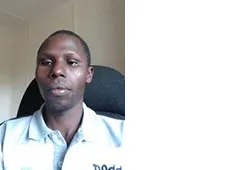
Abraham Lagat
Abraham has very keen interest in applications of geospatial analysis, machine learning and internet of things. A member of the International Statistics Institute, International Biometric Society and the American Statistical Association.
Editorial
The Elsevier Mathematical Science Sponsorship Fund will enable me to attend the 62nd World Statistics Congress 2019 in Kuala Lumpur, Malaysia to learn from the many very diverse sessions, gain insight on applications of statistical methodologies and new technologies especially towards achieving Sustainable Development Goals (SDGs), network with other participants and initiate collaborative and learning platforms. Besides this will be an opportunity to experience the Malays culture.
Olena Vaneeva
Olena Vaneeva was born in 1982 in Dnipropetrovsk, Ukraine. In 2004 she received a Masters degree in mathematics from Dnipropetrovsk National University. In 2008, Olena got her Ph.D. at the Institute of Mathematics of NAS of Ukraine in Kyiv, where she is currently a Senior Researcher.
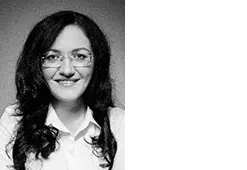
Olena Vaneeva
Her research interests are in the area of group analysis of differential equation. This includes study of different kinds of symmetries of differential equations, admissible and equivalence transformations in classes of such equations, as well as construction of conservation laws and exact solutions for equations of mathematical physics and mathematical biology. She is a member of American Mathematical Society and European Women in Mathematics.
Olena Vaneeva has received a number of national and international awards. These are, in particular, Prize of the President of Ukraine for young scientists (2010), Abel Visiting Scholar Grant from the Niels Henrik Abel Board (2014), Prize of the Presidium of the National Academy of Ukraine for young scientists (2014), Award “For women in science” from L’Oreal foundation (2018). She collaborates with researchers from Cyprus and Czechia and made 18 short scientific visits abroad as well as gave over 30 talks at international conferences. Olena is also actively involved in popularization of mathematics, being among the organizers of many events for schoolchildren and students like PhysMathDay, Pi Day and others.
Editorial
The event “Women in mathematics: history and perspectives” will take place on April 20, 2019, at the Institute of Mathematics of the National Academy of Sciences of Ukraine in Kyiv.
This is a one-day event for historical and modern perspectives on the role and impact of women in mathematics. The key speakers will be female researchers who are at the higher level of their careers. By their personal stories these women will encourage high school girls and students to become professional mathematicians. The main objectives of the event are reducing gender gap in mathematics, popularization of mathematics and giving an opportunity for high school girls and students to establish contacts with successful female mathematicians.
There will be three parts of the event, which symbolize past, present and future of women in mathematics. In the first part talks on history of women in mathematics will be given, enlightening biographies of such prominent female mathematicians as Maria Gaetana Agnesi, Sophie Germain, Sofia Kovalevskaya, Emmy Noether and others. In the second part Ukrainian female mathematicians who is at the higher levels of academic career will give inspirational talkы which are based on their personal stories. In the third part we will discuss how mathematics forms a basis for STEM, and then some talks will be given by school girls and students who will present their projects for popularization of mathematics.
We will use the grant from the Elsevier Mathematical Sciences Sponsorship Fund to cover travel expenses of participants from other Ukrainian cities. This will give them opportunity to take part in the meeting. We believe that our event will have great impact on future careers of young female mathematicians.
Kenan Kergrene
My name is Kenan Kergrene and I am a postdoctoral researcher at INRIA (the French National Institute for computer science and applied mathematics) in Paris under the supervision of Martin Vohralík and Alexandre Ern. In 2018 I completed my PhD at Polytechnique Montreal under the supervision of Serge Prudhomme.

Kenan Kergrene
My research work focuses on solutions of Partial Differential Equations by Finite Element Methods. My research interests revolve around the notion of accuracy and reliability of numerical approximations and are typically related to enrichment methods, model-order reduction methods, as well as error estimation and adaptivity.
Editorial
I am deeply grateful to the Elsevier Mathematical Sciences Sponsorship for this grant that will allow me to participate in the fifteenth US National Congress on Computational Mechanics (USNCCM). This conference is to be held in Austin, Texas in July 2019 and is one of the major conferences in my research area. The sponsorship will thus enable me to present my results to experts from my field. It will also allow me to attend other researchers’ presentations, which will be a great opportunity to keep up with the most recent findings and developments in the fields of computational mechanics and applied mathematics. I look forward to this opportunity to meet fellow researchers and potentially foster future collaborations.
Hernán Javier San Martín
My name is Hernán Javier San Martín and I am from Argentina. I realized my bachelor and PhD in mathematics at the National University of La Plata (UNLP). I am actually a researcher at Conicet and Professor in the Department of Mathematic at UNLP. My research area is algebraic logic, which is the branch of mathematical logic that studies logical systems by giving them a semantics based on some algebraic structures.
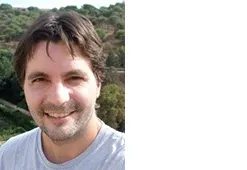
Hernán Javier San Martín
Editorial
I express my acknowledgment to Elsevier Mathematical Sciences Sponsorship Fund for providing me with a grant for the participation in the XVIII SLALM (Latin American Symposium of Mathematical Logic), which will be held in Concepción de Chile (Chile), 16-20 December 2019. This grant will help me to present results of my recent research work. It is really a great opportunity for me to hear some of the leading experts of many mathematical topics concerning mathematical logic, in order to know about the problems that the scientific community is working on and to get the possibility to establish future collaborations.
Adriano de Cezaro
Adriano de Cezaro is currently Associated Professor of Mathematics at the Institute of Mathematics, Statistics, and Physics of Federal University of Rio Grande, Brazil. He earned his Ph.D. in Mathematics from Institute of Pure and Applied Mathematics (IMPA) in 2010.
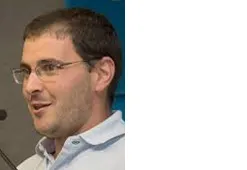
Adriano de Cezaro
A. De Cezaro research interest is included in the field of applied mathematics with a focus on the topic of parameter identification problems (inverse problems), usually modelled by differential equations. Inverse problems describe the need to infer information about specific parameters through the partial knowledge (measurements) of solutions of differential equations. Such problems are characterized by their intrinsic difficulty associated with instability (or ill-conditioning). Furthermore, data are usually obtained by measurements and hence, corrupted by noise, without mentioning the difficulties related to the massive volume of observations that must be processed. Techniques for dealing with the instability and noise in the data in order to find satisfactory solutions to such problems are known as regularization methods. These tools involve interaction between theory (functional analysis, optimization), scientific computing and practice (iteration with professionals of many areas - industry and academia).
Editorial
I would like to express my gratitude to Elsevier Mathematical Sciences Sponsorship Fund for the grant for attending and present my current research at the Applied Inverse Problems Conference (AIP 2019) which will be held in Grenoble, France, 08-12 July 2019 and the International Congress of Industrial and Applied Mathematics (ICIAM 2019) which will be held in Valencia, Spain 15-19 July 2019. Those are the most important conferences in Inverse Problems and Applied Mathematics, respectively. Furthermore, given the number of researchers in topics of my interest that will attend the aforementioned conferences, this opportunity will surely enhance collaboration projects in the field of applied mathematics.
Sandra Spiroff
Sandra Spiroff is an Associate Professor of Mathematics at the University of Mississippi, where she has worked since 2008. She earned her Ph.D from the University of Illinois at Urbana-Champaign, and currently holds a grant from the Simons Foundation. She is the President of the University of Mississippi’s Chapter of Phi Beta Kappa, and the advisor/co-founder of the Department's Graduate Student Chapter of the American Mathematical Society.
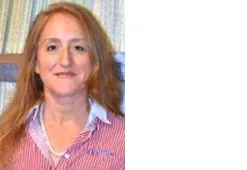
Sandra Spiroff
An advocate for students and young faculty, she is a member of the National and Gulf States Math Alliance whose mission is to increase participation of minority populations in math graduate programs, and a co-organizer of the Women in Commutative Algebra Research Network and a Banff Workshop 2019.
Editorial
The Elsevier Mathematical Sciences Sponsorship Fund will be used to recruit and support a minority graduate student in Mathematics at the University of Mississippi. In particular, the student may use the funds as a summer stipend to continue the uninterrupted study of mathematics, or apply the funds to purchase supplementary supplies like textbooks or other material, and conference travel. Moreover, the University of Mississippi, through the office of the Vice Chancellor for Diversity and Community and Community Engagement, will provide additional support to this program to maximize the impact of the Elsevier award.