
프로필
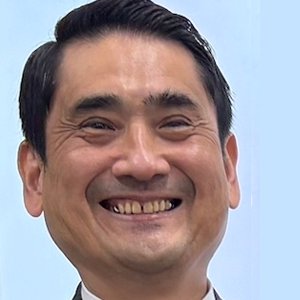
Kazunori Ikebukuro
Tokyo University of Agriculture and Technology, Japan
Dr. Ikebukuro received the B.S. degree in 1989 from University of Tokyo in Japan, the M.Sc. degree in 1992 from University of Tokyo and Ph. D degree in 1996 from University of Tokyo. During M.Sc. course, he got the British council scholarship and studied at Cranfield Institute of Technology in UK from 1990 to 1992. His Ph. D thesis is on the development of biosensor for environmental monitoring. He worked at Research Center for Advanced Science and Technology, University of Tokyo as a research associate from 1993 to 1996, as a lecturer from 1996 to 2001. Then he worked at the Dept. Biotechnol. Life Sci., Tokyo University of Agriculture & Technology as an associate professor and he is working as a professor at TUAT from 2009.
His research interests are in 1) Development of functional aptamers for theranostics using evolutionary molecular engineering strategy, 2) Development of novel sensing technologies using combination of aptamers, enzymes and antibodies, 3) Development of detection system for gene and its epigenetic modification focusing on DNA/RNA structures. He is always focusing on the design and development of molecular recognition device for biosensors.
University webpageopens in new tab/window
Presentation title: DNA functions as sensor, actuator and signal generator.
DNA senses the physicochemical properties of its environment and changes structure accordingly. Therefore, DNA works as sensor, actuator and signal generator, enabling homogeneous detection of many target molecules. In this talk, I will explain our homologous biosensing system that is based on the inherent properties of its DNA.