
프로필
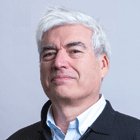
Plenary speaker: Christophe Journeau
CEA, France
Christophe Journeau graduated in 1985 from Paris Central Scholl of engineering (ECP) and received his PhD in Mechanics/Energetics from the University of Orléans. He has been working since 1990 with CEA, the French Atomic Energy and alternative energies Commission.
For more than 30 years he has been conducting experimental research on corium, the molten mixture that forms during nuclear reactor severe accidents, with the PLINIUS platform. For a dozen years, he has been collaborating with Japanese partners on R&D issues related to fuel debris cutting and retrieval at Fukushima Daiichi.
He has published more than 100 articles in journals and books and was one of the editors of recently published book on “Severe Accidents in Sodium Fast Reactors”.