
Series Editor
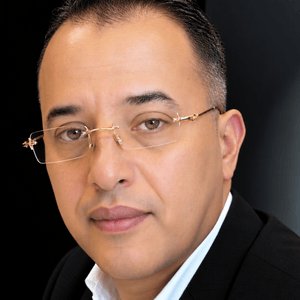
Simon Elias Bibri, PhD
Senior Researcher, Scientific Coordinator, and International Expert
Institute of Computer and Communication Sciences (IINFCOM) and School of Architecture, Civil and Environmental Engineering (ENAC), the Swiss Federal Institute of Technology in Lausanne (EPFL), Switzerland
Simon Elias Bibri, PhD 이메일Simon Elias Bibri, PhD, is a globally recognized scholar and expert in sustainable smart cities, smarter eco-cities, environmental sustainability and resilience, and emerging and converging AI systems. He currently serves as a Senior Researcher and Scientific Coordinator at the Swiss Federal Institute of Technology in Lausanne (EPFL). He has a diverse professional background, having served as Head of the Computer Department, Software and IT Business Engineer, IT Project Manager, Green ICT and Environmental Sustainability Strategist, Research Associate, Assistant Professor, and International Consultant. He was also a visiting scholar at Lund University and a visiting senior researcher at the Royal Institute of Technology (KTH) in Sweden. He has served as an international expert in AI for Climate Action for the UNFCCC and in Sustainable Urban Development for the UNIDO.
Currently, he serves an expert for the Focus Group on Smart Sustainable Cities, Environmental Sustainability, and Digital Twins at the ITU. He also serves as Editor-in-Chief of the International Journal of Environmental Studies at Taylor & Francis, Book Series Editor at Elsevier, Associate Editor of the Sustainable Cities and Society journal at Elsevier, and Lead Editor of the Sustainable Artificial Intelligence-Powered Applications book series at Springer. He holds a bachelor’s degree in Computer Engineering, multiple master’s degrees from Esteemed Swedish universities, and a PhD in Computer Science and Information Technology from NTNU.
He is a prolific scholar with numerous highly cited research articles published in high-impact Elsevier journals, alongside 12 authored books, 5 edited works, and 20 co-edited volumes. His research has received over 19,000 citations, resulting in an h-index of 62. His scholarly impact has been recognized through his inclusion in the Stanford University–Elsevier list of the world's top 2% of scientists for seven consecutive years (2020–2026). In 2026, he ranks 36th worldwide in Artificial Intelligence as a subfield of Earth and Environmental Sciences. He has also been recognized by ScholarGPS as the world's #1 highly ranked scholar in sustainable cities, #2 in urbanism, and #3 in smart cities. More recently, he joined an EU Horizon Europe consortium project as Senior Researcher, Scientific Coordinator, and Work Package Leader.