
Learn how Shadow Health Lab can empower your students

Unfortunately we don't fully support your browser. If you have the option to, please upgrade to a newer version or use Mozilla Firefox, Microsoft Edge, Google Chrome, or Safari 14 or newer. If you are unable to, and need support, please send us your feedback.
By Liz Lucas, EdD, RN, CNE
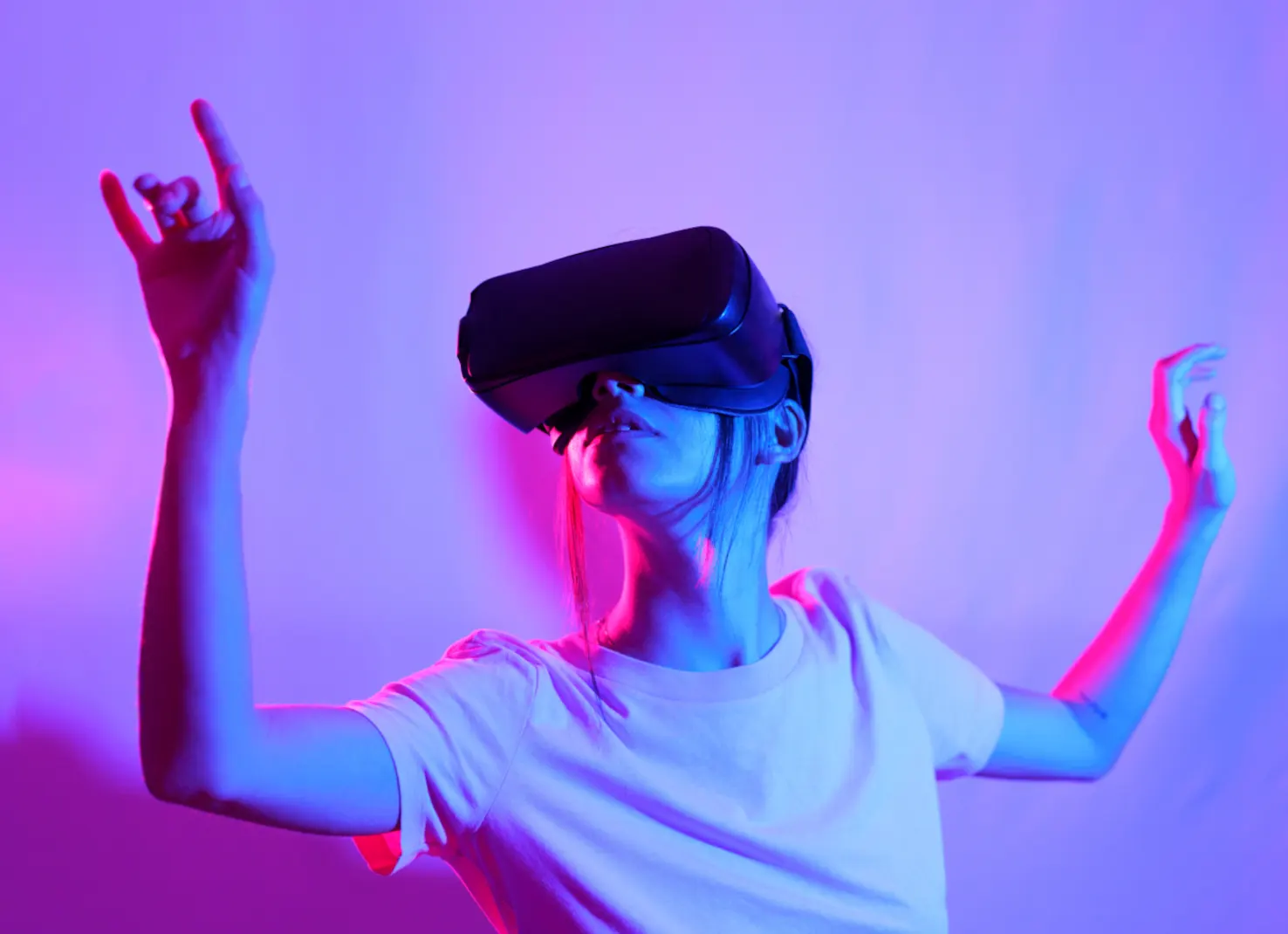
The Healthcare Simulation Standards of Best Practice® (HSSOBP) emphasize the importance of psychologically safe, competency-based, and evidence-informed simulation experiences across healthcare education. The standards identify several foundational elements of high-quality simulation to support competency-based education and professional integrity, including intentional design, prebriefing, facilitation, and debriefing. Together these elements support the development of clinical judgment, patient safety, communication, and reflective learning. As nursing programs continue to face challenges such as clinical placement shortages, limited faculty resources, inconsistent learner experiences, and growing competency expectations, immersive virtual reality (VR) simulation offers a scalable, evidence-aligned approach to simulation-based education. Shadow Health Lab with Virtual Reality (Shadow Health Lab with VR) was intentionally designed to provide learners with immersive, facilitator-guided simulation experiences aligned with simulation best practices. Through realistic patient encounters, structured facilitation, psychologically safe learning environments, and competency-based progression, Shadow Health Lab with VR supports nursing programs in expanding access to high-quality simulation while maintaining alignment with the HSSOBP framework. Conclusion Nursing education is navigating a convergence of pressures including shrinking clinical placement availability, rising competency expectations, uneven learner exposure, and the operational demands of traditional simulation. Meeting these challenges requires approaches that are both scalable and educationally rigorous. Shadow Health Lab with Virtual Reality offers one such approach. By placing every learner in an active nursing role within immersive, facilitator-guided patient scenarios, the platform addresses access and participation gaps without sacrificing the deliberate practice, reflective learning, and facilitator involvement that the Healthcare Simulation Standards of Best Practice identify as foundational. The alignment documented throughout this paper is not incidental; it reflects the intentional design choices embedded in the platform’s development, from competency-mapped scenario progression to structured debriefing tools and psychologically safe learning environments. Importantly, Shadow Health Lab with VR does not position itself as a replacement for traditional simulation or clinical experience. Rather, it functions as a complement: a consistent, lower-overhead option for building and assessing clinical judgment that programs can integrate alongside existing modalities. This flexibility makes it particularly valuable for programs operating under resource constraints or seeking to standardize learner opportunities across sites. As VR simulation matures as a modality, the questions that follow are practical ones: How does immersive VR experience translate to clinical performance? How does it develop over repeated use? What facilitation approaches yield the strongest outcomes? These are not hypothetical; they are answerable through the kind of intentional, evidence-informed implementation that the HSSOBP framework was designed to support. Shadow Health Lab with VR is built to be part of that ongoing inquiry. Download the full whitepaper to explore how Shadow Health Lab with virtual reality brings simulation standards to life, with insights and strategies to enhance healthcare education.

Senior Content Manager, Nursing
Osmosis from Elsevier