
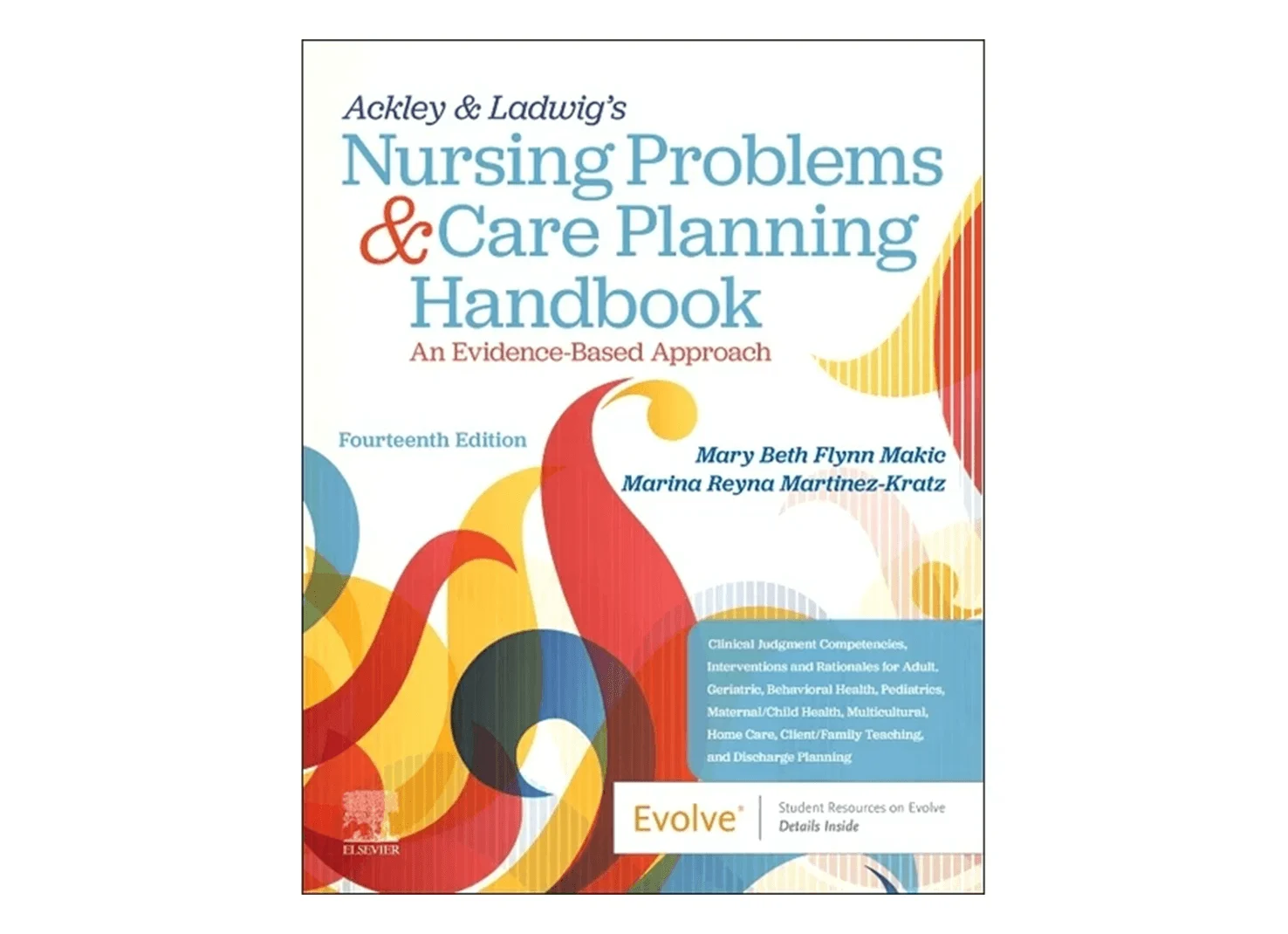
Author Q&A: Ackley & Ladwig's Nursing Problems & Care Planning Handbook: An Evidence-Based Approach, 14th Edition
23 January 2026
By Mary Beth Flynn Makic, PhD, APRN, CCNS, CCRN, FAAN, FNAP, FCNS, Marina Reyna Martinez-Kratz, MS, RN, CNE
Introduction and Background
Mary Beth Flynn Makic: I have been a nurse for 40 years, in which my practice is predominantly caring for acute and critically ill adults. A decade ago, I joined the faculty at the University of Colorado, but I still have a research clinical practice at a local Level I trauma hospital. As a critical care clinical nurse specialist, I’ve always been driven to find the current best evidence to inform nursing practice interventions. Thus, this text resonates with my core beliefs for nurses — driving optimal care and patient outcomes by applying best evidence to our care for clients and families.
Marina Reyna Martinez-Kratz: I have practiced nursing for 38 years, primarily working in behavioral health as a staff nurse, nurse manager, clinical coordinator, case manager and educator. Betty Ackley and Gail Ladwig were my nursing professors, mentors, and later my colleagues. I began teaching nursing at Jackson College in 1997 and was the lead faculty for the behavioral health, leadership, and nutrition courses. Betty Ackley and I developed the first online course at Jackson College in 1998, which is still offered! It was around this time that I started contributing to the text. Throughout my teaching career, my passion has been to help students think and act like nurses. Developing this text has been a labor of love, and I have been inspired by the many students I have had the privilege of mentoring and teaching.
Q: Tell us about the development of your book. How has it evolved since the first edition? If applicable, what are the key changes or updates in this new edition?
Mary Beth Flynn Makic: The book has consistently been innovative in providing meaningful updates and designs to ensure delivery of contemporary knowledge to address problems nurses experience with clients and families. We are excited to share that we have woven the Clinical Judgment Measurement Model (CJMM) framework into this edition. We hope that this will support nurses’ critical thinking and decision-making processes, especially as care of clients and families continues to become more complex.
Marina Reyna Martinez-Kratz: Every edition of the book has had changes and updates that address the dynamic nature of nursing practice. The 14th edition has some big changes with the incorporation of the CJMM model and the PES (problem, etiology and signs/symptoms) format. Using the CJMM model and PES statement to guide problem identification and nursing care are innovations that we believe will allow students and novice nurses to make valid clinical decisions based on clinical judgment.
Q: What do you find most exciting or significant about this edition? Are there particular chapters, topics, or features you would like to highlight?
Mary Beth Flynn Makic: There are several exciting elements about the 14th edition. First, we need to highlight the visionaries, Drs. Ackley and Ladwig, who were the originators of these amazing resources for students and practicing nurses alike. Their vision of providing a structure for identifying a client problem, potential nursing outcomes (NOC), and intervention (NIC) classifications supported by evidence-based nursing interventions was exceptionally forward thinking. We have continued to build on this framework. A super exciting change is the organization of client problems by systems categories, which is often how nurses give and receive reports. We talk about client ‘systems’ being physical, psychosocial and environmental. Organizing the client problems identified in the text by systems aligns to how we practice. For example, we have grouped client problems into 15 broad categories such as cardiovascular or family focused. Linking a client problem to a system category can optimally focus the clinician on the needs for the client.
Marina Reyna Martinez-Kratz: I think an exciting change in the 14th edition is the move to the explicit use of the problem/etiology/signs and symptoms (PES) system for problem identification. The PES format allows for clear and structured documentation of the client’s problem, which is essential for patient-centered care. Accurate problem identification sets the stage for effective interventions, client safety and optimal client outcomes.
Q: Who is the primary audience for your book, and why will they find it valuable? Has this target audience shifted since the original publication?
Mary Beth Flynn Makic: The primary audience is the prelicensure nurse, the student learning to be an evidence-informed nurse. However, the text is also a fantastic resource for a nurse new to practice or a nurse who precepts students or novice nurses or clinical teaching faculty. The utility of the text really is the ease with which the nurse can find content within the text and apply it to a client problem to develop an individualized plan of care based on the application of all elements of the nursing process. The core principles of assessment, analysis, planning, implementation and evaluation (AAPIE) are well developed for each topic within the text.
Marina Reyna Martinez-Kratz: While the primary audience for our book is the student nurse, it is a resource that grows with the student and can be used from freshman year to graduation to beginning practice. The text can also be a wonderful resource for practicing nurses and is a great addition to any nursing unit’s library.
Q: Are there any new ideas, practices, or procedures introduced in this edition?
Mary Beth Flynn Makic: We have always had a section on motivational interviewing, but it was a supplemental resource. Given the important role of the nurse-client relationship, Motivational Interviewing is in Section I of this edition of the text.
We have added the elements of the Clinical Judgment Measurement Model (CJMM) throughout the text to align with the standardized understanding of building clinical judgment, enhancing critical thinking and decision-making skills and competency, and ultimately improving patient care.
Marina Reyna Martinez-Kratz: We have added the explicit use of the PES system for problem identification in this edition. The PES format allows for clear and structured documentation of the client’s problem, which will focus care and link to evidence-based interventions and desired outcomes.
Q: Looking ahead, what challenges or problems in your specialty do you hope future generations will address?
Mary Beth Flynn Makic: I think the biggest challenge for nurses, especially as we move more into a practice in which generative artificial intelligence (AI) continues to emerge, is the necessity of the nurse to stop and thoughtfully evaluate whether technological advances align to the client’s needs. Generative AI can be very helpful in practice, but the nurse is still the primary individual, through the nurse-client relationship, to pause, critically review the AI prompts and determine the best evidence-informed intervention to be considered in the care of the client.
Electronic Health Record (EHR) documentation can be a challenge and continues to consume a nurse’s time, taking away from meaningful interactions. I think an opportunity afforded by this textbook is the alignment of systems concepts and patient problems that are routinely documented in an EHR, highlighting the value and vital role the nurse has in the care of clients within documentation systems.
Marina Reyna Martinez-Kratz: I think information overload is a critical issue for nurses. Nurses are subjected to multiple cognitive demands with information coming in from EHRs, devices, alarms, families and colleagues. Reducing a nurse’s cognitive load will create a safer environment for both the nurse and the client.
Q: Is there anything else you would like to share about your book or its impact?
Mary Beth Flynn Makic: While the textbook is designed to grow the knowledge and evidence-based practice of nurses, it also is a terrific resource for faculty and clinical instructors. We have updated PowerPoint® presentations on the Evolve website. We also provide current citations to support nursing interventions with DOI numbers to help faculty and nurses find citations.
Marina Reyna Martinez-Kratz: The updated case studies provide problem-based learning using clinical judgment competencies and take students through comprehensive care planning. As a lead faculty, I always provided a copy of the text as a resource for my clinical faculty and nurse preceptors, which was greatly appreciated!
Contributors

Mary Beth Flynn Makic, PhD, APRN, CCNS, CCRN, FAAN, FNAP, FCNS
Professor at The University of Colorado College of Nursing

Marina Reyna Martinez-Kratz, MS, RN, CNE
Professor Emeritus at Jackson College