
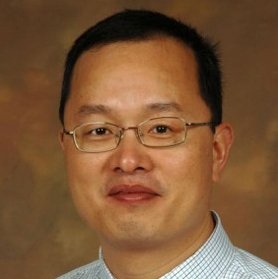
Profile
Qihao Weng
Hong Kong Polytechnic University, China
Plenary Talk Title:
Next-Generation GeoAI and Urban Remote Sensing: Unifying Visual-Spatial Intelligence and Urban AI Security for Sustainable Cities
Short Biography: Prof. Weng is a Chair Professor of Geomatics and Artificial Intelligence and a Global STEM Scholar at the Hong Kong Polytechnic University, where he directs the Jockey Club STEM Lab of Earth Observations and the Research Centre for Artificial Intelligence in Geomatics. Previously, he served as Director of the Center for Urban and Environmental Change and as a Professor of Geography at Indiana State University in the USA from 2001 to 2021. He currently holds the position of Editor-in-Chief of the ISPRS Journal of Photogrammetry and Remote Sensing and leads GEO’s Global Urban Observation and Information Initiative. Prof. Weng is a Foreign Member of Academia Europaea (The Academy of Europe) and an elected Fellow of IEEE, AAAS, AAG, ISPRS, and ASPRS. His distinguished career has been recognized with numerous awards, including the NASA Senior Fellowship, the AAG Distinguished Scholarship Honors Award, the Taylor & Francis Lifetime Achievements Award, the Japan Society for the Promotion of Science Fellowship (Short-term S[E], formerly known as the “JSPS Award for Eminent Scientists”), the AAG Wilbanks Prize for Transformational Research, and the AAG Remote Sensing Specialty Group Lifetime Achievement Award. In 2021, he was awarded a Global STEM Professorship by the Hong Kong Special Administrative Region government. Prof. Weng’s research focuses on remote sensing and geospatial AI applications to urban environmental and ecological systems, urbanization impacts, urban climate, and sustainability. He is the author of 340 articles, 16 books, and five conference proceedings, with over 43,500 citations and an H-index of 96 on Google Scholar.
Abstract: As human activities drive rapid global change, high-density urban environments stand at the frontline of climate vulnerability, severe weather events, and resource degradation. Addressing these multi-scale challenges requires moving beyond traditional remote sensing toward a unified, AI-driven paradigm for Earth system science. In this plenary address, I will present how the convergence of Artificial Intelligence (AI) and Earth Observation (EO) is fundamentally redefining urban observing, sensing, imaging, and mapping, establishing the foundation for next-generation geoinformation and planetary sustainability.
The presentation will trace three transformative pillars shaping the future of urban remote sensing. First, I will explore the AI transformation of urban EO, discussing how deep learning, multimodal data fusion, and geospatial foundation models are shifting urban remote sensing from passive, static mapping to autonomous, real-time, and predictive intelligence across spaceborne, airborne, and ground-based platforms. Second, I will introduce urban visual-spatial intelligence as a human-centric sensing framework that links physical Earth observations with human perceptual and cognitive dynamics. By unifying spaceborne imaging, street-level computer vision, and human eye-tracking responses, this paradigm quantifies complex microclimatic thermal stress, street-canyon environments, and non-linear human-environment interactions. Third, as cities increasingly rely on AI-driven models for digital twins, disaster early warning, and urban governance, we face an urgent, overlooked threat to urban AI security. I will highlight critical vulnerabilities—including physical and digital adversarial attacks on remote sensing models, sensor spoofing, spatial hallucinations, and demographic or spatial biases—and propose guidelines for trustworthy, secure, and ethical GeoAI.
By bridging physical multi-sensor remote sensing with human-centric visual-spatial intelligence and robust security architectures, we can deliver actionable, trustworthy geoinformation. Ultimately, this plenary address aims to inspire concerted, cross-disciplinary efforts toward building climate-resilient, safe, and sustainable urban futures in support of global sustainability mandates.
Keywords: GeoAI, Urban Remote Sensing, Visual-Spatial Intelligence, Urban AI Security